Full Hearts and Tearful Goodbyes
We had a fantastic visit with the greatest of Greats, Aunt Mary and Sharon. Two afternoons together gave us plenty of laughs, chats, catching up, and, of course, entirely too much food—but nowhere near enough time together. We left with teary eyes and hearts full of love!
A Little Lemon and a Lot of Hospitality
Our drive to Tucson was pleasantly uneventful, which is always a good thing when moving Jackson down the road! We arrived at the very nice Tucson / Lazy Days KOA Resort, a large property with quite a range of sites. Options included simple back-ins, covered patios with sun decks, and sites with full outdoor kitchens.
Every site had a citrus tree—mostly lemon, lime, or orange. Ours came with a lemon tree, a paver patio with outdoor furniture, and a dog run. Something for all three of us!
While in Angel Fire, we had made plans to get together with Laura and Brian, who winter in Tucson. They invited us over for a simple, casual evening, although I think Brian’s idea of “simple” cooking might be a little different from mine!
We dined outdoors on lemon pasta with shrimp and luganega sausage with peppers and onions. Everything was delicious, and Mark and I both went back for seconds. When I started getting chilly, our thoughtful hosts immediately switched on the outdoor heaters so we could comfortably continue our evening.
Laura, an animal lover, had even included Timber in the invitation. He wasted no time making himself at home—and eating all of their cat’s dinner. Apparently, he thought the invitation included the entire household menu.
Their fully enclosed backyard was another highlight. Timber was so excited to have room to run and romp that settling down was simply out of the question. By about 8:30, he finally wore himself out and sprawled across their floor. Athena, their cat, watched this oversized intruder suspiciously from the safety of her perch. First her dinner, then her floor. She had every reason to be concerned.
Between the two of them, Laura and Brian gave us enough Tucson sightseeing suggestions to fill a week.
We had most of one afternoon.
Or so we thought!
Saguaros, Teddy Bears, and Broccoli Heads
Saguaros, Teddy Bears, and Broccoli Heads
The next day brought another pleasant surprise when we ran into Liz and Mike at the KOA. They had just arrived in Tucson to visit Liz’s sister. We decided to explore Saguaro National Park before meeting Laura and Brian again for cocktails.
Tucson is a UNESCO Creative City of Gastronomy, and Brian and Laura were keen to have us sample some of the city’s distinctive flavors—including creative libations! But first, we had a date with some rather statuesque desert residents.
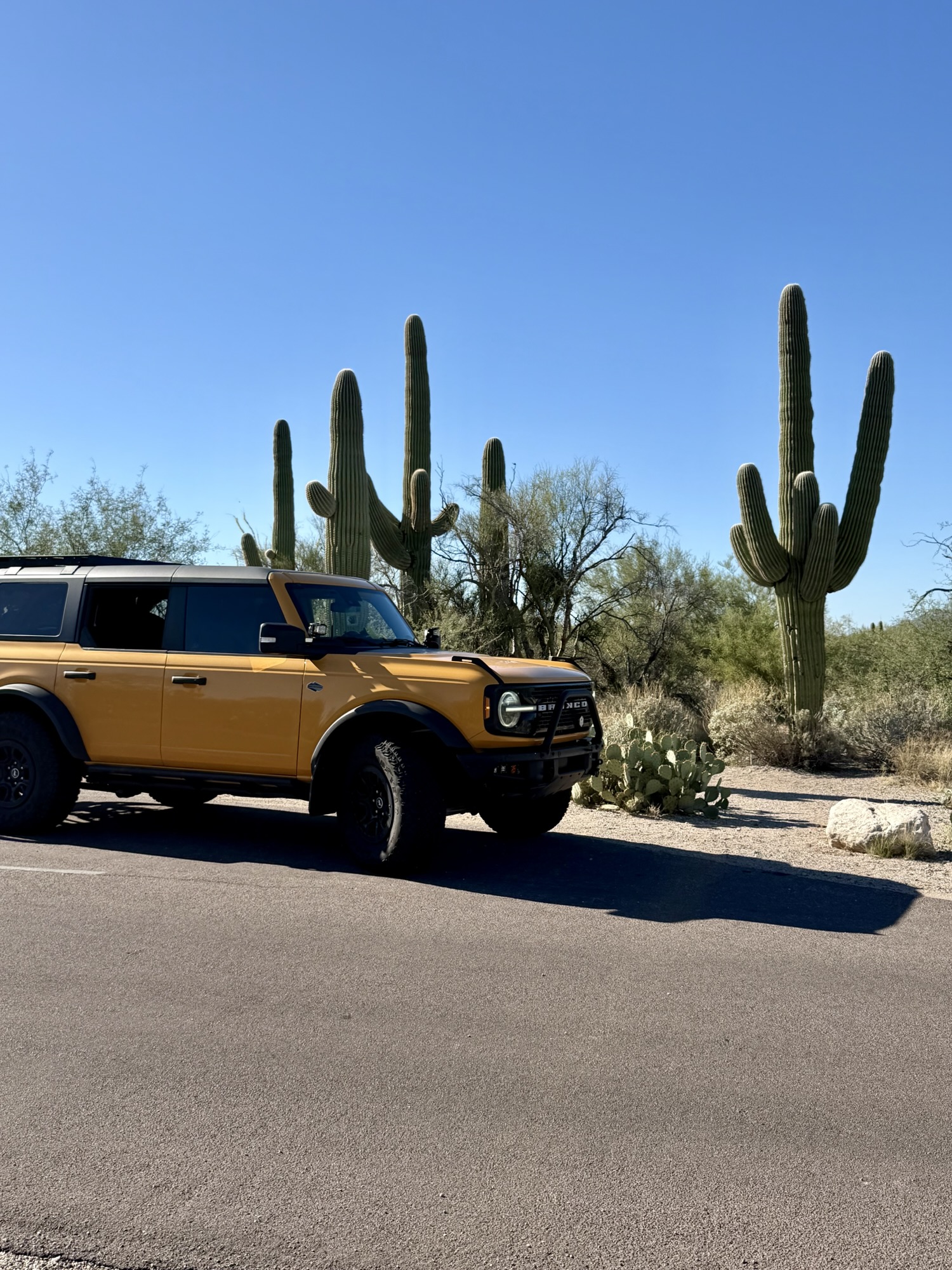
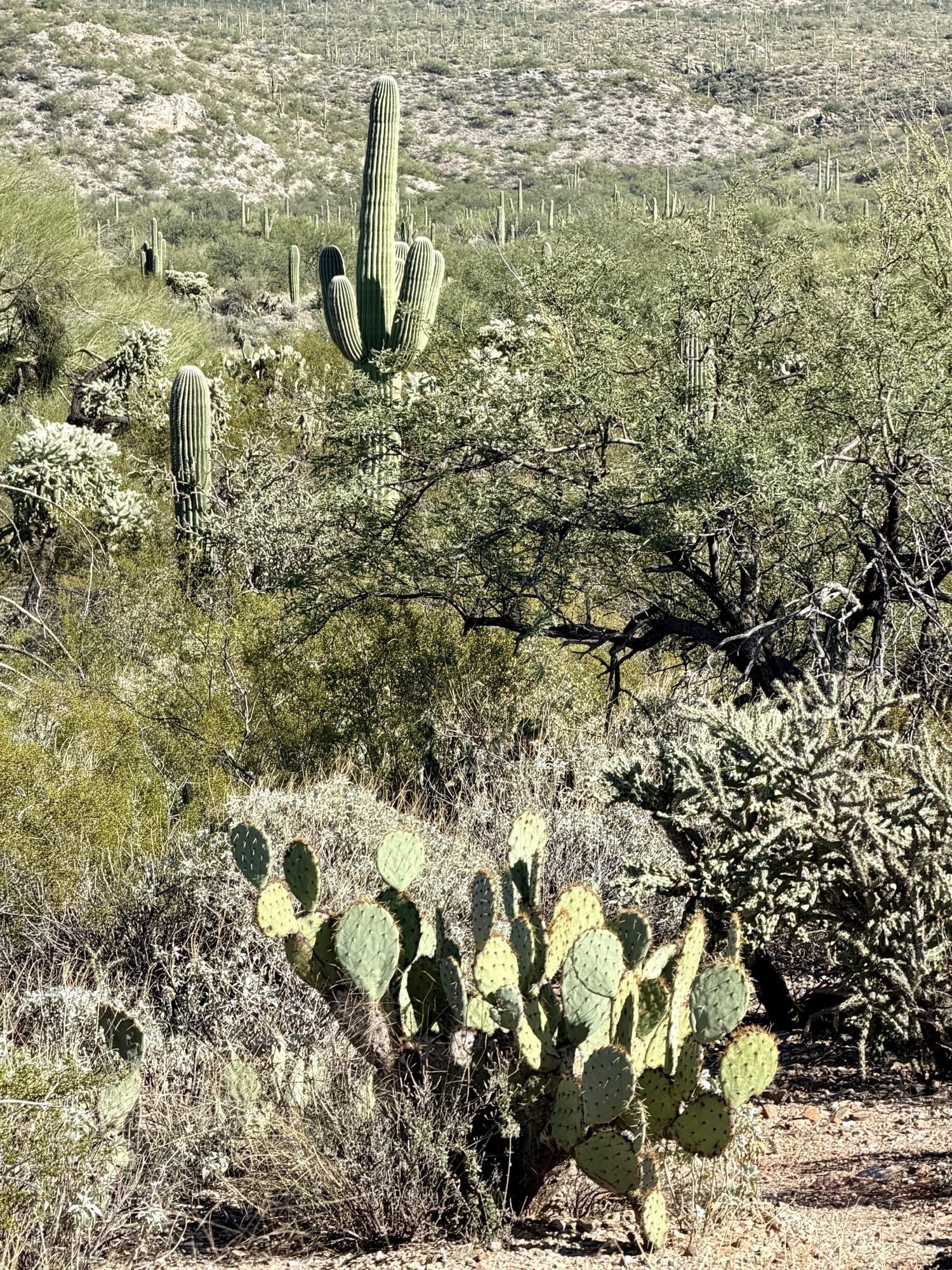
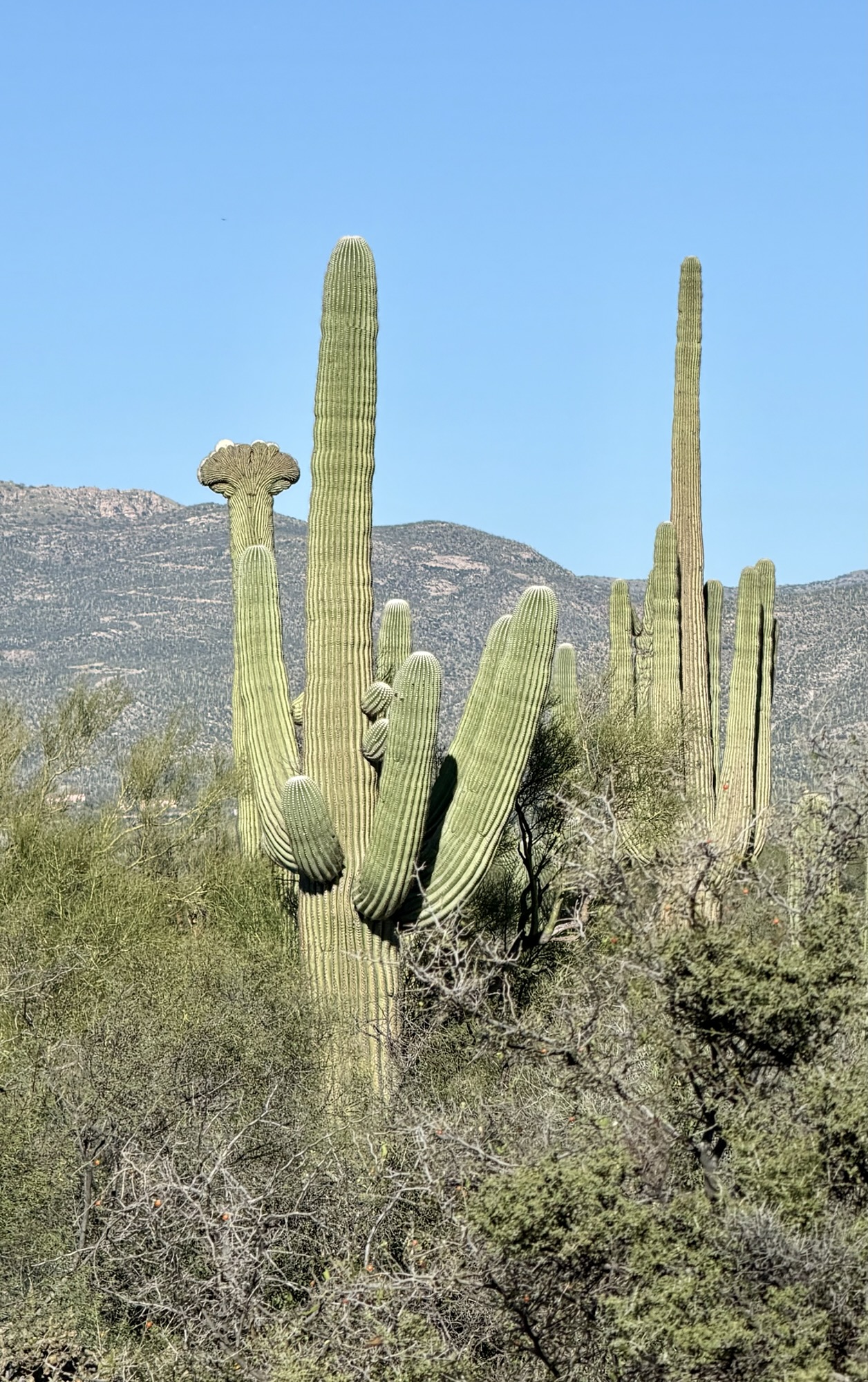
The park’s eight-mile paved Cactus Forest Loop Drive makes exploring this iconic Sonoran Desert landscape an easy and enjoyable afternoon outing. Saguaros are undoubtedly the stars, but Liz helped us look beyond the towering giants and identify some of their equally prickly neighbors.
There were cholla cacti, including the recognizable teddy-bear cholla. Despite the cuddly name, this is one teddy bear you should admire from a distance!
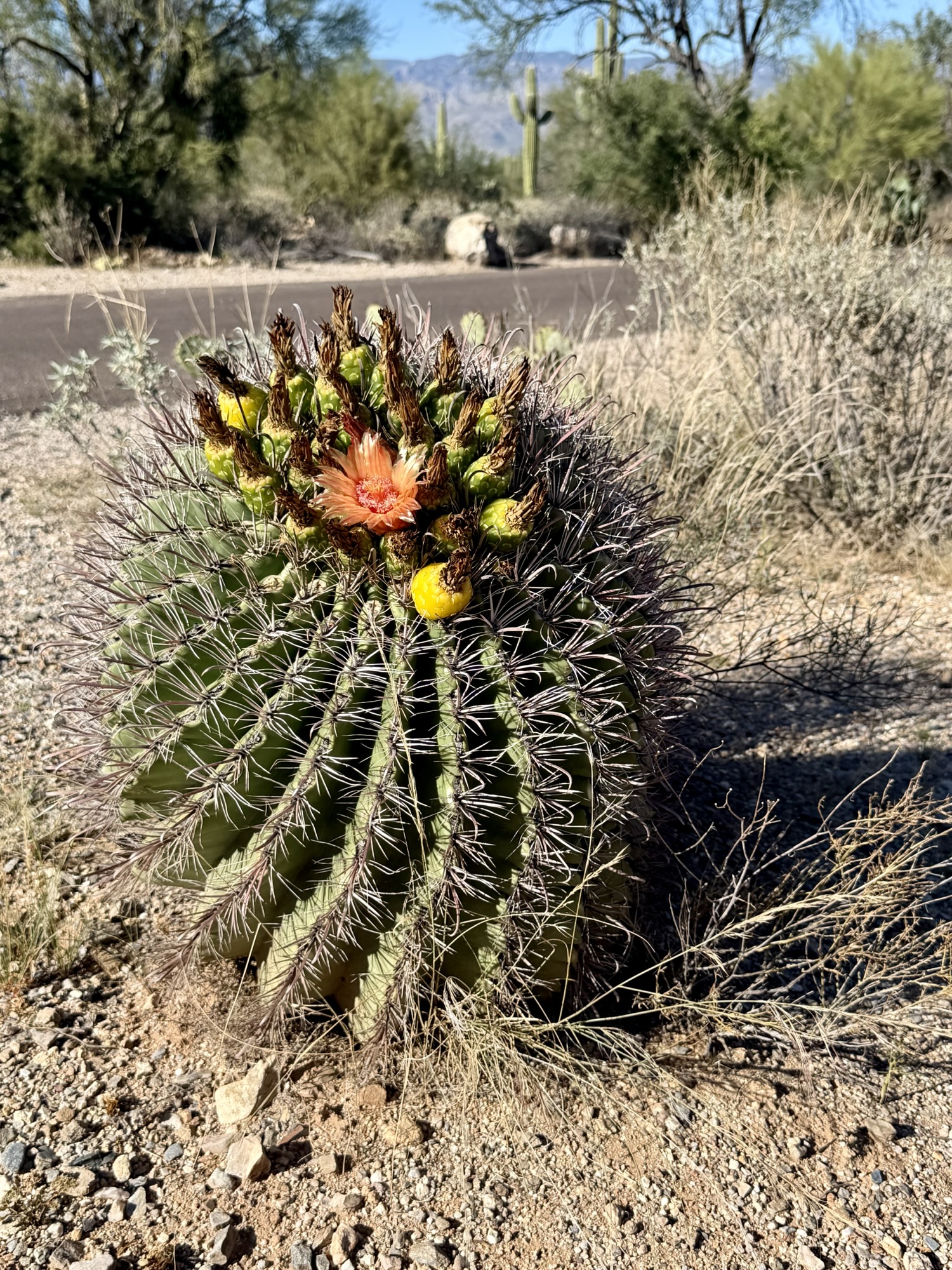
The fishhook barrel cacti were much easier to identify once Liz pointed out their stout, ribbed bodies and curved spines. The name suddenly made perfect sense.
We also spotted Engelmann’s prickly pear, with its broad, flat pads. There are several prickly pear species in the park, but this was one I could at least begin to recognize without immediately asking Liz again.
Then there were the saguaros themselves. Some stood tall and straight, while others had enough arms and personality to look as though they were directing traffic. Liz had us watching for crested, or cristate, saguaros, whose unusual fan-shaped growth prompted me to rename them “broccoli heads.”
I suspect that term will not be appearing in any botanical textbooks.
Saguaros grow slowly and can live roughly 150–200 years. In the park, their first branches often appear around 50–70 years of age, although in drier conditions it can take considerably longer. Some never grow arms at all. Knowing that certainly makes you look at those enormous, many-armed specimens a little differently!
Arizona also protects its native cacti. Moving or removing a saguaro can involve state requirements and local rules—even on private property. These desert elders deserve considerably more thought than an ordinary landscaping decision.
When the Wind Rewrites the Itinerary
We had planned to leave the following morning, but woke to reports of strong winds and travel advisories for high-profile vehicles. Both Laura and Liz texted warnings. When the locals are concerned enough to check on you, it seems wise to listen!
The KOA also sent a notice offering to work with campers who needed to extend their stays. Kudos to this staff! Between the lovely sites, thoughtful amenities, and willingness to help when the weather changed, this campground earned one of our top votes.
We heard people referring to “Santa Ana winds,” although that name is generally associated with Southern California. Whatever the proper weather label for our Tucson wind event, powerful crosswinds and blowing desert dust were enough to convince us that Jackson could remain parked.
We booked two additional nights and began juggling our next two stops. Travel plans are adjustable. Our willingness to gamble with the wind is considerably less so.
Besides, we suddenly had time for some of those Tucson suggestions!
Mark Finds Plane Heaven
Our first bonus outing was the Pima Air & Space Museum. This place is huge! Hundreds of aircraft fill six exhibit hangars and extensive outdoor grounds spread across about 80 acres.
Mark was in plane heaven.
I was interested, too, although after a while some of them started looking suspiciously alike to me. Mark, on the other hand, zeroed in on the SR-71 Blackbird, the B-29, a Cobra gunship, and a helicopter-looking sky crane.
Sorry, plane people. I know that last description probably made you wince.
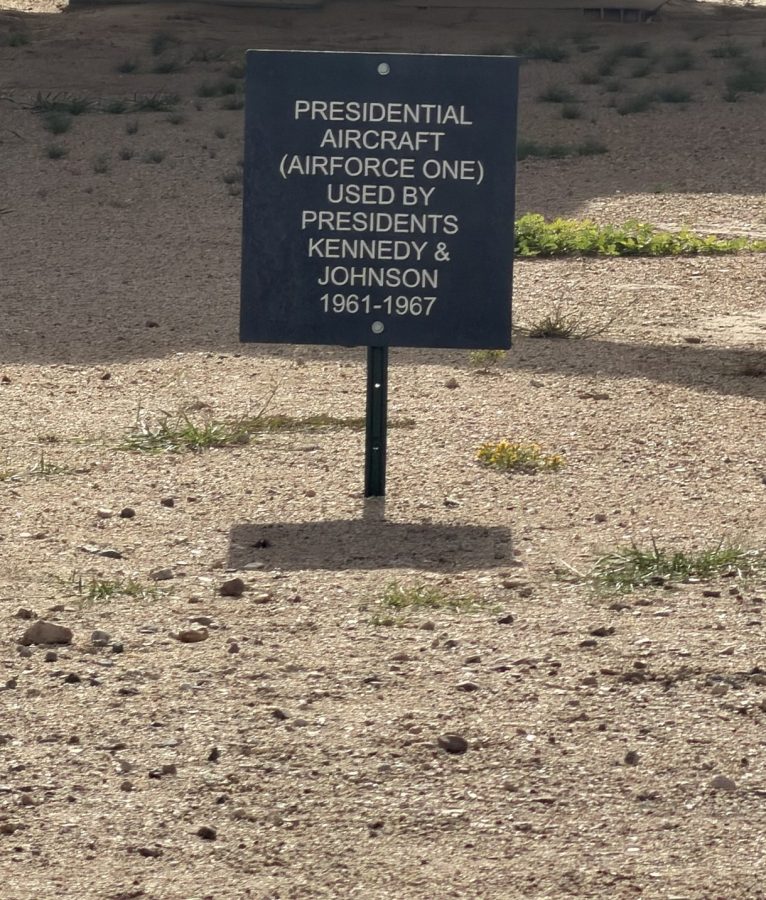
There were military aircraft, early commercial planes, and aircraft associated with presidential travel. We even spotted one with “South Carolina” printed on its tail, which naturally required a picture.
For me, the highlight was the narrated tram tour through the outdoor collection. Our ride cost $10 per person, and the explanations helped turn a sprawling assortment of aircraft into stories I could follow. It was extremely windy, but I was glad we did it.
After four hours, however, my aviation attention span had reached its cruising limit. Mark might have managed the affiliated Tucson Military Vehicle Museum, but I was ready to call our sightseeing day complete.
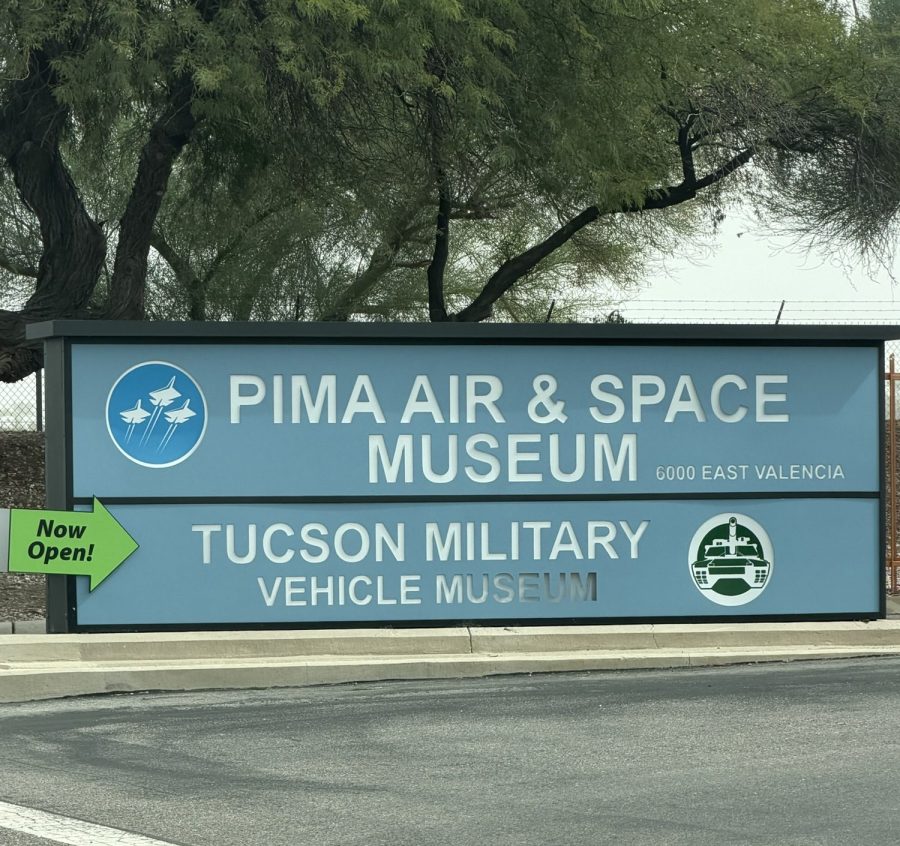
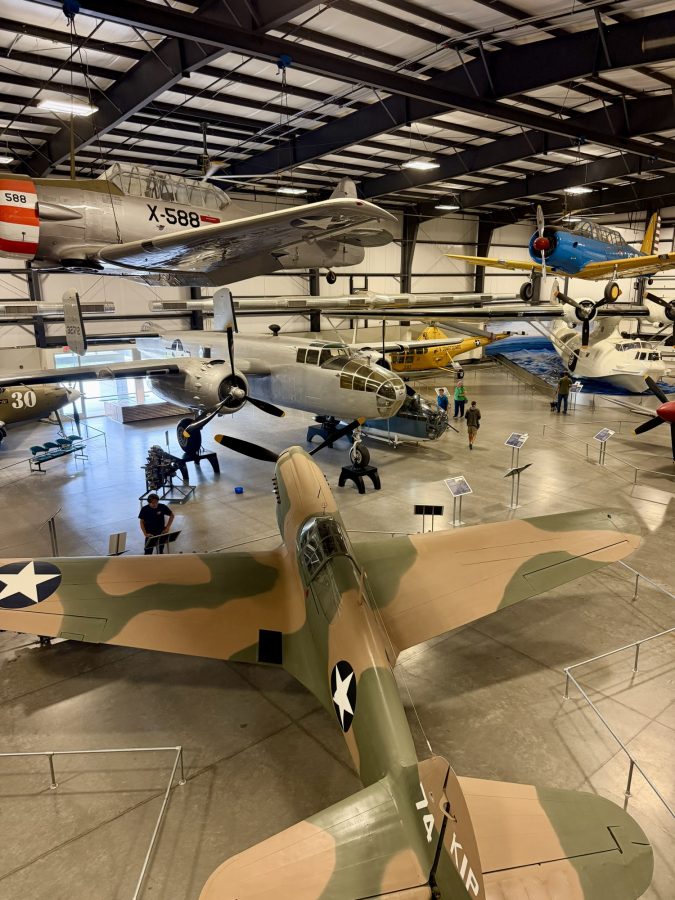
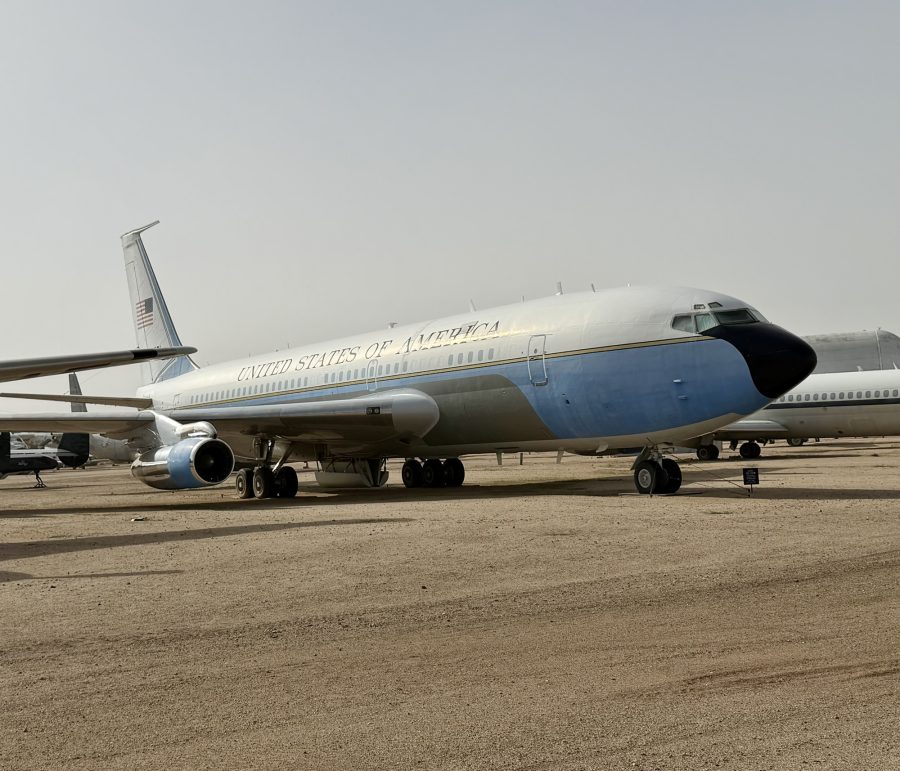
Our first bonus outing was the Pima Air & Space Museum. This place is huge! Hundreds of aircraft fill six exhibit hangars and extensive outdoor grounds spread across about 80 acres.
Mark was in plane heaven.
I was interested, too, although after a while some of them started looking suspiciously alike to me. Mark, on the other hand, zeroed in on the SR-71 Blackbird, the B-29, a Cobra gunship, and a helicopter-looking sky crane.
Sorry, plane people. I know that last description probably made you wince.
There were military aircraft, early commercial planes, and aircraft associated with presidential travel. We even spotted one with “South Carolina” printed on its tail, which naturally required a picture.
For me, the highlight was the narrated tram tour through the outdoor collection. Our ride cost $10 per person, and the explanations helped turn a sprawling assortment of aircraft into stories I could follow. It was extremely windy, but I was glad we did it.
After four hours, however, my aviation attention span had reached its cruising limit. Mark might have managed the affiliated Tucson Military Vehicle Museum, but I was ready to call our sightseeing day complete.
[Insert photos: museum sign, South Carolina aircraft, presidential aircraft information, hangar overview, and Mark’s favorites.]
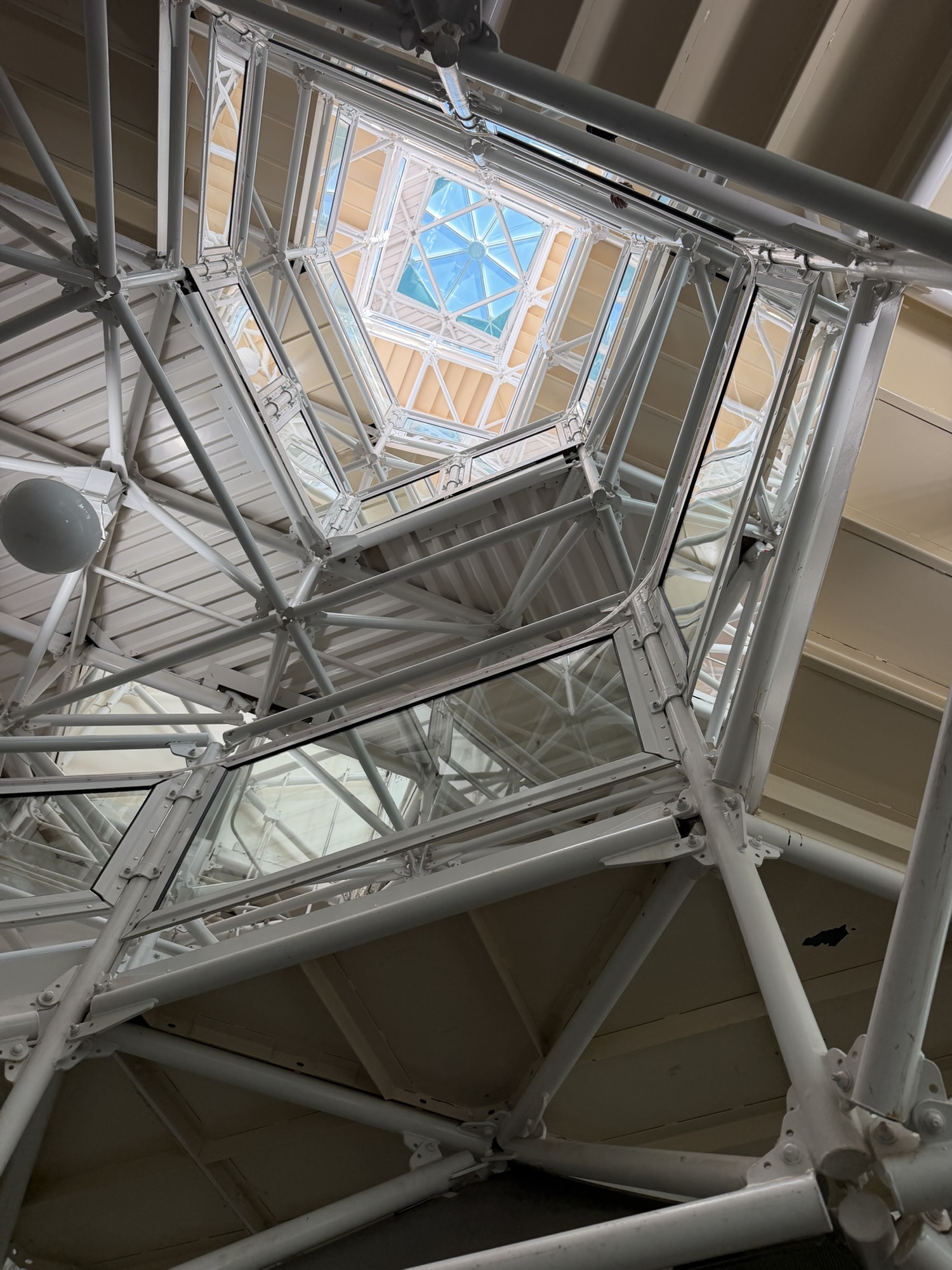
Biosphere 2: An Extraordinary Idea, a Mixed Visit
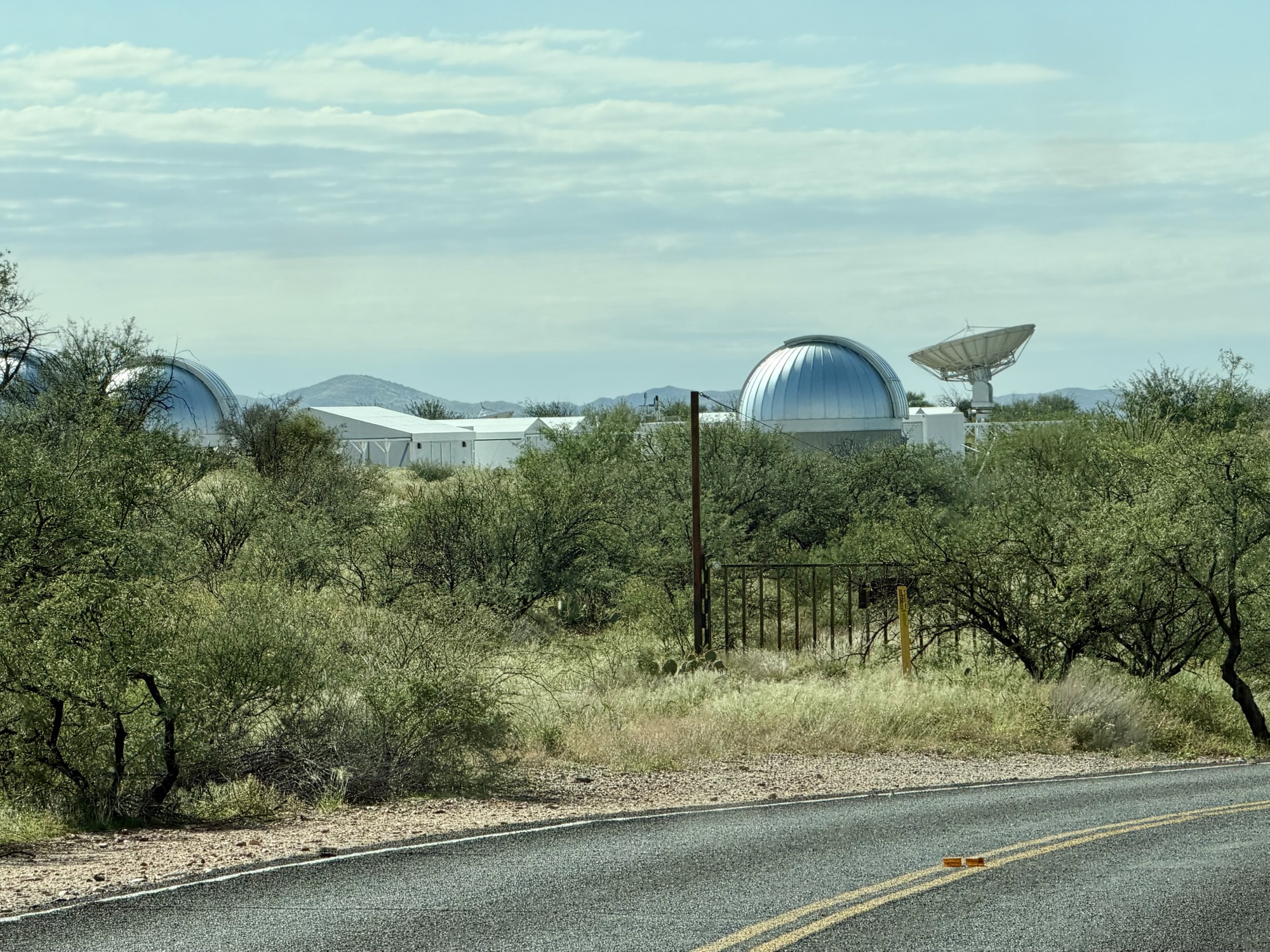
We were also curious about Biosphere 2, near Oracle, north of Tucson.
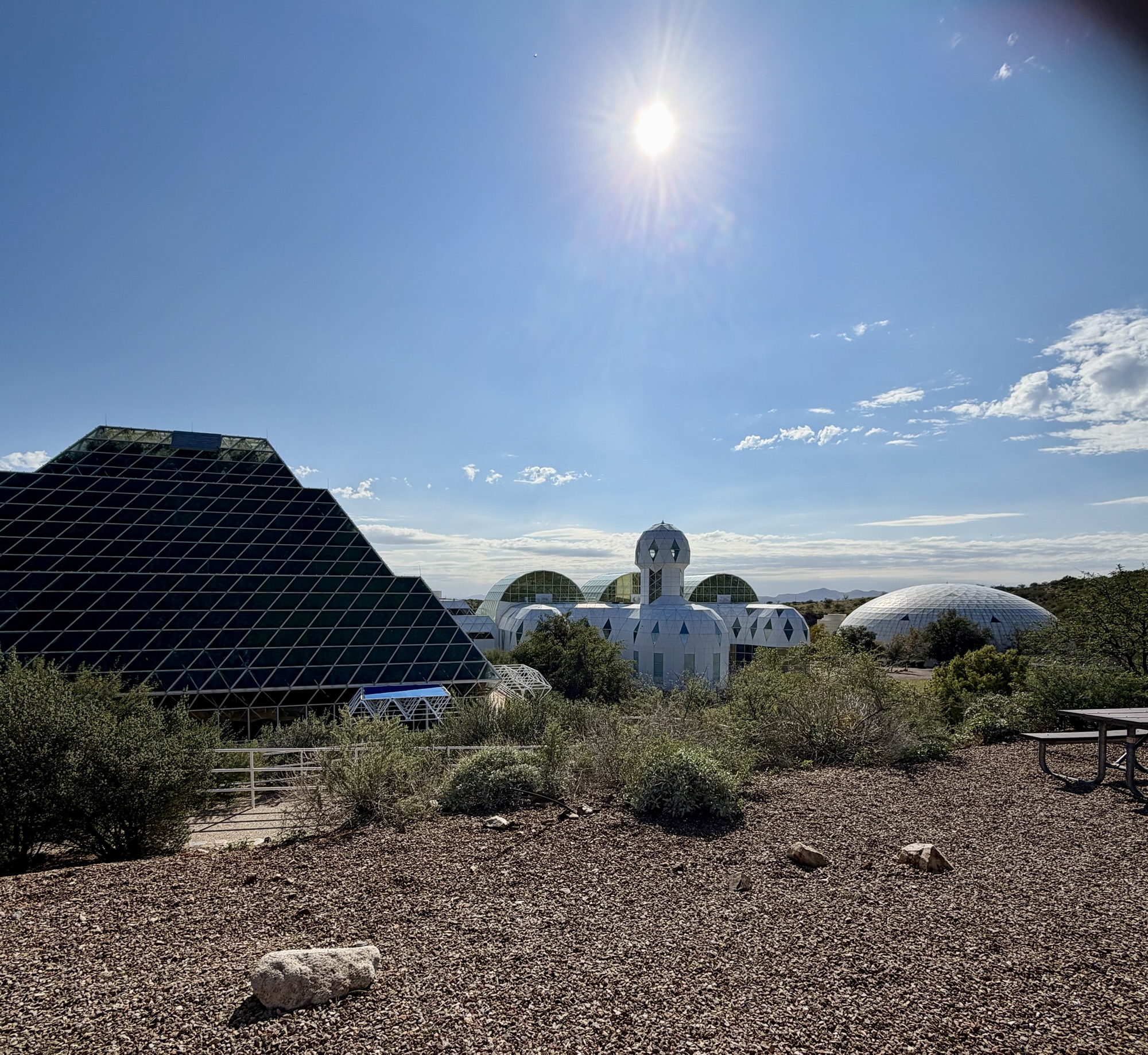
You may remember the heavily publicized experiment in which eight people lived inside a sealed, roughly three-acre complex from 1991 to 1993. The goal was to explore whether people could sustain themselves within a closed ecological system, producing food and recycling essential resources. Oxygen shortages, food challenges, and the crew’s weight loss became major parts of the story.
Seeing the engineering behind that ambitious undertaking was fascinating. The buildings, environmental systems, and attention to the smallest details made us appreciate just how much planning went into trying to create a self-sustaining world beneath glass.
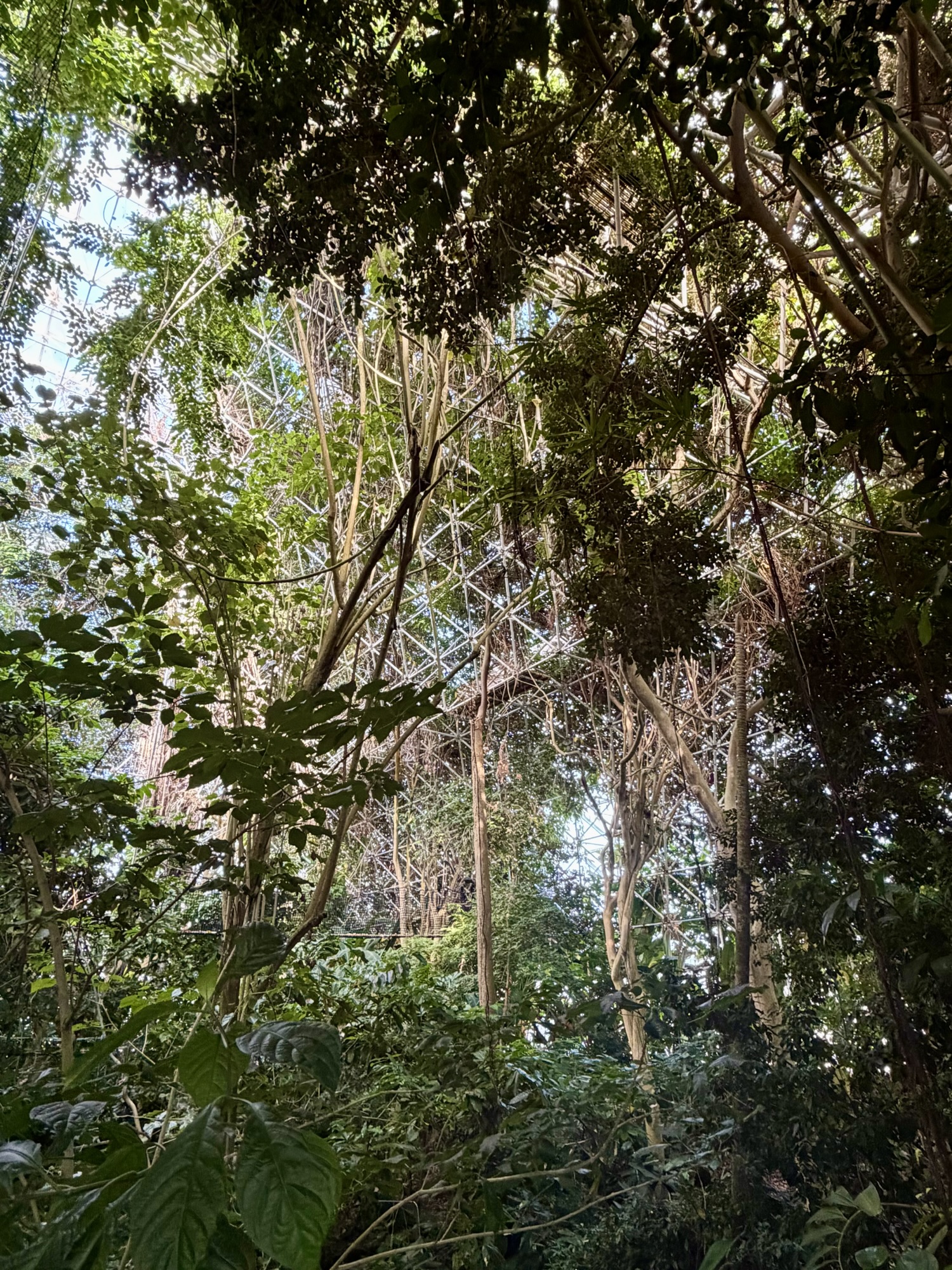
Imagine designing an ocean, a rainforest, agricultural areas, and living quarters—and then trying to make all of those pieces work together!
Still, Mark and I left disappointed with the visitor experience. Portions of the complex looked tired to us, and the tour did not give us a clear enough understanding of how everything we were seeing connected to the research happening today.
The ocean was a particular example. After hearing about its original coral reef, waves, and beach, the scene before us felt sparse compared with the lively underwater environment I had imagined. Parts of the rainforest left us with a similar feeling.
The University of Arizona does conduct active research here, including work on coral resilience and ecosystem responses to environmental change. In fact, researchers introduced new corals into the ocean habitat in February 2026. I would have appreciated a clearer explanation of that work during our visit.
We left impressed by the original vision and engineering, but wishing the tour had done a better job connecting that remarkable history with the facility’s present purpose.
A Brief Border Patrol Stop
With the winds finally easing, we continued toward Alamogordo and White Sands National Park.
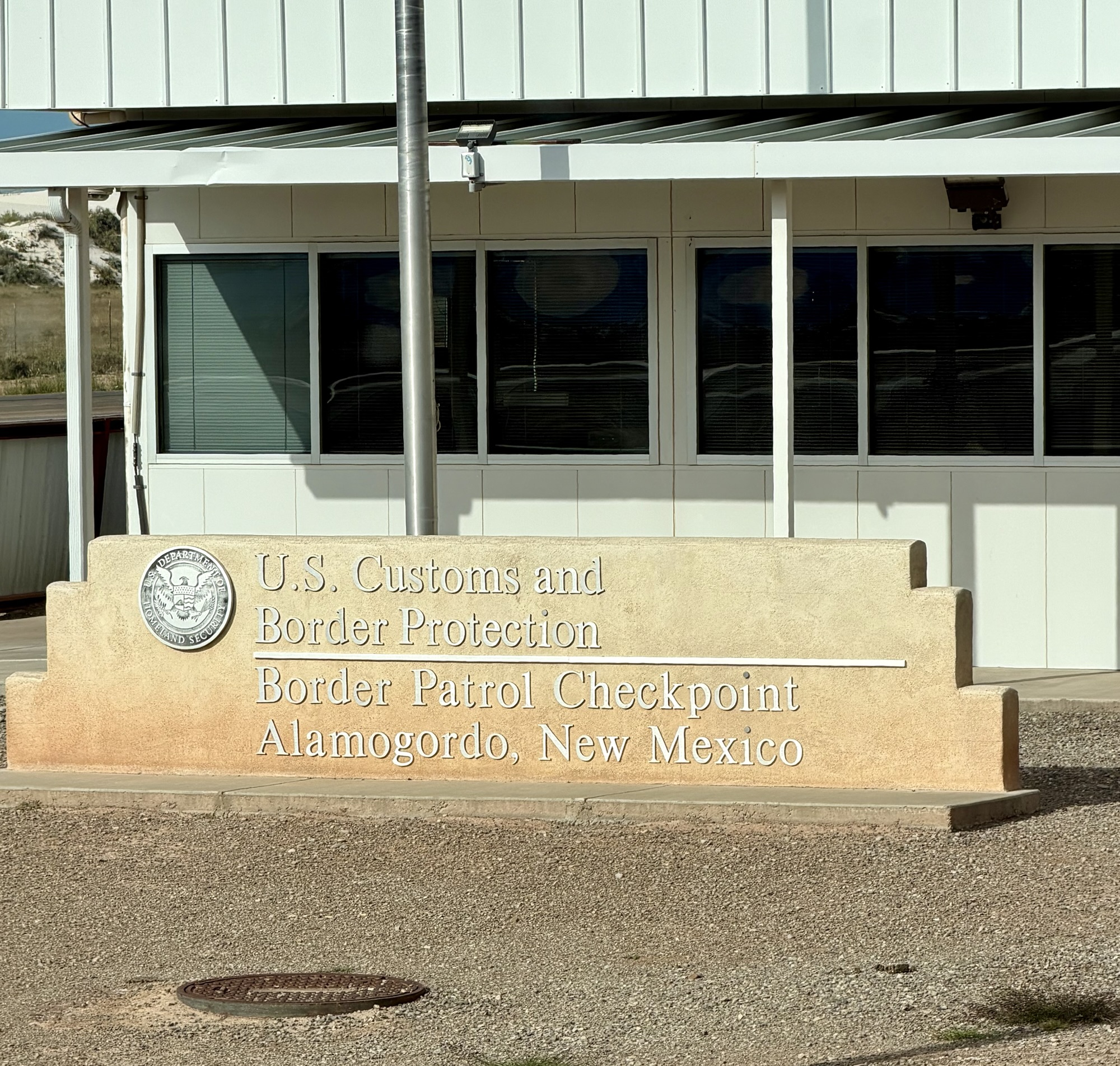
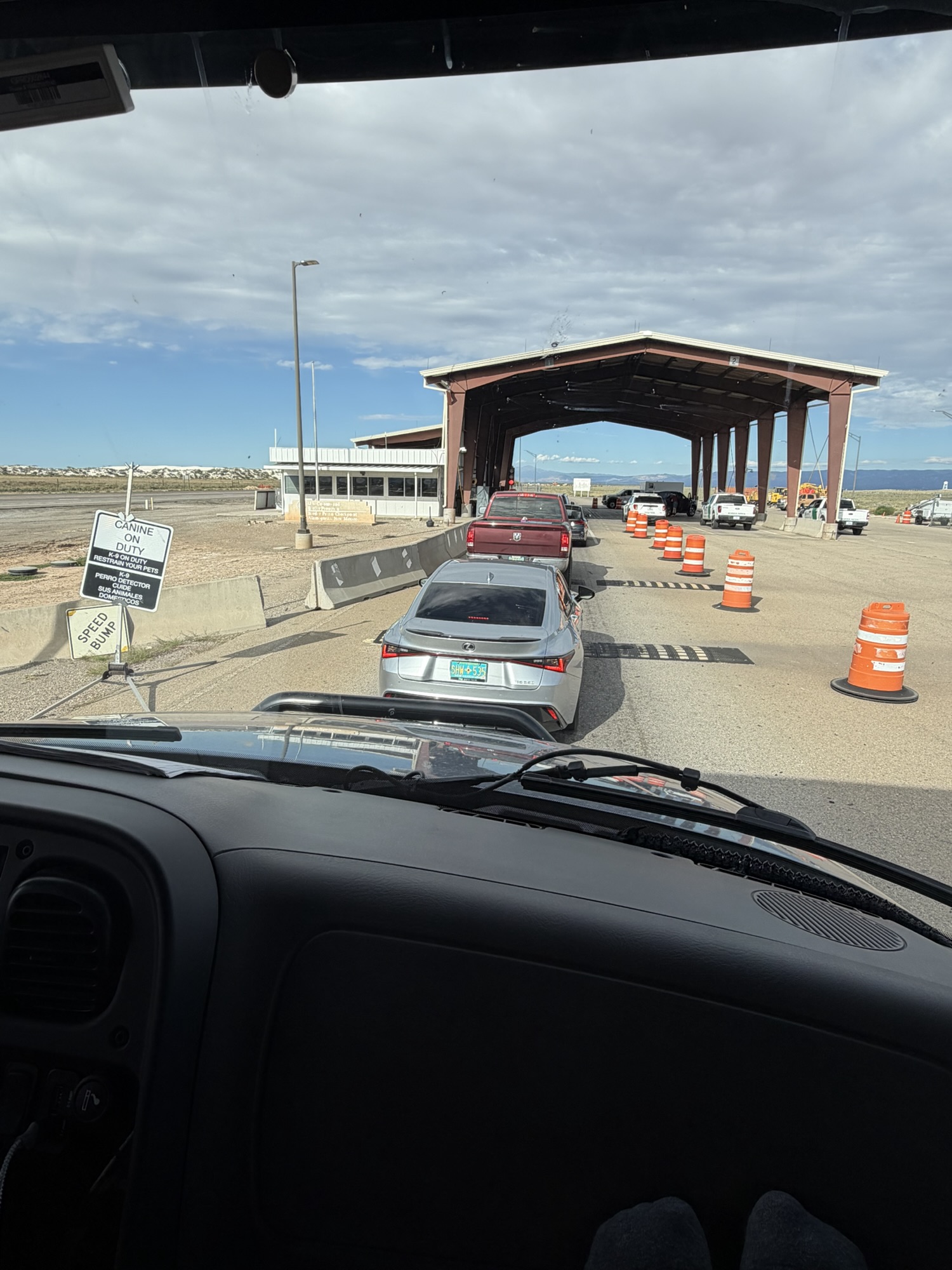
Along the way, we passed through an inland Border Patrol checkpoint. We were still well north of the international border, so encountering the inspection station was a reminder of how far inland these checkpoints can be.
We were impressed by how efficiently everything moved. Jackson and Cheeto went through what appeared to be a scanning process, and within a few seconds we were cleared to continue.
White Sands and Pistachios
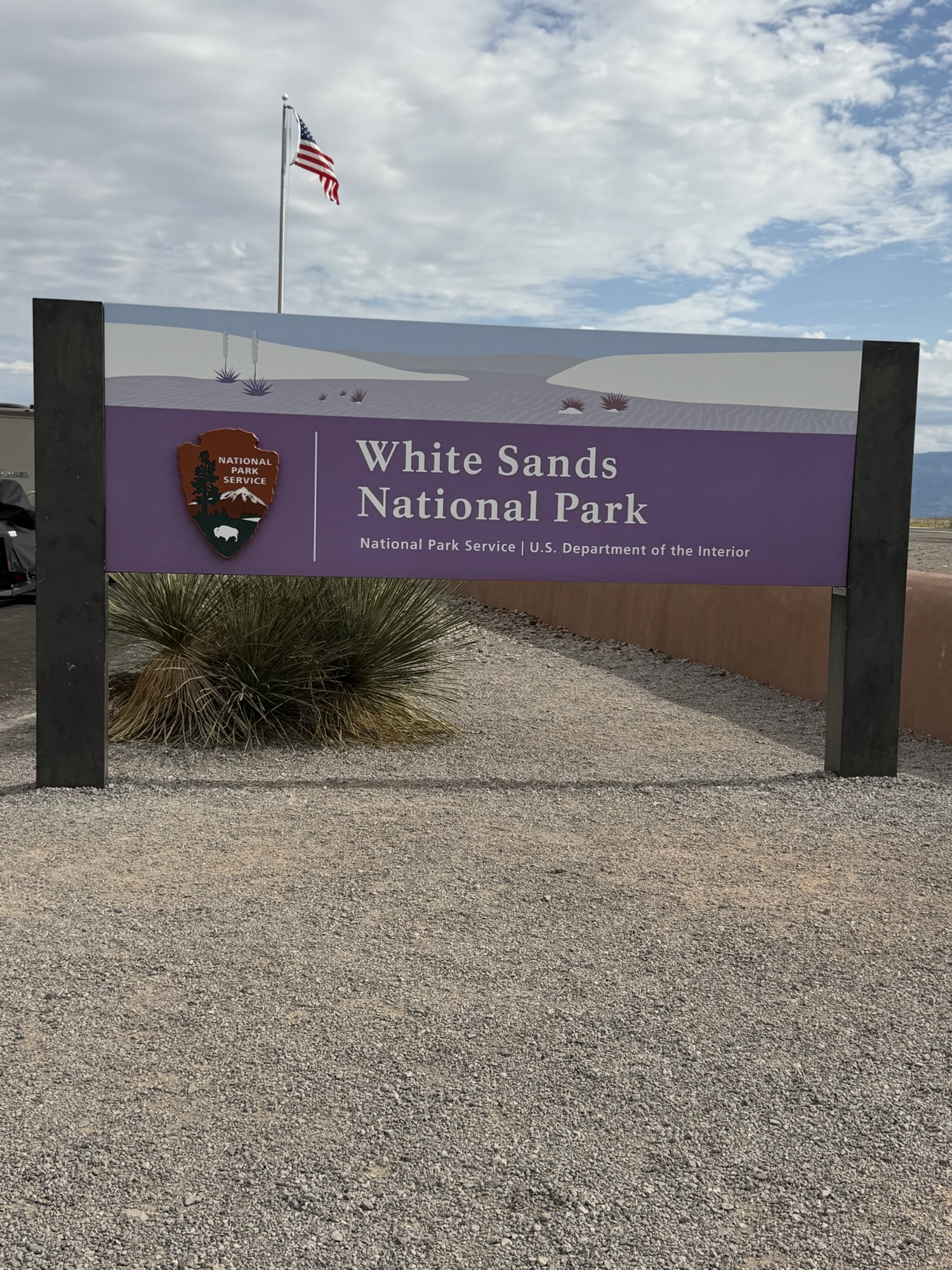
We checked another national park off our list at White Sands National Park. Meanwhile, back in Arizona, Chiricahua received its national park designation on October 20. Apparently, just as we shorten our list, someone finds a way to lengthen it!
I’ll admit that White Sands did not impress me quite as much as I expected.
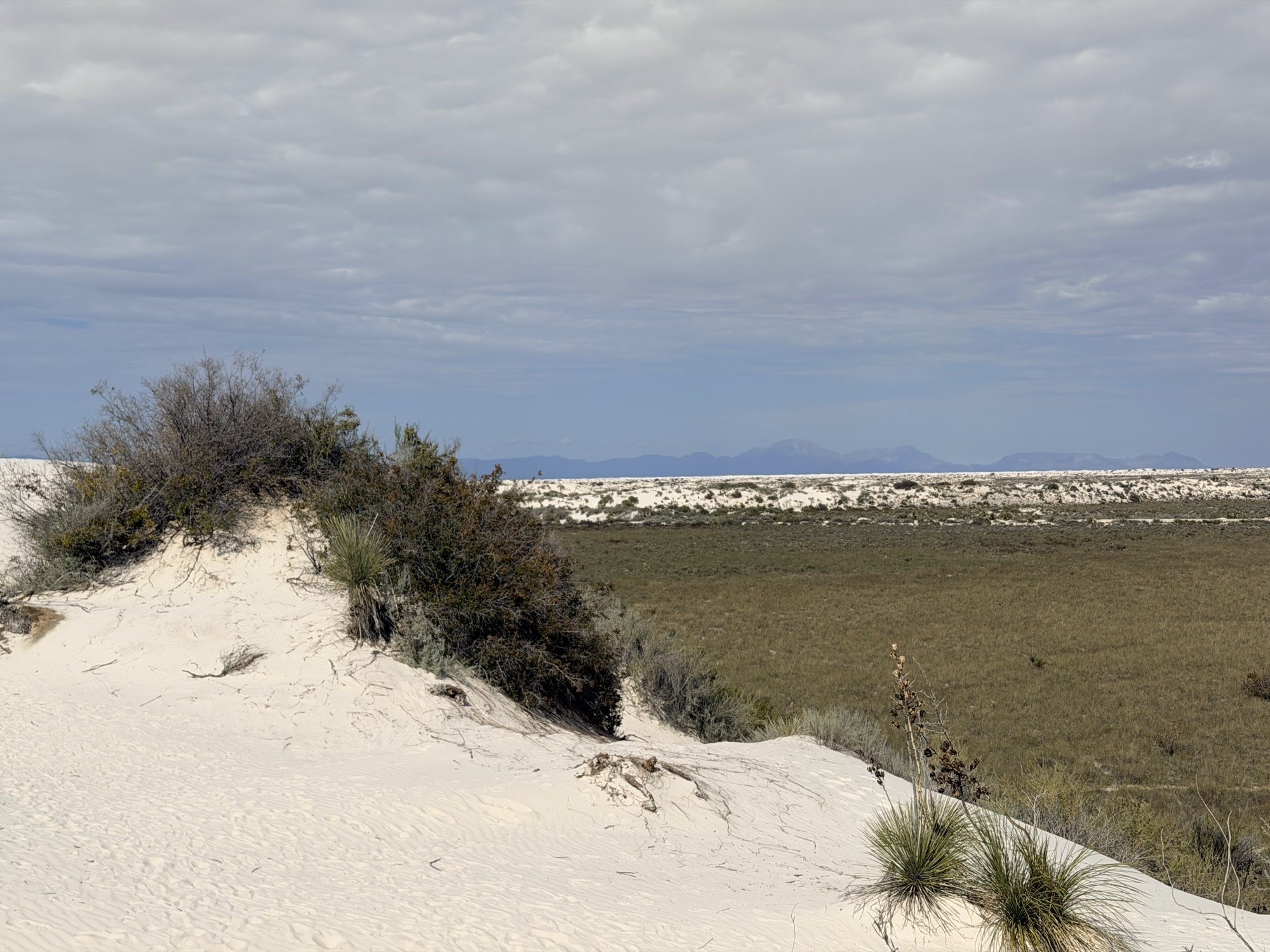
The bright gypsum dunes are certainly unusual, but I found myself comparing them with the dunes along Lake Michigan at Indiana Dunes National Park and Sleeping Bear Dunes National Lakeshore. Perhaps it is the combination of water and sand that appeals to me most. Give me a towering dune with a great water beyond it, and I am a happy girl.
What did capture my attention at White Sands was the history beneath our feet.
The park preserves an extraordinary collection of fossilized human and Ice Age animal footprints. Research dates some human tracks to approximately 21,000–23,000 years ago, making them important evidence of people living in the Americas during the last Ice Age. Mammoths, giant ground sloths, ancient camels, and other animals also left their tracks here.
These footprints preserve something different from an arrowhead or a fragment of pottery: the traces of living creatures moving across a landscape. People walking, animals passing, and brief moments of ordinary life recorded long before any of us could have imagined discovering them.
The original track sites are not accessible to visitors, but learning about them gave me an entirely different appreciation for the park.
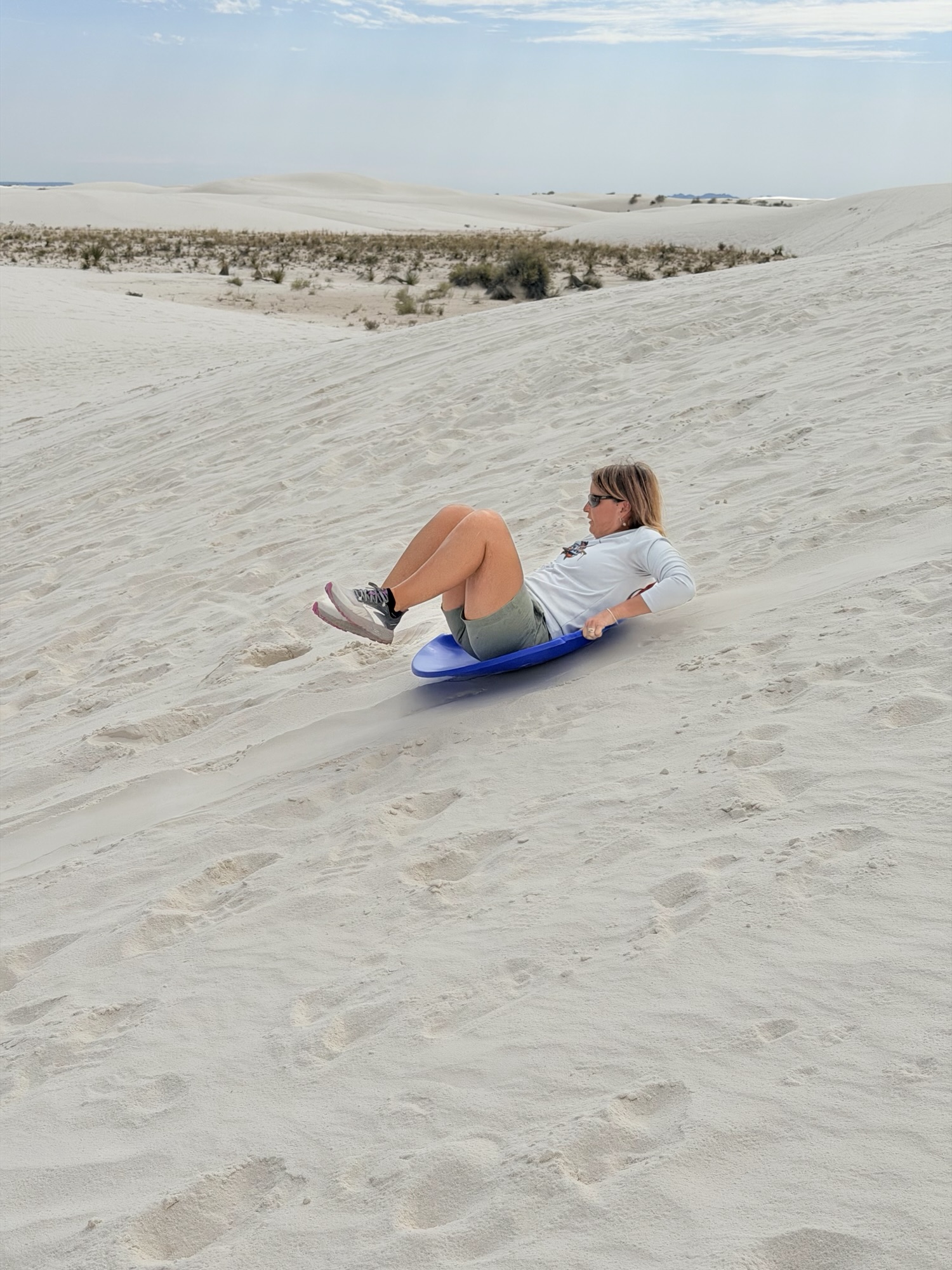
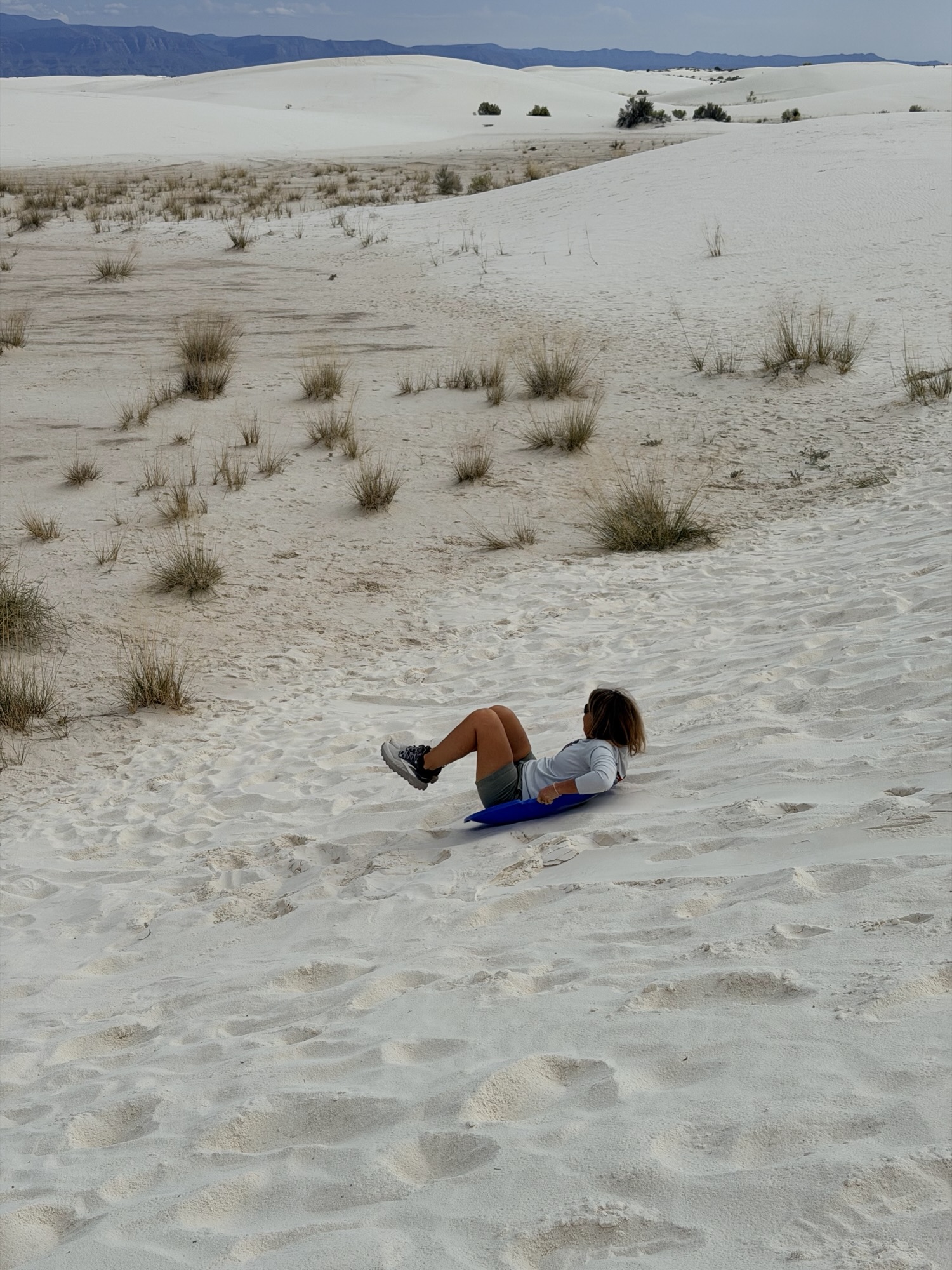
We also tried sledding down the dunes.
Let’s just say we were in no danger of receiving a speeding ticket.
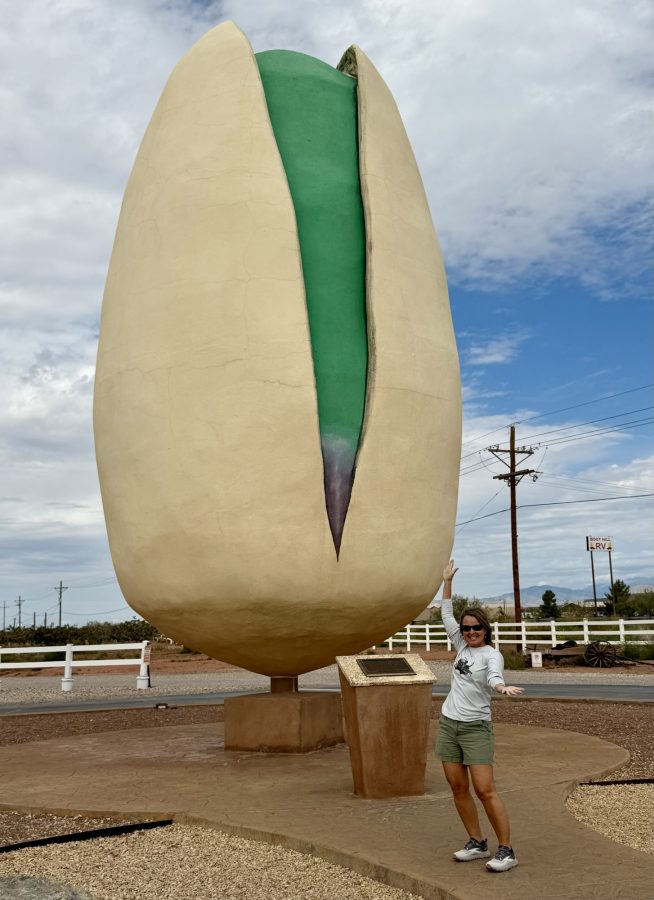
After seeing numerous signs advertising the world’s largest pistachio, we obviously had to investigate PistachioLand.
A giant roadside nut? How could we possibly drive past that?
We bought several bags of flavored pistachios, including spicy pickled and vanilla bourbon glazed. Dirk and Brie had brought us pistachios from Turkey that were among the best roasted-and-salted ones we have ever tasted, so a holiday pistachio taste-off is now officially on the family agenda.
There was also pistachio ice cream, which was outstanding.
Research is research. Sometimes you simply have to be thorough.
Back Underground at Carlsbad Caverns
Our weather delay in Tucson had one unfortunate financial consequence. Our Carlsbad campground would not adjust our prepaid reservation, so we lost the first night and arrived a day late for our three-night booking.
A disappointing response, especially after the hospitality we had experienced at the Tucson KOA, but we still felt we had made the right decision.
It had been more than 15 years since we last visited Carlsbad Caverns National Park with the kids. This time, we were particularly interested in returning for the evening bat flight.
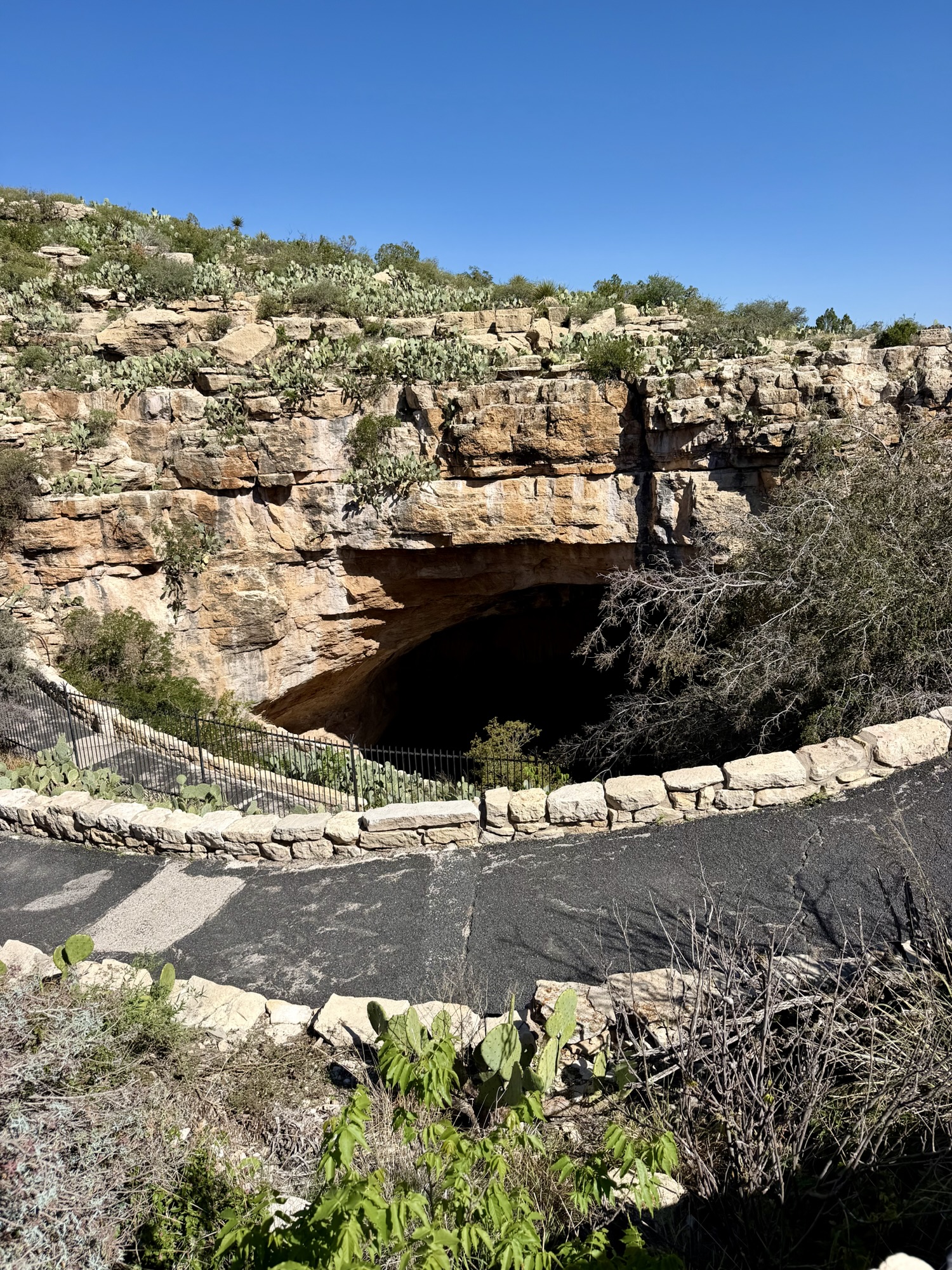
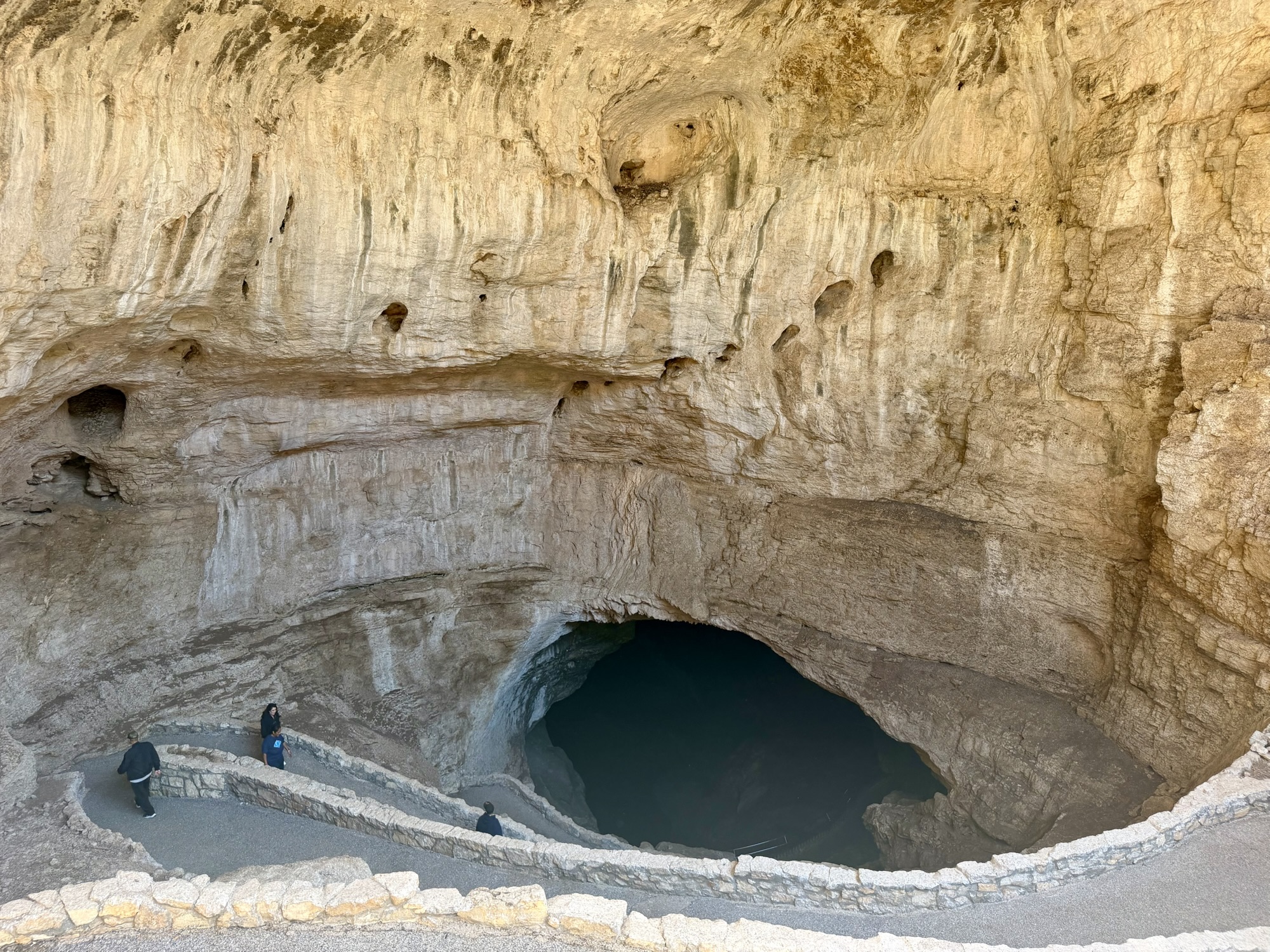
We had secured our timed entry several days earlier and chose to walk down the steep switchbacks through the natural entrance. Descending into the enormous cavern is an experience all its own. Daylight gradually disappears, the air changes, and suddenly you are surrounded by a world that feels completely separate from the one above.
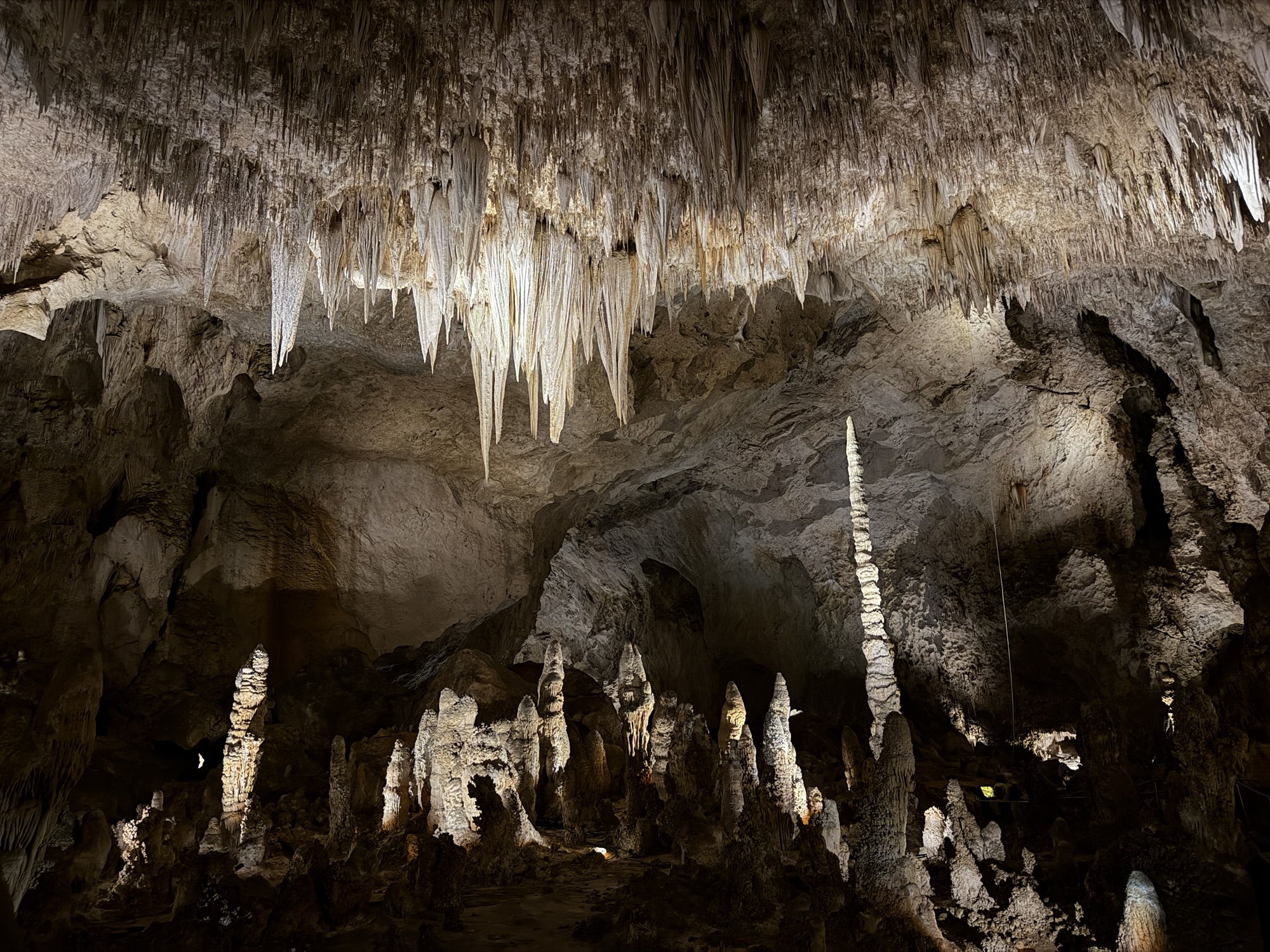
We spent several hours wandering among stalactites, stalagmites, columns, draperies, and other formations decorating the ceilings, walls, and floors of the massive chambers.
Nature has clearly been very busy down there over the last thousands of years.
At 5:30 that evening, we joined about 150 other visitors at the Bat Flight Amphitheater. A ranger shared stories about cave explorer Jim White, the Brazilian free-tailed bats, and their seasonal migration to Mexico while cave swallows swooped overhead.
The program is an electronics-free experience: no cameras, phones, or filming during the bat flight. For once, everyone simply sat and watched.
Because it was late in the season, the ranger prepared us for a smaller emergence than the enormous summer flights. We were told to expect perhaps 20,000–30,000 bats rather than the hundreds of thousands that might emerge earlier in the year.
As dusk settled and the swallows returned to the cave, the bats began coming out.
They spiraled upward in a counterclockwise flow, then disappeared into the darkening sky to hunt for insects. The emergence continued for more than 45 minutes. Sitting quietly, watching thousands of tiny silhouettes pour out of the cave, was well worth the return visit.
Eventually, I began to get chilled. Mark suggested we quietly make our way out, and we tiptoed toward the walkway before heading to the parking lot, still glancing overhead for the last shapes we could distinguish against the evening sky.
Dinner afterward was at Lucky Bull Grill. The dining room held a mix of families and people who appeared to have come straight from a long day working in the area’s construction and oil-and-gas industries.
Our dinner was fairly average bar-and-grill fare, although the menu offered some variety.
I ordered catfish.
In New Mexico.
Perhaps that tells you everything you need to know about my decision-making that evening.
Choosin’ Texas
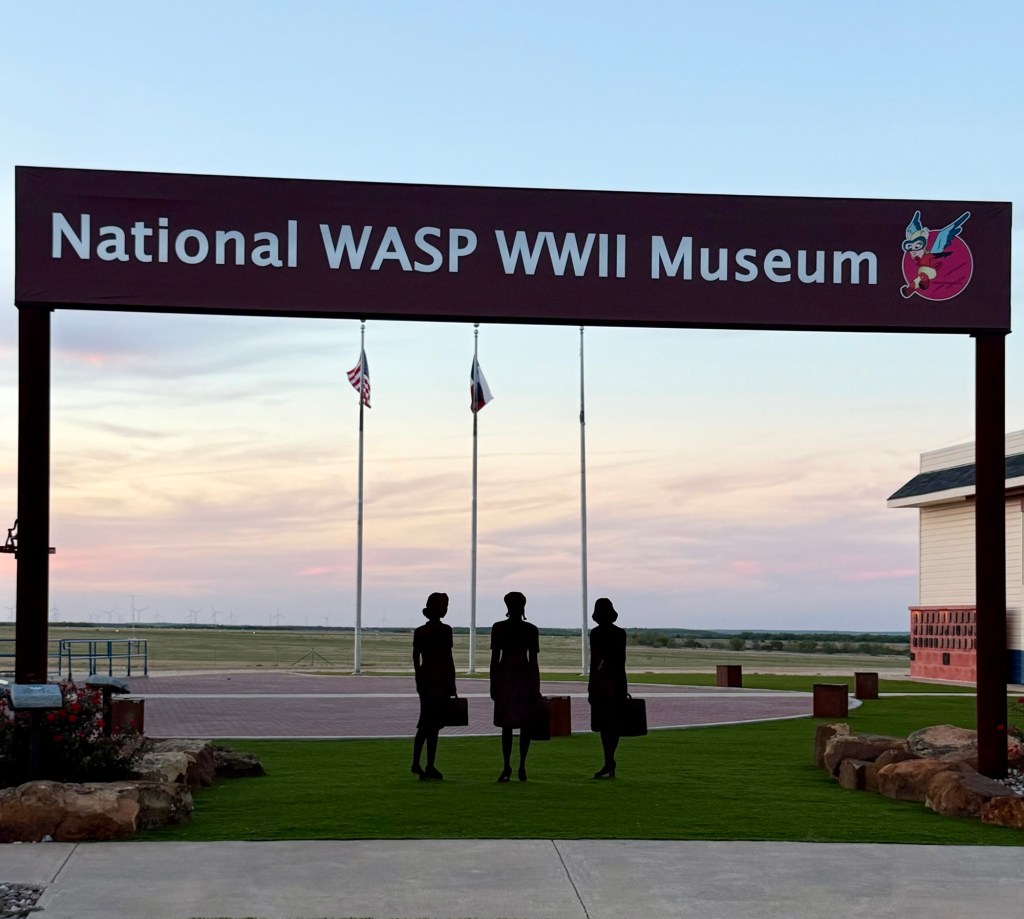
Our next stop brought us to Sweetwater, Texas, for an overnight stay in the parking lot of the National WASP WWII Museum.
We arrived with only 45 minutes until closing, but the woman welcoming visitors graciously encouraged us to take a quick look around. She offered to answer our questions, although there would not be enough time to visit the aircraft in the hangar.
I knew very little about the Women Airforce Service Pilots before this visit. What an extraordinary group of women!
The wartime training program graduated 1,074 pilots; together with the original 28 members of the Women’s Auxiliary Ferrying Squadron, 1,102 women served as WASP. They flew military aircraft as civilians, helping free male pilots for combat assignments. Their work included ferrying aircraft, test flights, and towing targets for live gunnery practice.
That last assignment alone would have given me considerable pause.
Thirty-eight women died serving in the program. Learning about their work, courage, and sacrifices made our short visit feel much too short.
The museum shop also had a wonderful selection of books about these remarkable pilots. This was one of those stops where I arrived expecting a convenient overnight location and left grateful to have learned something important.
A Few More Stops Until Home
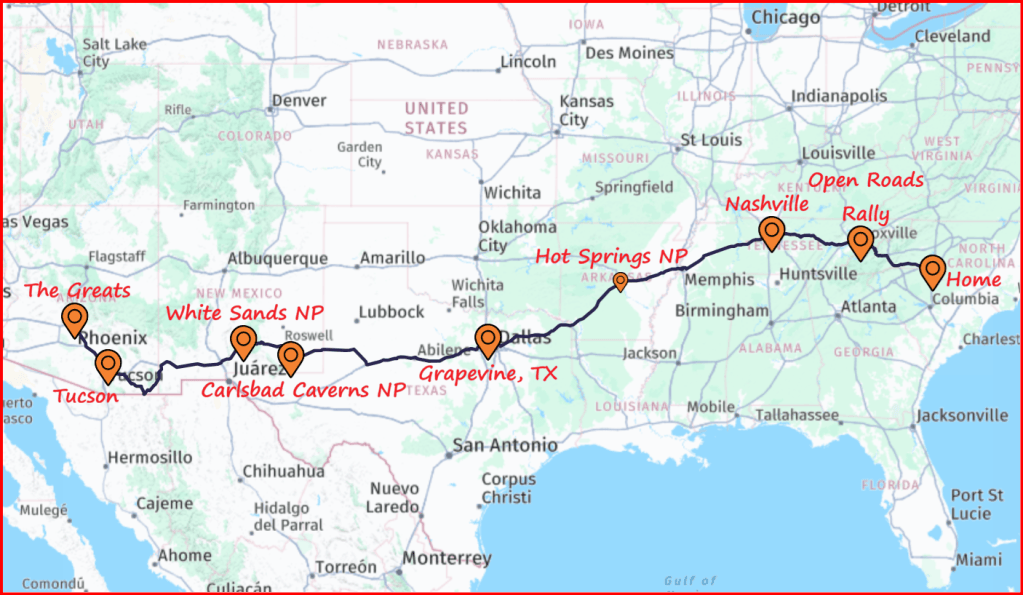
From Sweetwater, we are heading to Grapevine, Texas, for a few days before continuing to Arkansas, where I am hoping for a soak at Hot Springs National Park.
Then it is on to one of our favorite cities, Nashville, to catch up with friends, followed by the Open Roads Rally in Sevierville, Tennessee.
After that, home!
We still have a few adventures ahead, but the final stretch is coming into view.


Leave a Reply