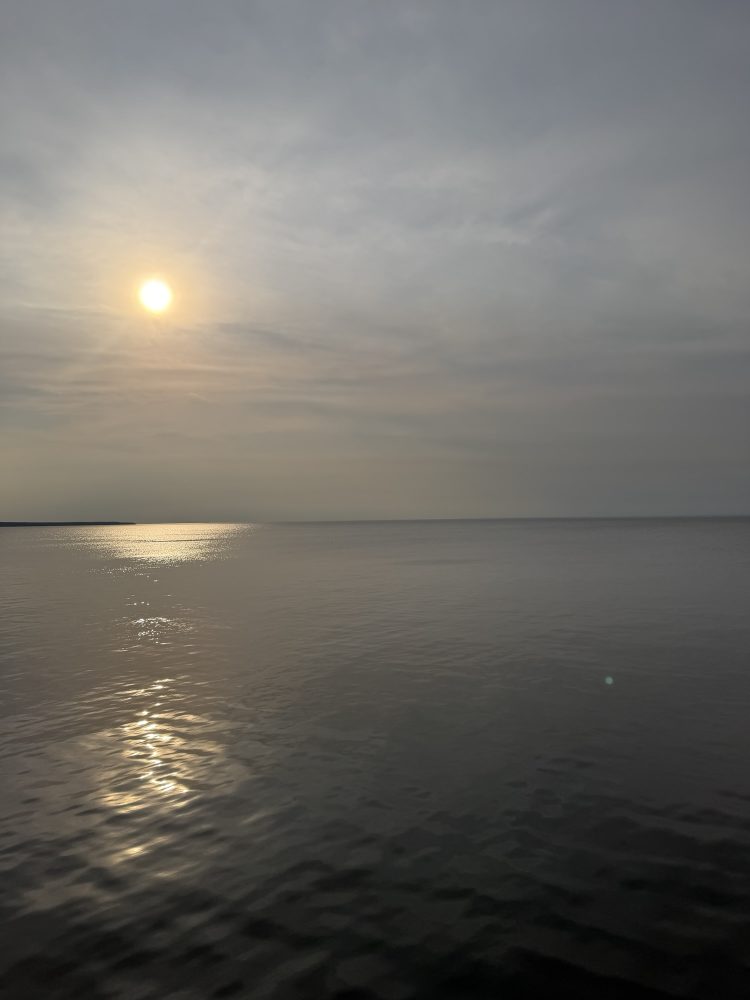
We spent the next week based in Ishpeming, Michigan, using this small Upper Peninsula town as our launching point for adventures in nearly every direction. Some days we stayed within an hour of the campground. On others, we traveled more than two hours north into the Keweenaw Peninsula and Michigan’s historic Copper Country.
Our home for the week was Country Village RV Park, a quaint and peaceful campground that proved perfect for catching up with friends. The staff was welcoming and attentive, and the other camping groups were friendly.
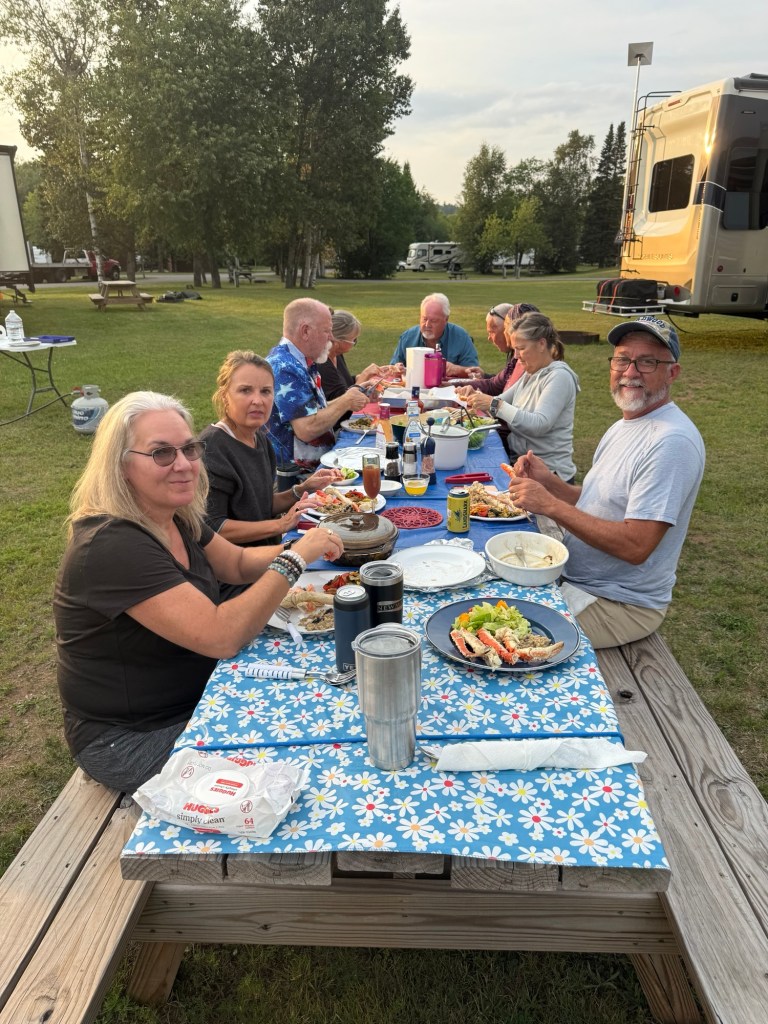
Our five rigs backed up to a large open space where we assembled picnic tables, fire rings, camp chairs, and a pop-up tent—essentially creating our own little neighborhood. We prepared meals together, gathered around the fire, and spent most evenings talking and laughing until it was time to wander back to our respective homes on wheels.
Welcoming More “SOB” Friends
A new couple, Peg and Mark, joined our group this week. Peg and Liz have been friends since childhood, and Peg and Mark recently purchased a Newmar Super C. They currently use it primarily for traveling between their homes in Michigan and Florida, but Liz and Mike are encouraging them to become a little more adventurous when their busy schedules allow.
Being fellow “Newmarians,” Mark and I immediately had a connection.
Among our group of DRV friends, we are lightheartedly referred to as their “SOB friends”—meaning Some Other Brand. Needless to say, we were thrilled when Peg and Mark rolled in with another Newmar and strengthened our side!
We spent time sharing information about Newmar rallies, AIM rallies, trips to Nappanee, and the quirks and features of traveling in a Super C. It was an easy fit, and they quickly became part of our campground circle.
Gathering Around the Table
As usual, some of our best moments happened around the picnic tables.
Everyone contributed from their stashes of staples, meats, fresh vegetables, appetizers, and desserts. One evening’s menu included boiled king crab legs, broiled salmon, sautéed squash and zucchini, stir-fried onions and peppers, mushroom Parmesan risotto, a garden salad, and a chocolate sampler that included Kentucky bourbon balls.
Not exactly roughing it, are we?
One morning, several Blackstone griddles were fired up for a campground breakfast of bacon, sausage, cheesy eggs, pork hash browns, buttered toast with several homemade jams and jellies, and fresh fruit.
Another evening, we enjoyed chicken pasta prepared by Liz and Mike, an appetizer of mostly champagne bubbles from Sandra and David, and squash and zucchini from us—partly because we still had a few left and they needed to be eaten. Carolyn and Scott had flown home for a grandchild’s birthday, while Peg and Mark drove to Wisconsin for a wedding, so our group had become a little smaller by then.
But the most distinctly Upper Peninsula meal of the week was our introduction to the local pasty.
A Proper U.P. Pasty
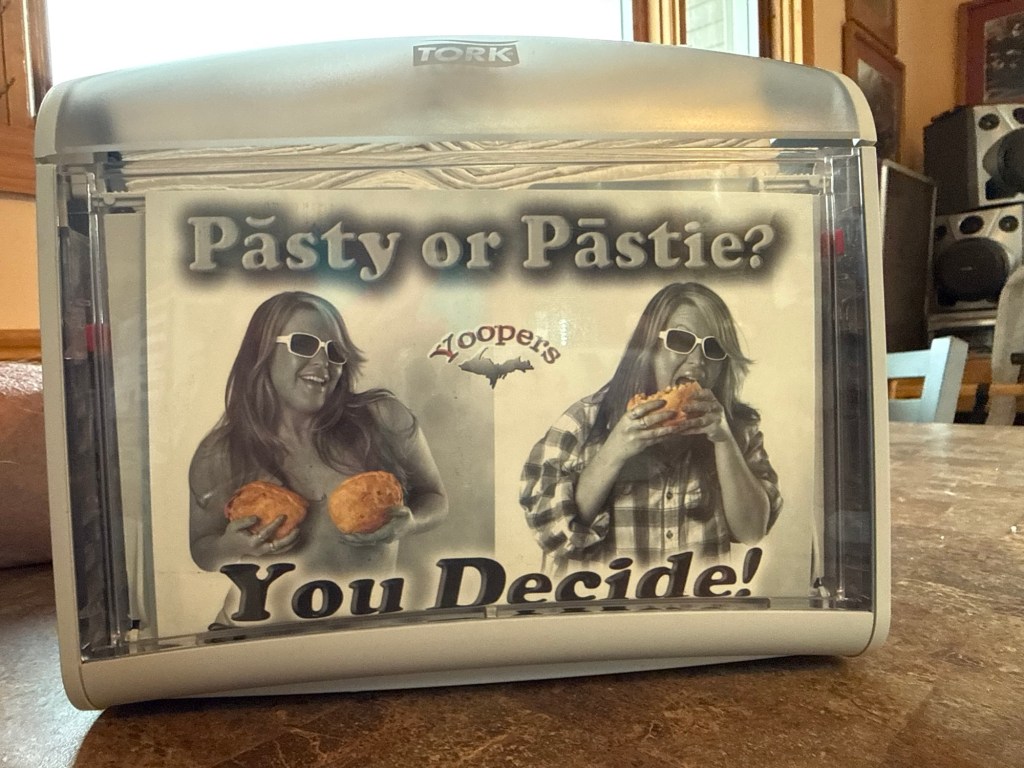
Pasties—pronounced “PASS-tees,” not “PASTE-ees”—as Peg and Mark hilariously explained the pronunciation definition differences – are one of Michigan’s most iconic regional foods.
During the copper and iron mining booms of the late 1800s and early 1900s, immigrants from more than 30 nationalities settled throughout the Upper Peninsula. Among them were experienced copper miners from Cornwall, England, who brought with them their traditional handheld, crust-wrapped meals.
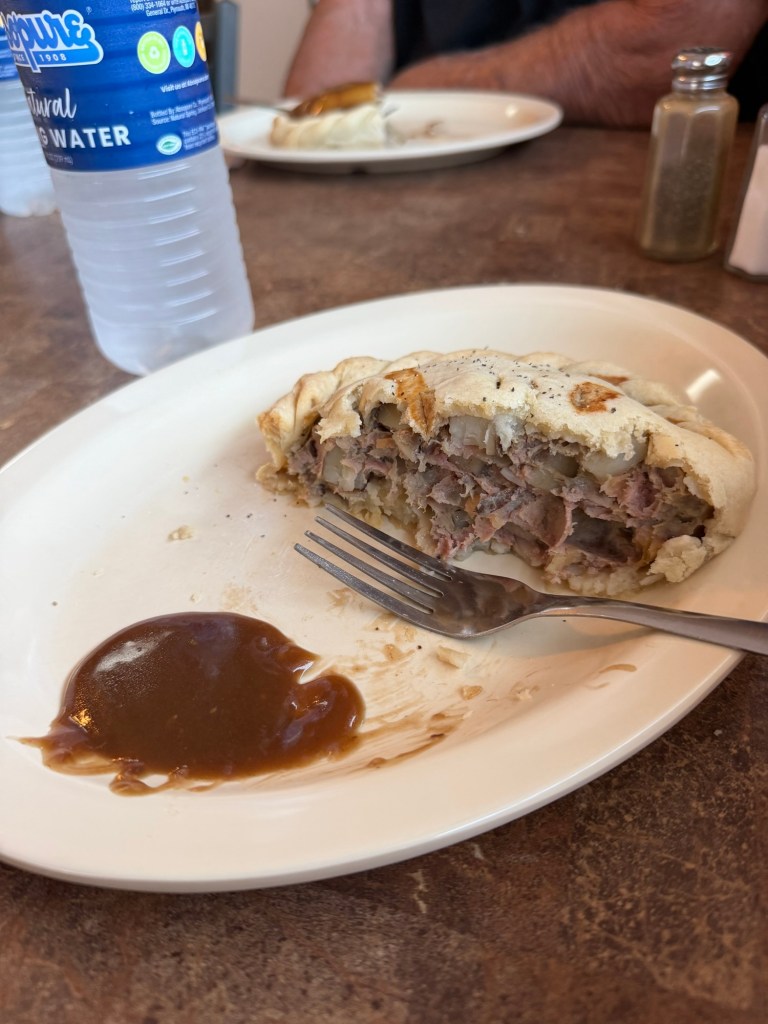
The thick pastry held meat, potatoes, onions, and other vegetables, creating a filling meal that miners could carry underground. More than a century later, the pasty remains deeply connected to the culture and history of Michigan’s U.P.
We picked up ours from Iron Town Pasties, a tiny, hole-in-the-wall restaurant with only two tables inside. Their menu offered several varieties, including traditional beef, spicy jalapeño beef, chicken pot pie, vegan vegetable with tofu, spicy vegan, vegetable with cheese, and a bierock filled with ground beef, cabbage, jalapeños, banana peppers, cream cheese, and spices soaked in beer overnight.
They also offered apple, cherry, blueberry, peach, and raspberry dessert pasties.
We had envisioned conducting an official tasting of several different varieties. Instead, every one of us ordered the traditional beef pasty with brown gravy.
So much for our highly scientific taste test.
The pasties were enormous, filling, and very good. We were too stuffed for dessert, but that did not prevent us from ordering a few fruit pasties to take home for later.
Pictured Rocks from the Water
Our first major excursion took us east to Munising for a sunset cruise along Pictured Rocks National Lakeshore, one of only four national lakeshores managed by the National Park Service.
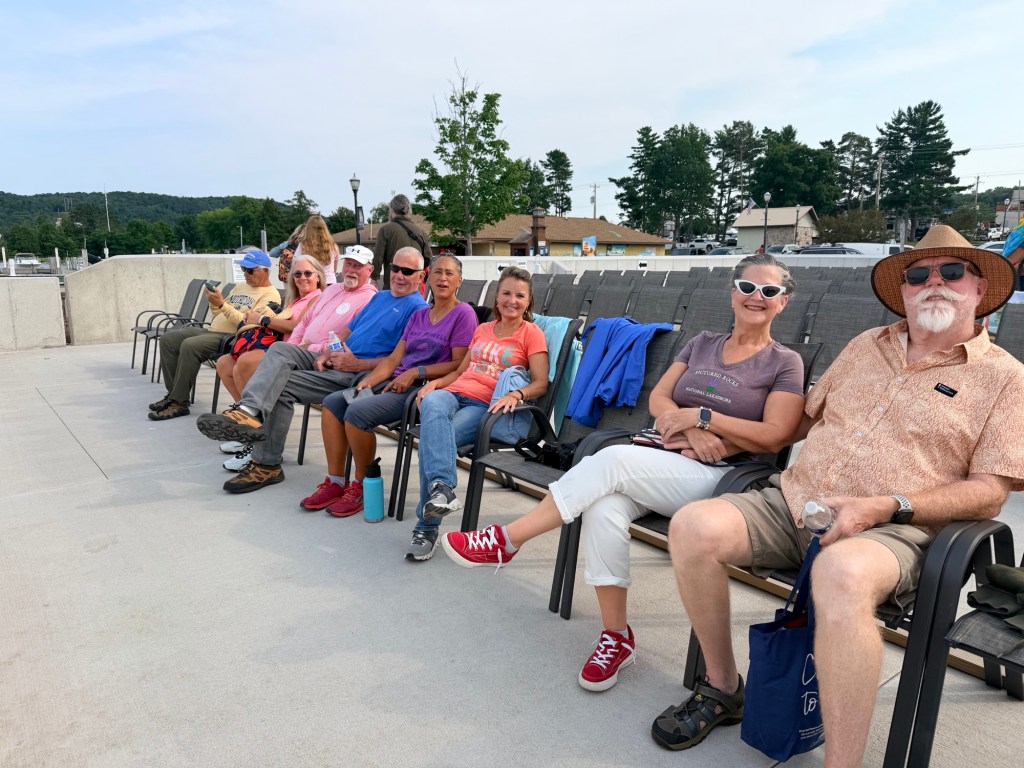
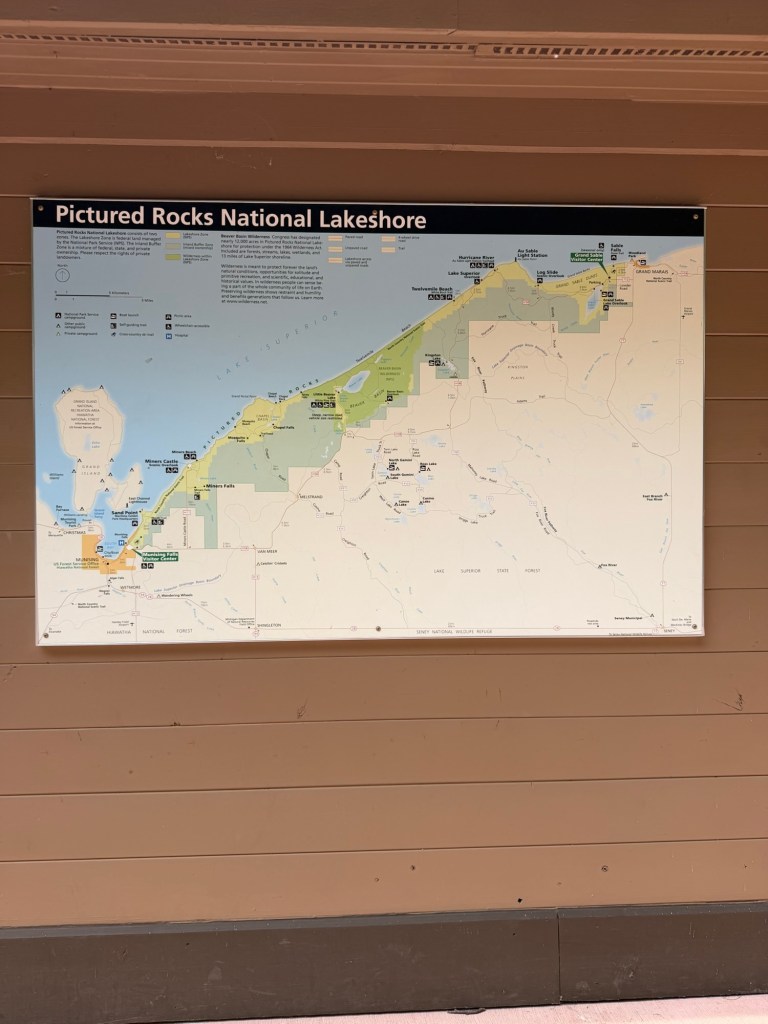
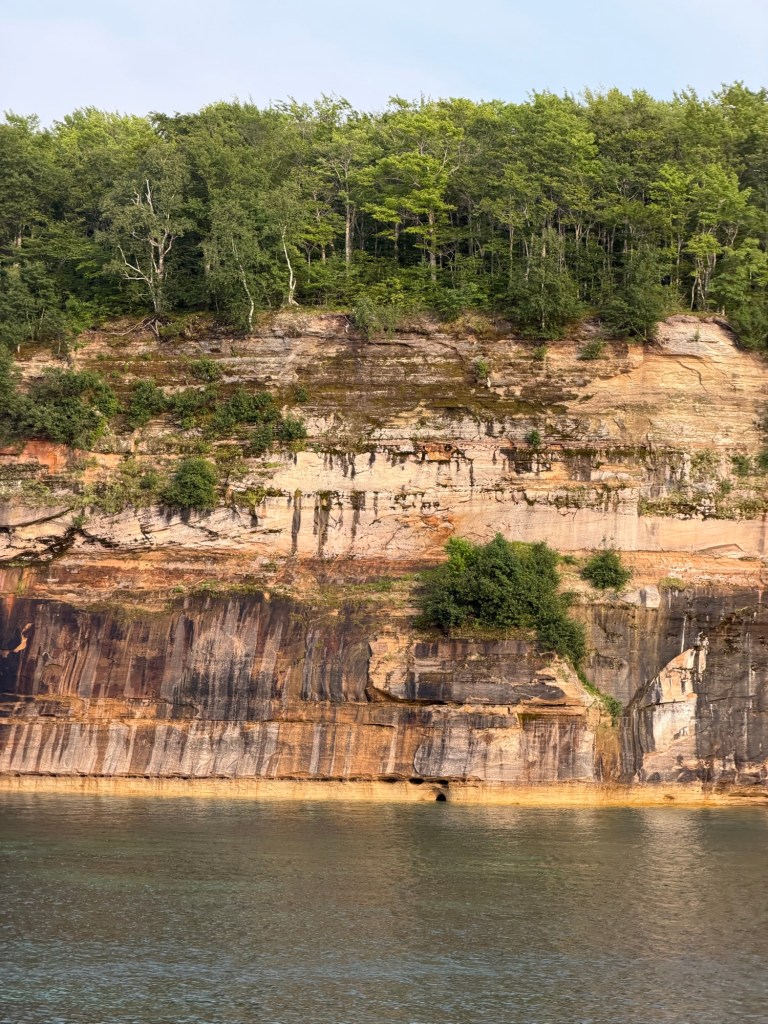
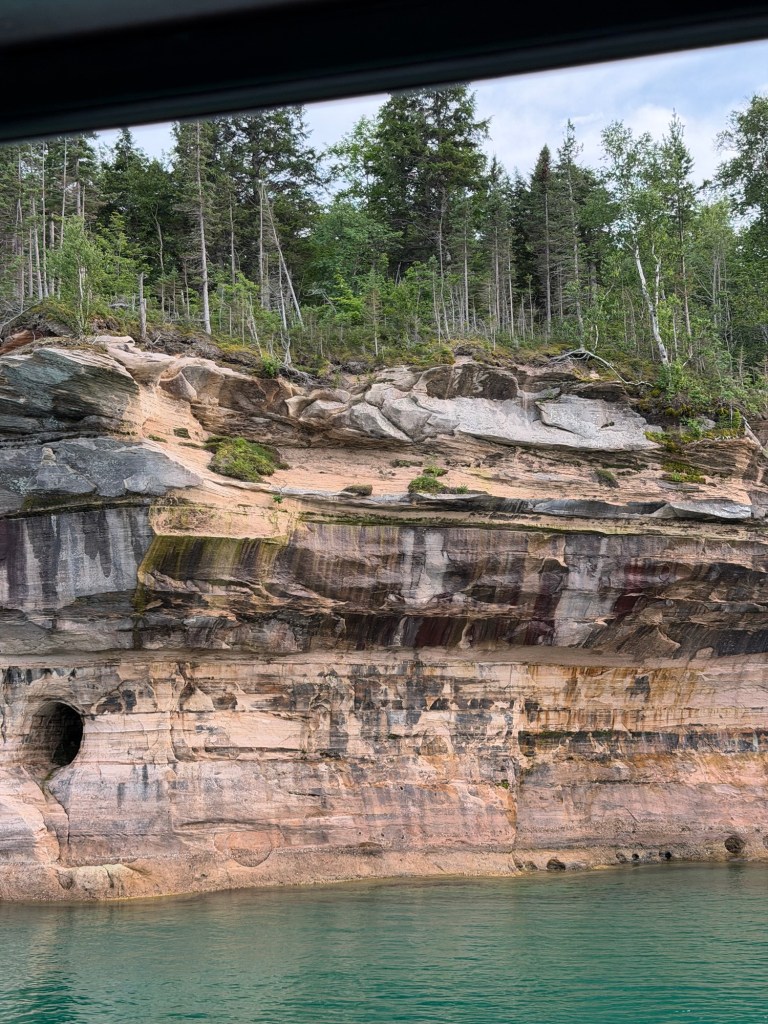
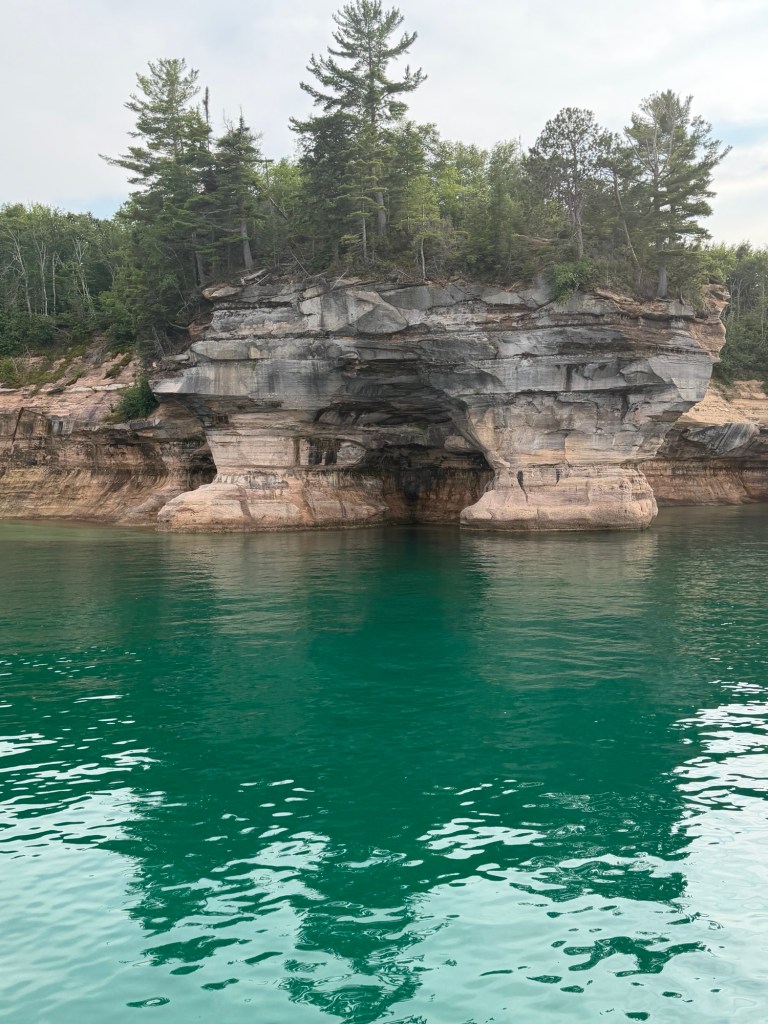
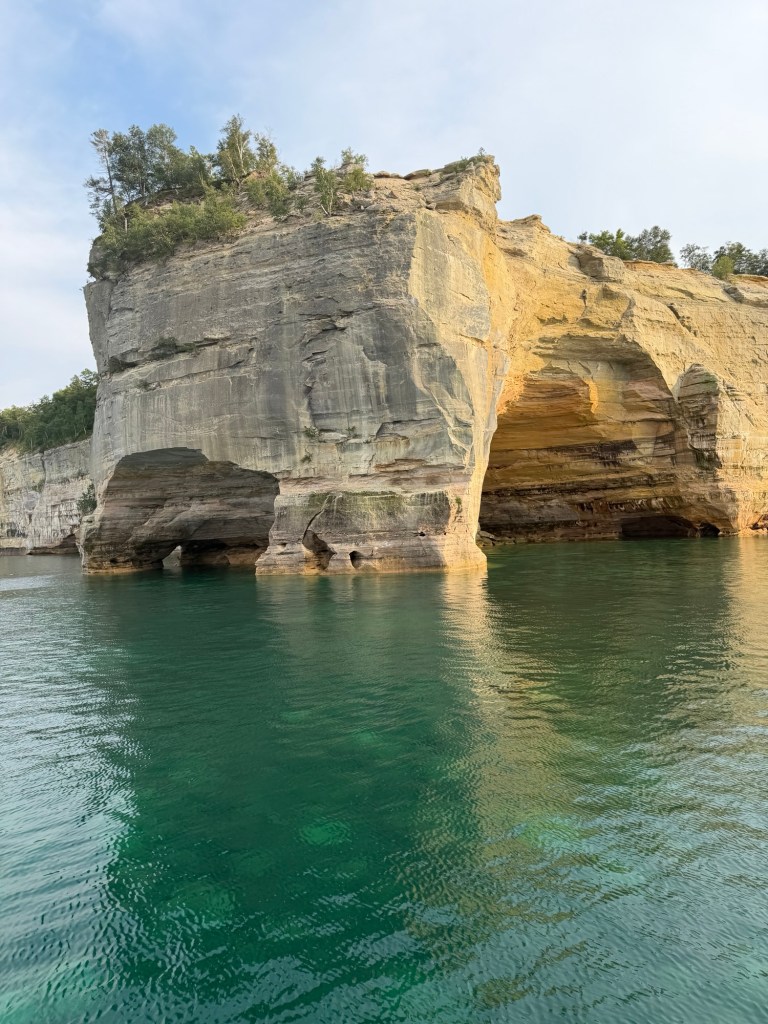
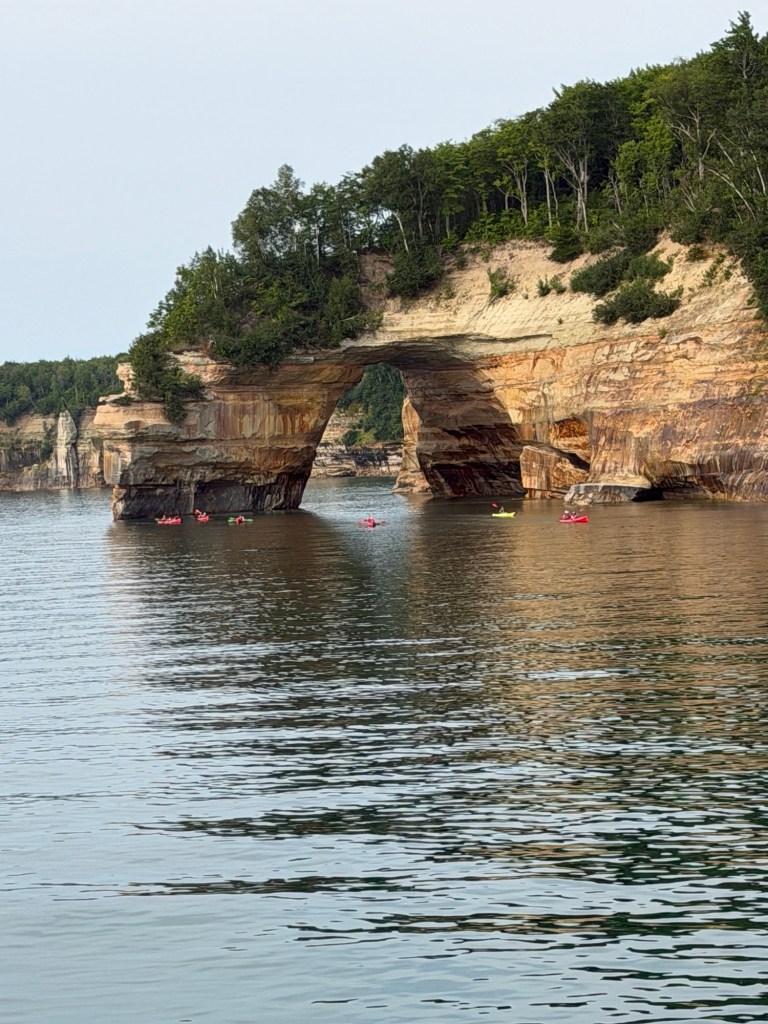
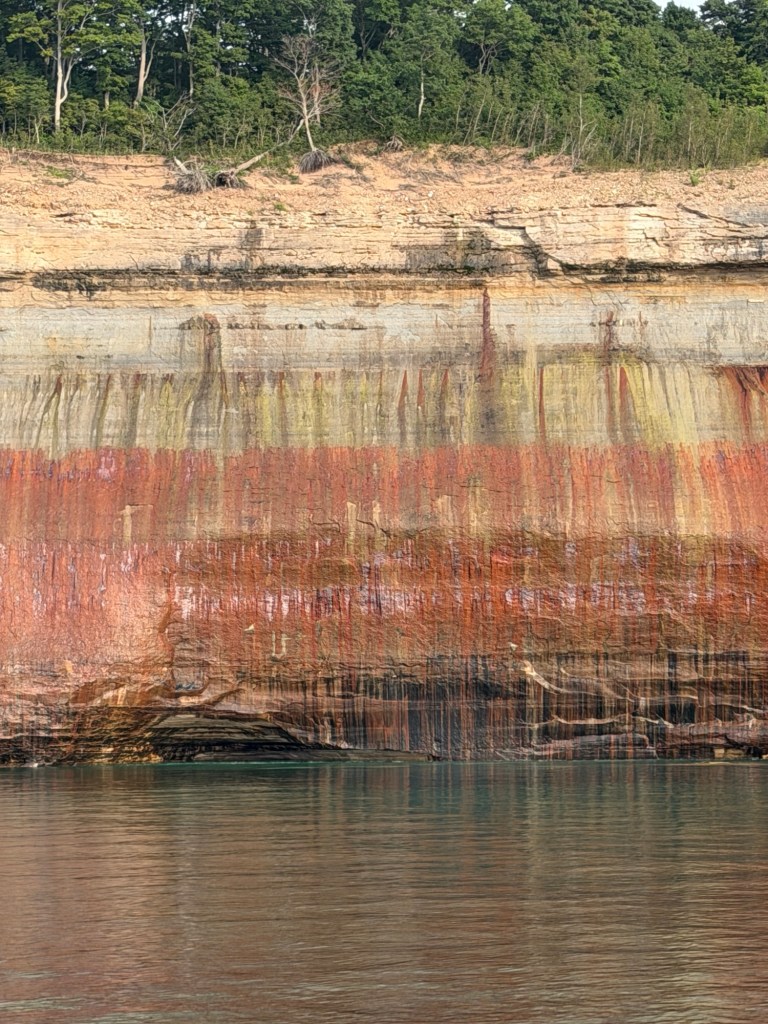
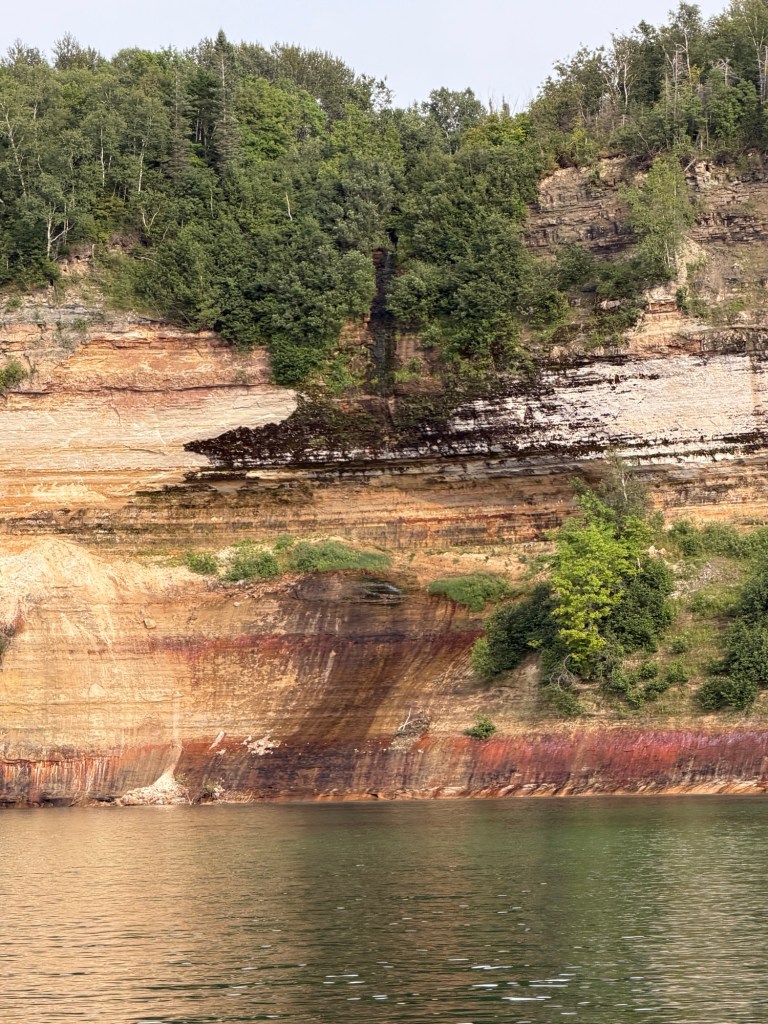
The park gets its name from the colorful mineral stains that streak its weather-sculpted sandstone cliffs. Rising 50 to 200 feet above Lake Superior, the cliffs extend along approximately 15 miles of shoreline.
Groundwater seeps through cracks in the rock, carrying minerals that leave behind streaks of red and orange from iron, blue and green from copper, brown and black from manganese, and white from limonite.
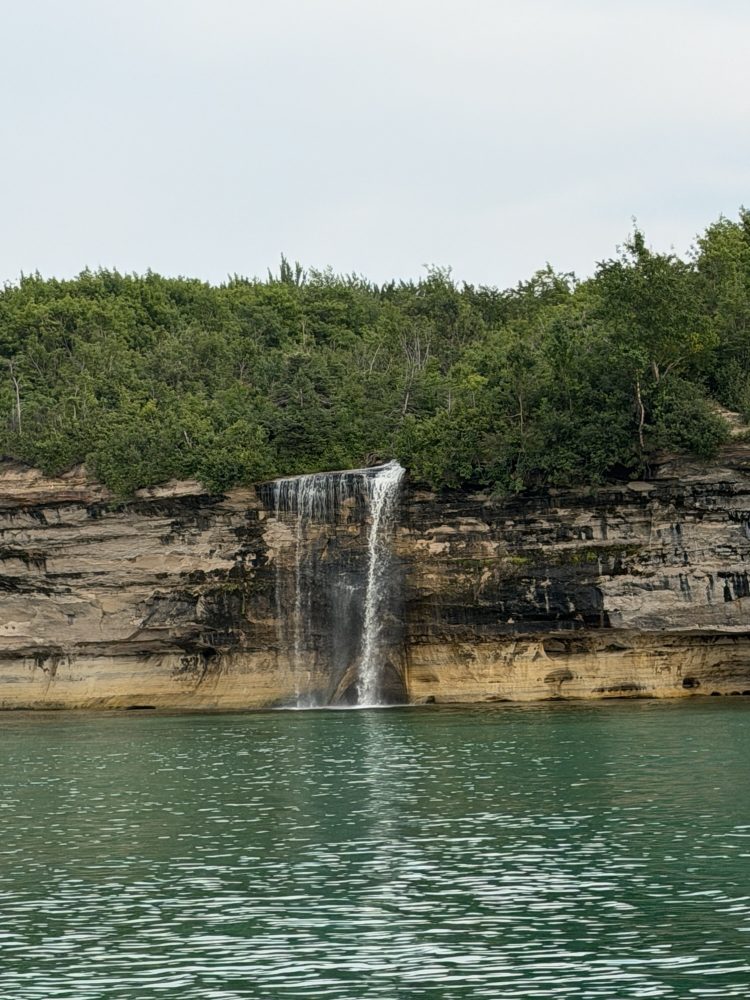
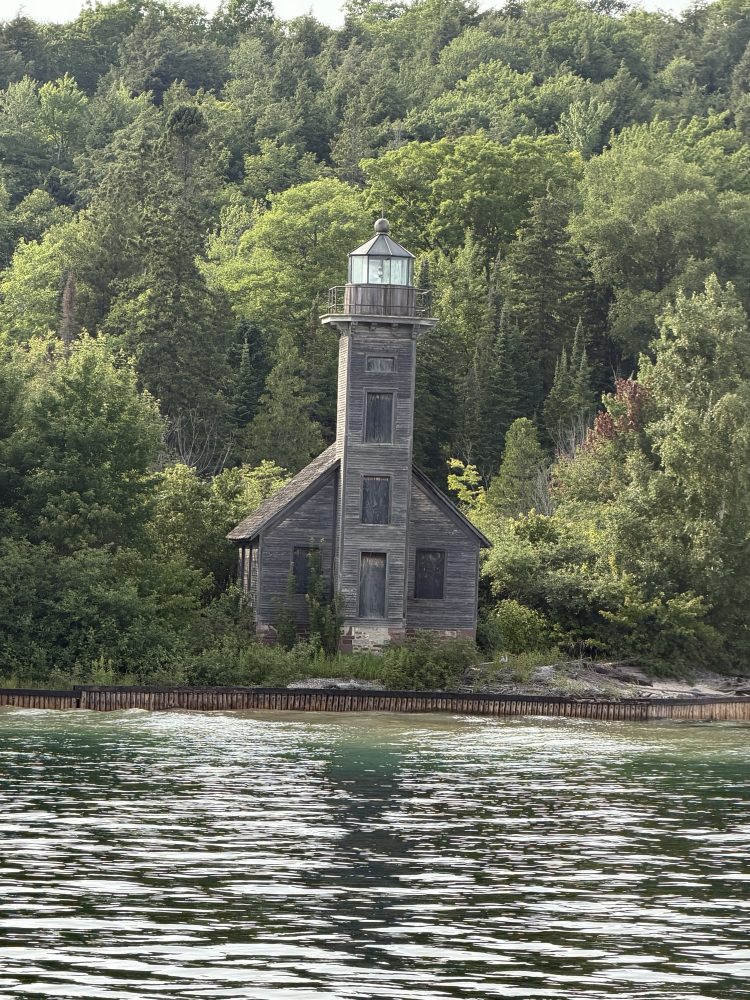
Seeing the cliffs from the water gave us an entirely different perspective. In addition to the mineral-streaked rock formations, we passed sandy beaches, waterfalls, dunes, and lighthouses along the Lake Superior shoreline.
About 30 minutes into our drive back to the campground, I suddenly realized I did not have my phone.
As Peg texted the others to let them know we were turning around to see if anyone had turned it in, Carolyn replied that she had found a phone in one of the bathroom stalls and taken it to the gift shop. She said it was in a leather case but that she had not opened it.
Of course, it was mine!
Relief washed over me—not only because my phone had been found, but because the case also held my driver’s license, credit cards, and money. Thankfully, the tour boat gift shop remained open until 10:00 p.m., giving us enough time to drive back and retrieve it.
Needless to say, the incident has provided the group with plenty of new material. I continue to receive helpful reminders such as, “Don’t take your phone to the bathroom,” and, “Do you have your phone?” every time we load into the cars.
I have a feeling I will be hearing about the incident and the good-natured ribbing the next time we meet up again!
A Bakery Run Through Copper Country
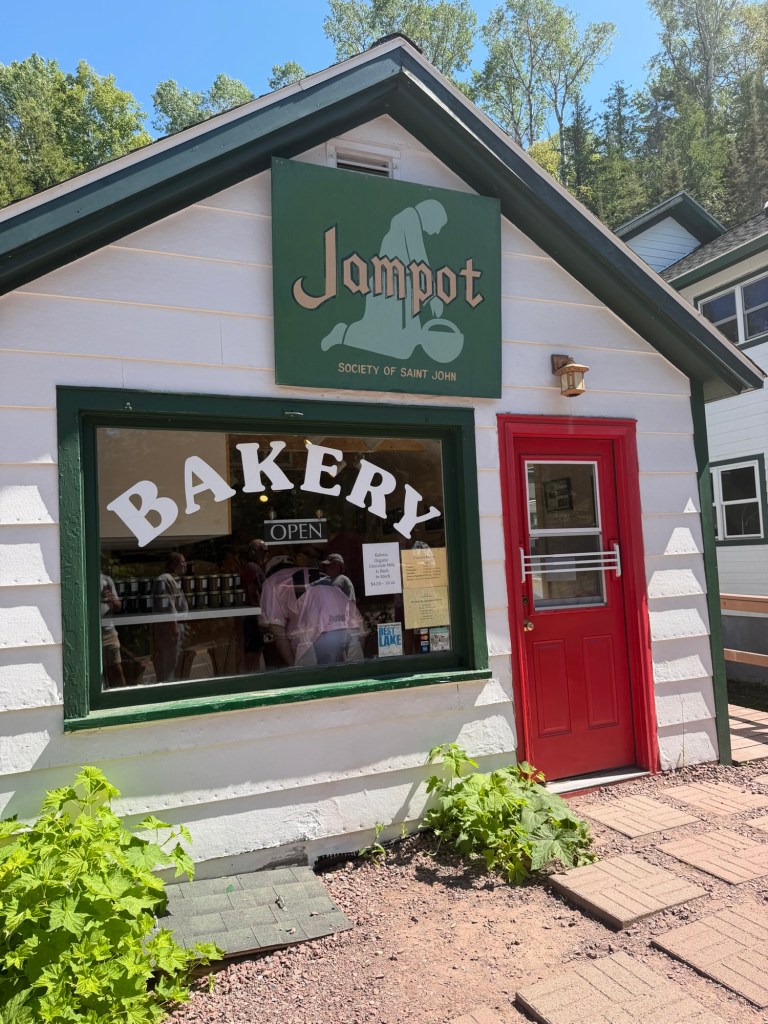
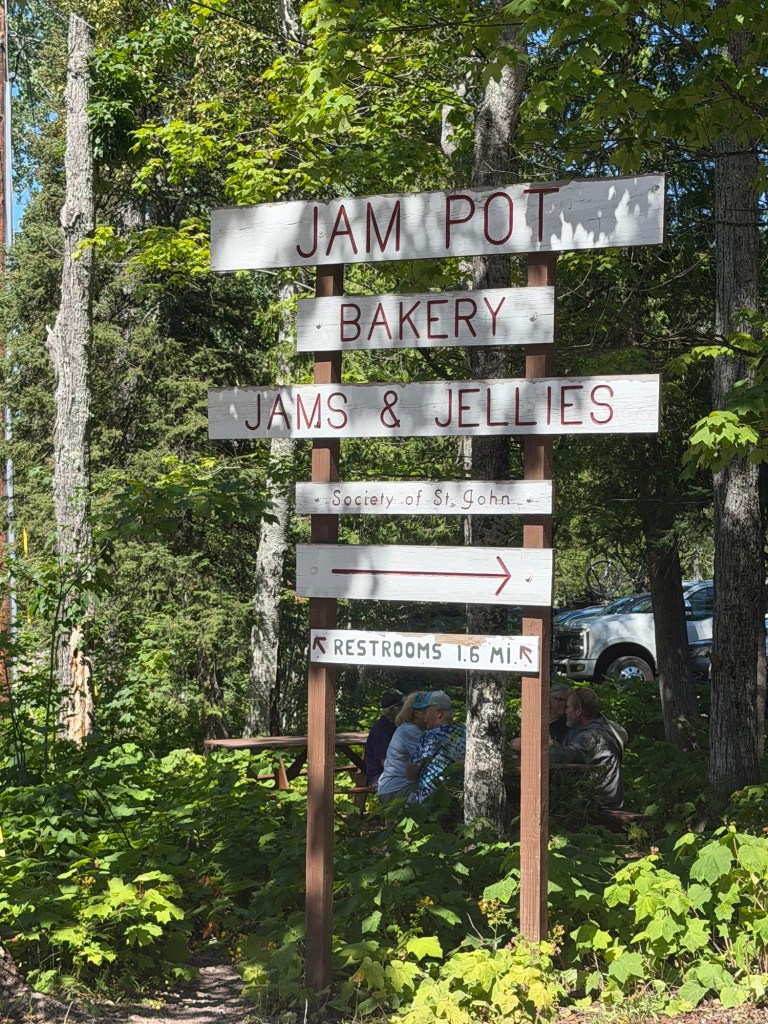
Our next afternoon took us farther north through portions of Keweenaw National Historical Park. After stopping at the National Park Service headquarters in Calumet for an overview of the region—and, of course, park stamps—we continued toward the Jampot.
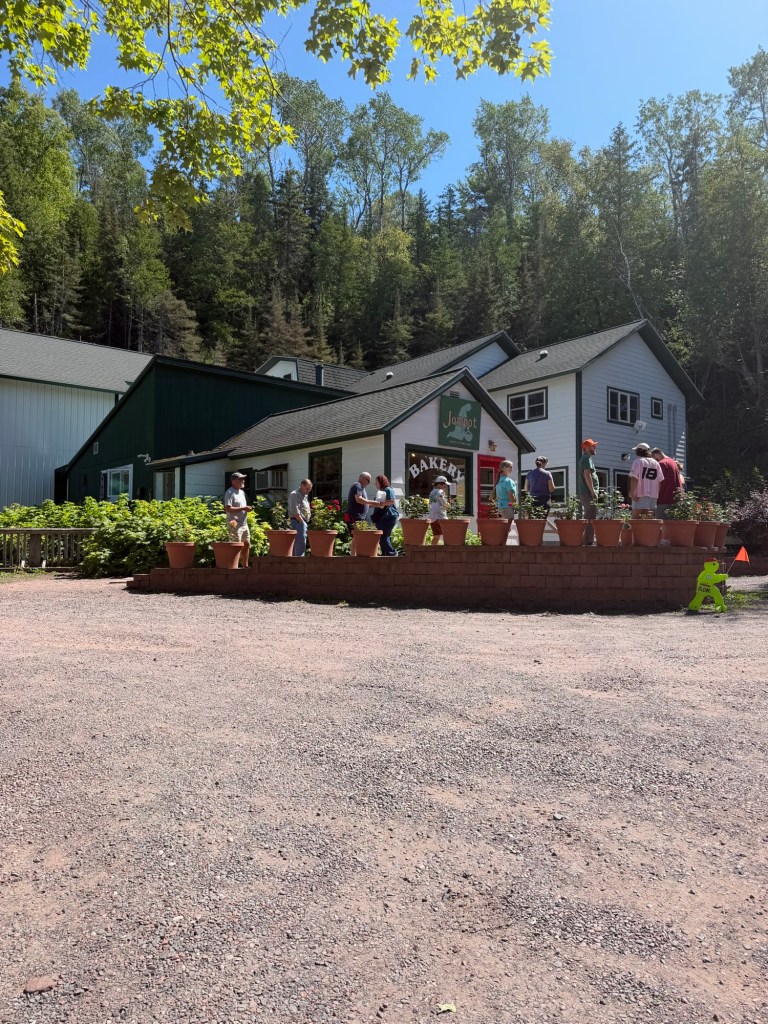
We arrived to find a long line and only about 30 minutes remaining before closing. The monks who operate the tiny bakery kept everything orderly, allowing only four to six customers inside at a time.
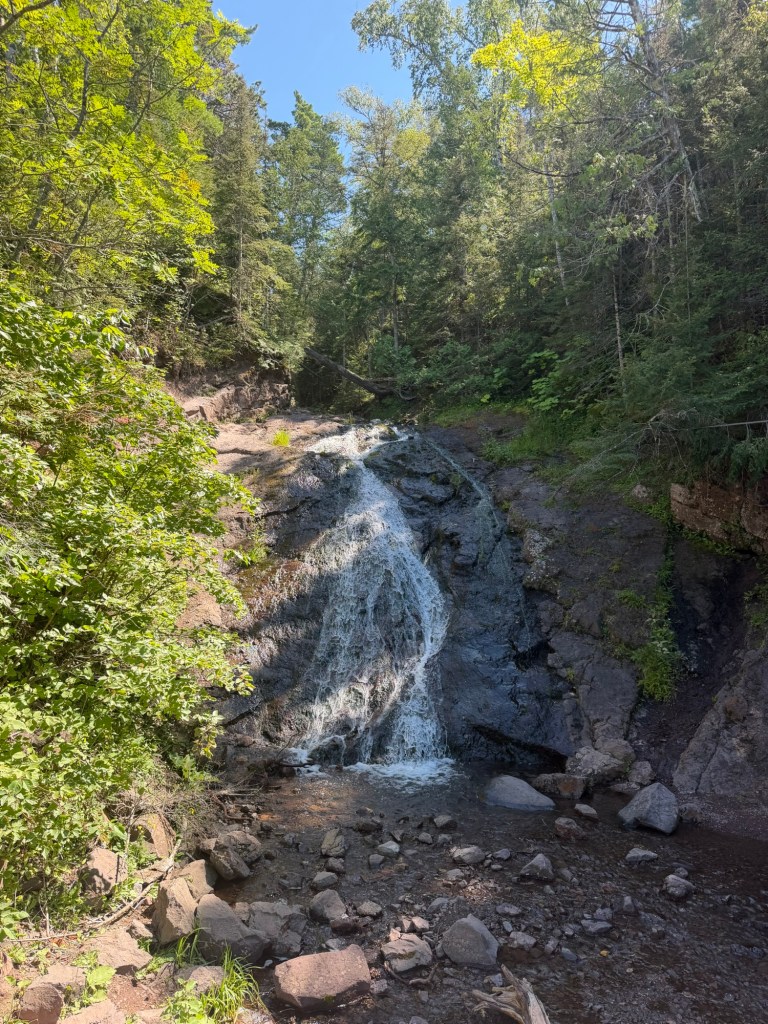
While several of us waited in line, the others walked up the hill to see nearby Jacobs Falls, a gentle cascade along the Eagle River.
Here is an important travel lesson: Do not enter a bakery after skipping lunch.
Mark and I emerged carrying several mini loaves, jars of jelly, cookies, and an enormous muffin. Some friends and family members may eventually receive frozen loaves or jars of the bakery’s famous thimbleberry jelly—assuming we do not eat everything first.
Thimbleberries grow wild throughout the Keweenaw and are known for their distinctive sweet-tart flavor. The delicate red berries are difficult to package and transport, so you rarely find them sold fresh outside the region. Jams and jellies are a much more practical—and delicious—way to enjoy them.
I had mistakenly assumed the Jampot was a bread bakery. I was expecting bagels, croissants, sourdough loaves, and similar savory choices.
It was most definitely a sweets bakery.
We adjusted quickly.
Mark sat outside eating what could only loosely be called lunch: a carrot cake muffin crowned with a generous amount of cream cheese icing. I sampled a cashew caramel and then tackled a mounded oatmeal cookie filled with raisins, currants, cranberries, and chocolate chips.
The following morning, we polished off a ginger-cinnamon mini loaf during our coffee break.
Michigan’s Tallest Waterfall
Once everyone—including Timber—had sampled a few of our bakery purchases, we continued to the Houghton-Douglass Falls and Veterans Memorial Scenic Site.
Located near Lake Linden, the 110-foot waterfall is considered the tallest in Michigan. A short trail follows Hammell Creek through the wooded gorge to views of the falls.
After our bakery detour, a walk sounded like a particularly responsible choice.
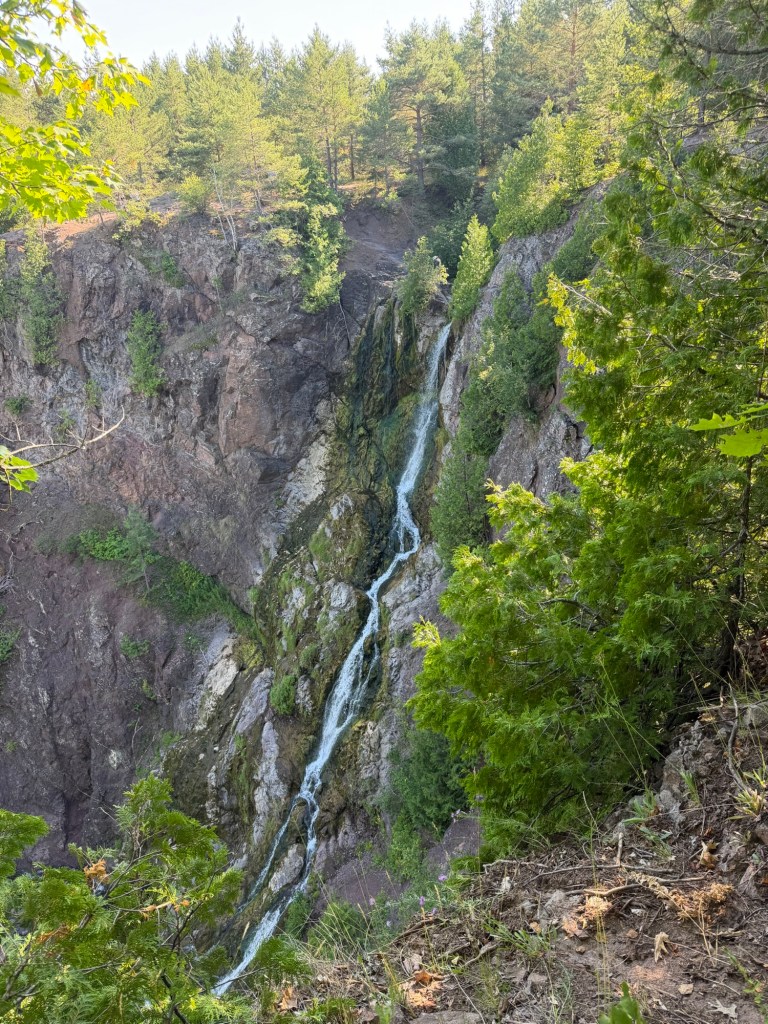
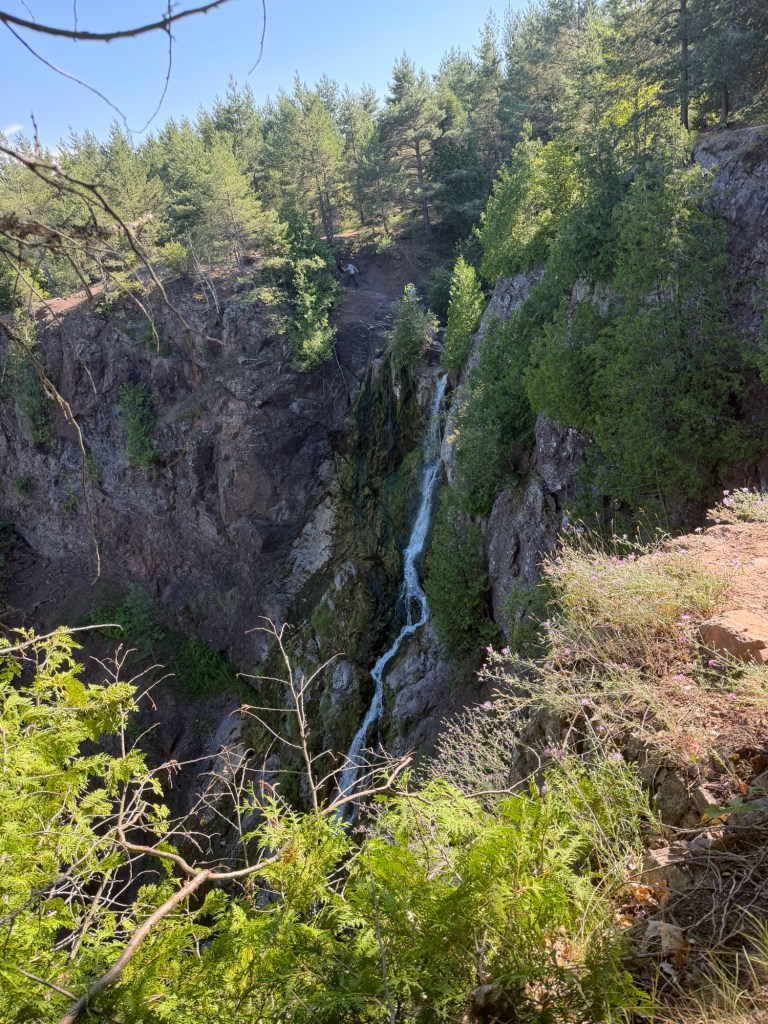
By the time we finished, Timber began reminding us that his dinner hour was approaching. We still had nearly two hours to drive back to the campground, so we stopped at a dog-friendly restaurant along the river in Houghton.
Unfortunately, the restaurant was short-staffed in the kitchen. Several menu items were unavailable, meals arrived in random order, and Timber’s food was the last to appear.
That resulted in an impressive pool of drool forming between Mark and me.
What should have been a relatively quick dinner became an almost two-hour experience. We made the best of it, chatting while our stomachs—and Timber—grew increasingly impatient.
Even with the Upper Peninsula’s long summer evenings, it was well past dark when we finally returned to camp.
Sugarloaf Views and a Lake Superior Challenge
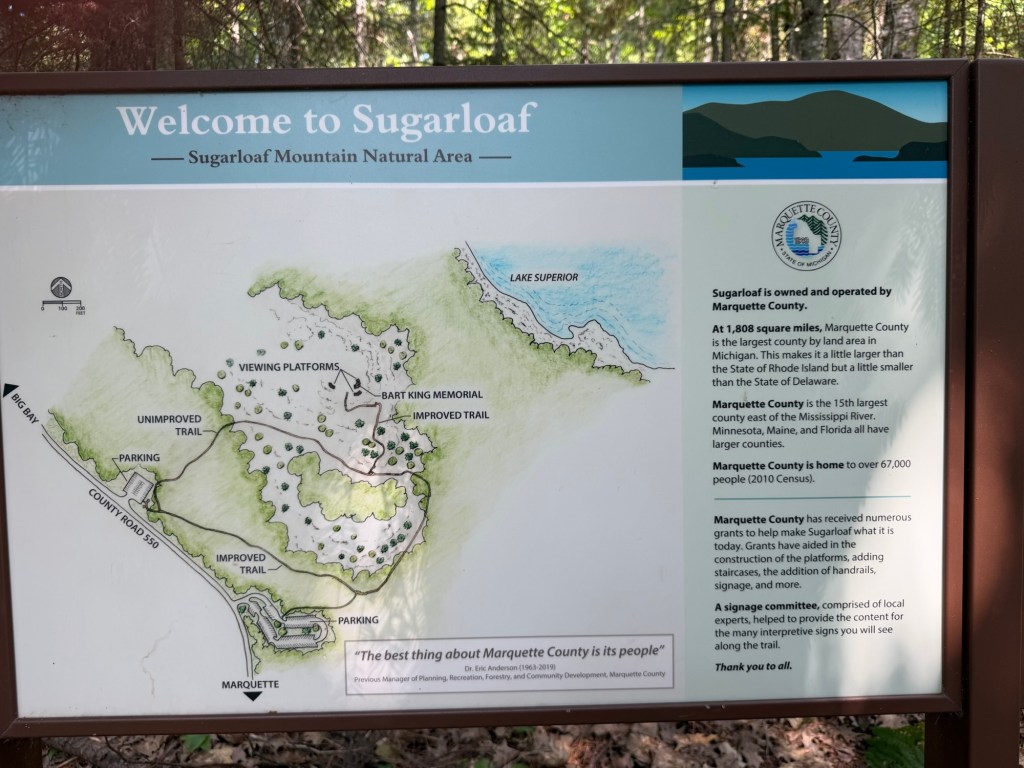
The following day, we stayed closer to Ishpeming and explored the area around Marquette.
Our first stop was Sugarloaf Mountain. The hike is not particularly long, but it is rated moderate, with stairs, rocky sections, and a steady climb to the top.
The reward is a series of observation decks offering panoramic views in several directions. The south-facing deck overlooks Marquette, the eastern deck looks across the Lake Superior shoreline, and the western platform offers views toward the Huron Mountains.
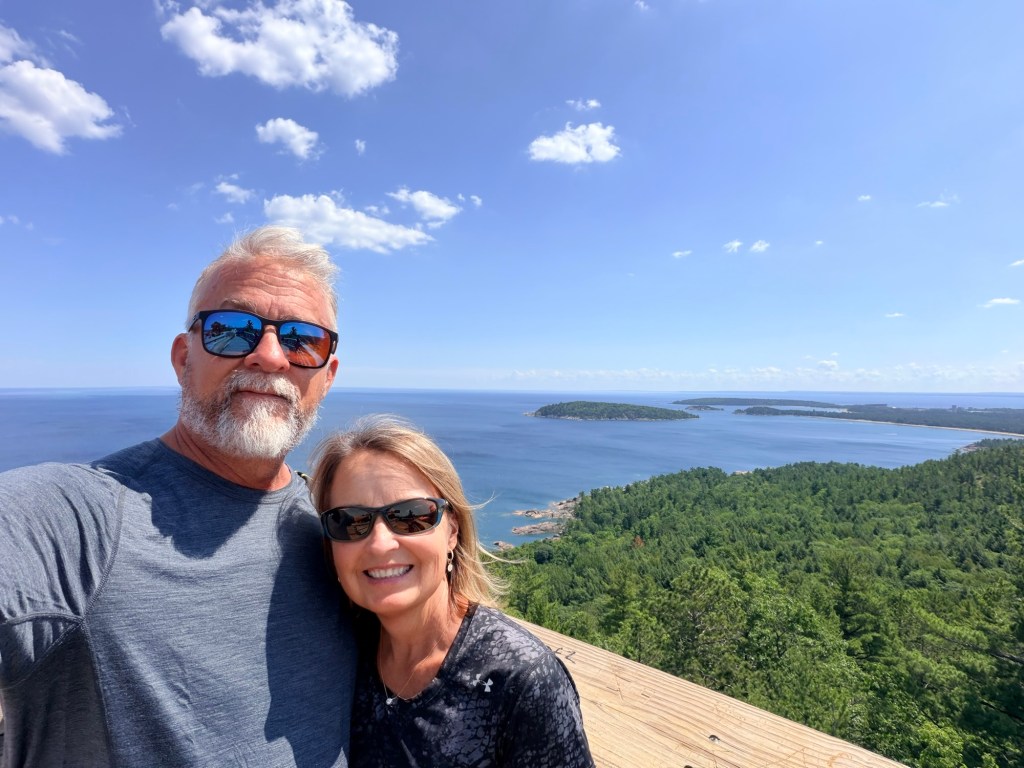
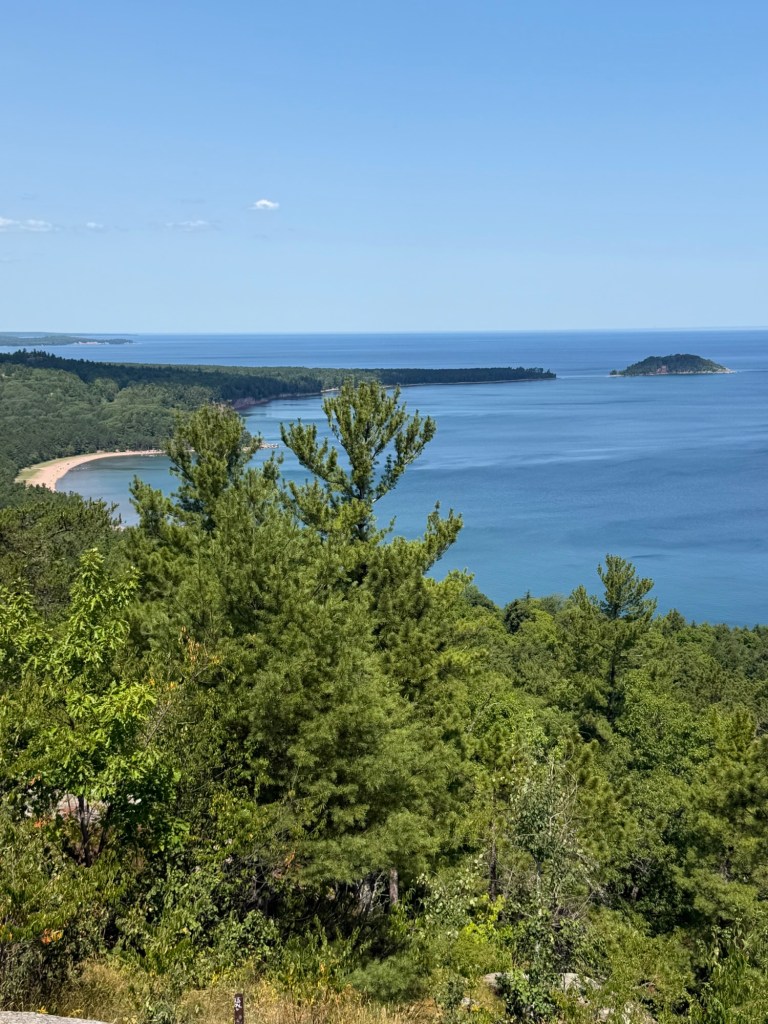
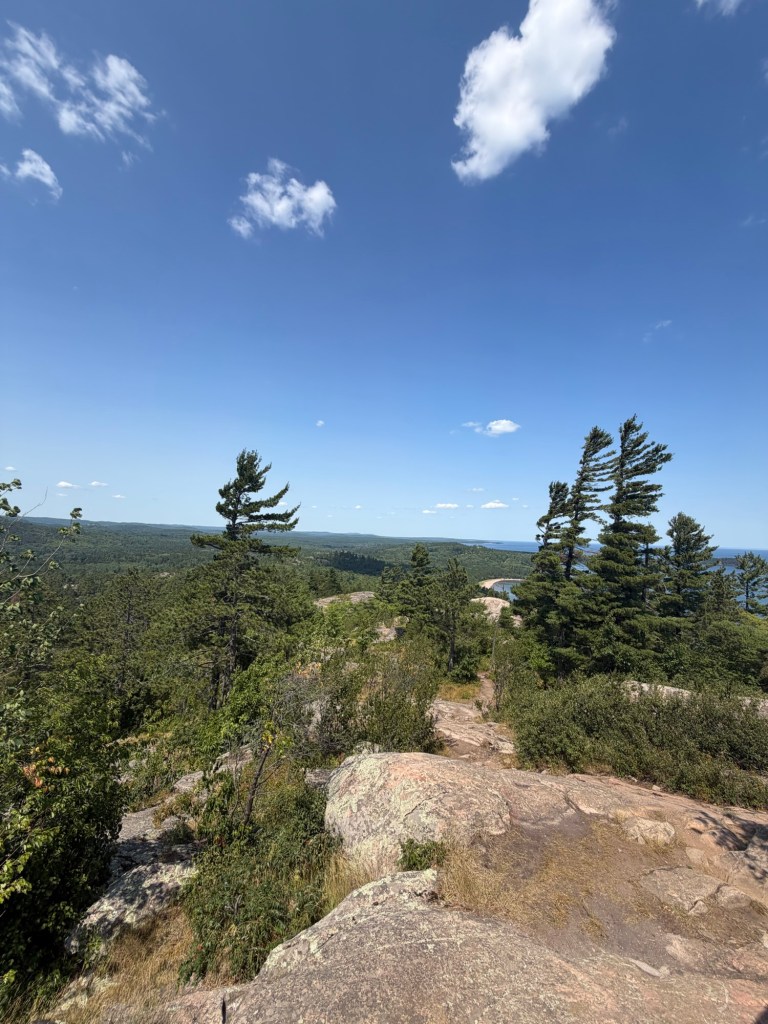
From there, Liz announced that it was the perfect day to jump into Lake Superior—and that no one should leave the Upper Peninsula without doing so.
That sounded much more reasonable when she said it than it did when we arrived at Black Rocks in Presque Isle Park.
The 323-acre forested peninsula extends into Lake Superior and offers some of the most beautiful shoreline views around Marquette. Black Rocks is named for the ancient dark basalt formations created by volcanic activity millions of years ago.
It is also a popular cliff-jumping spot.
Having arrived—and realizing Liz had no intention of allowing me to back out—we changed into our bathing suits and began what felt like a death march across the rocks.
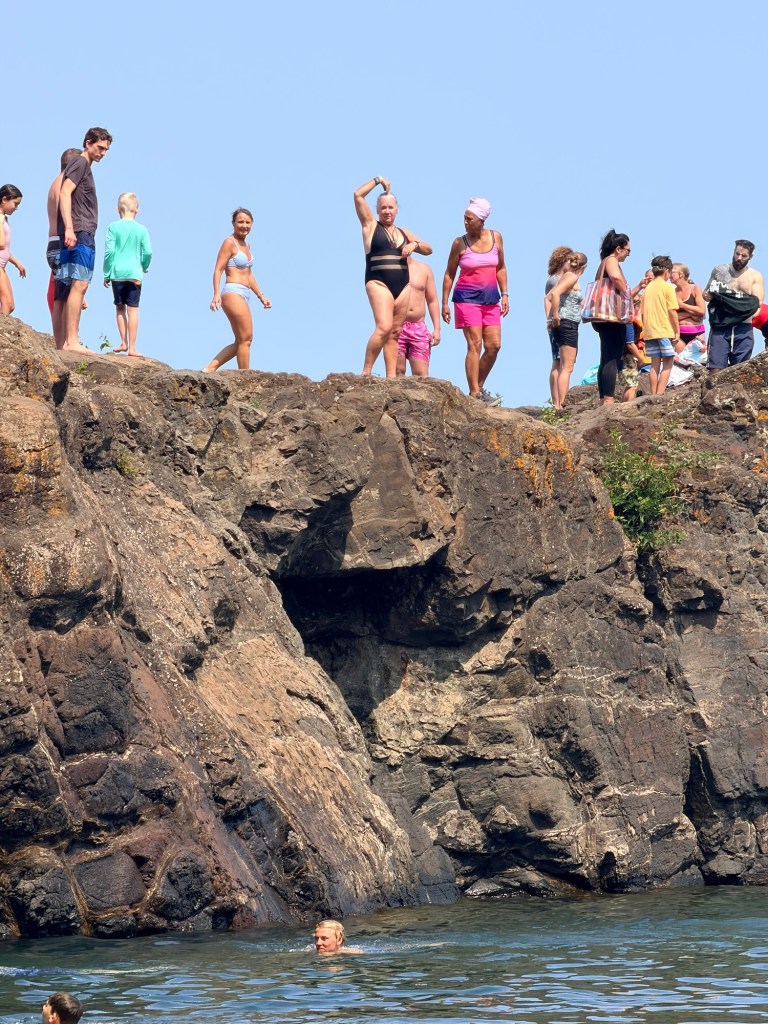
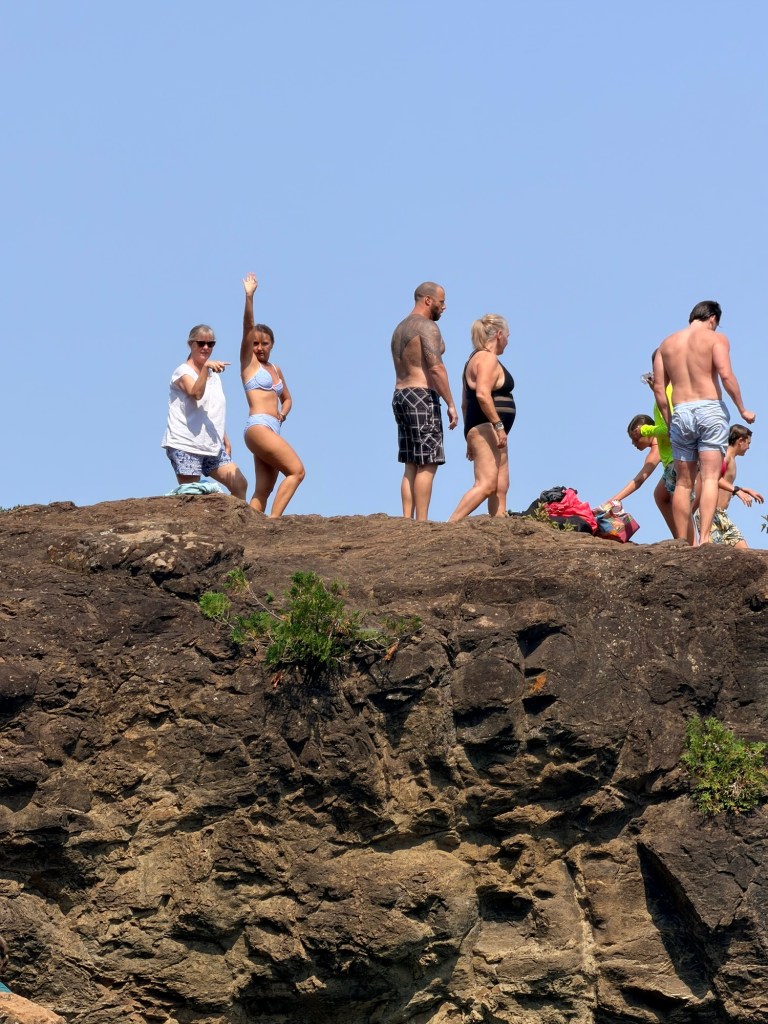
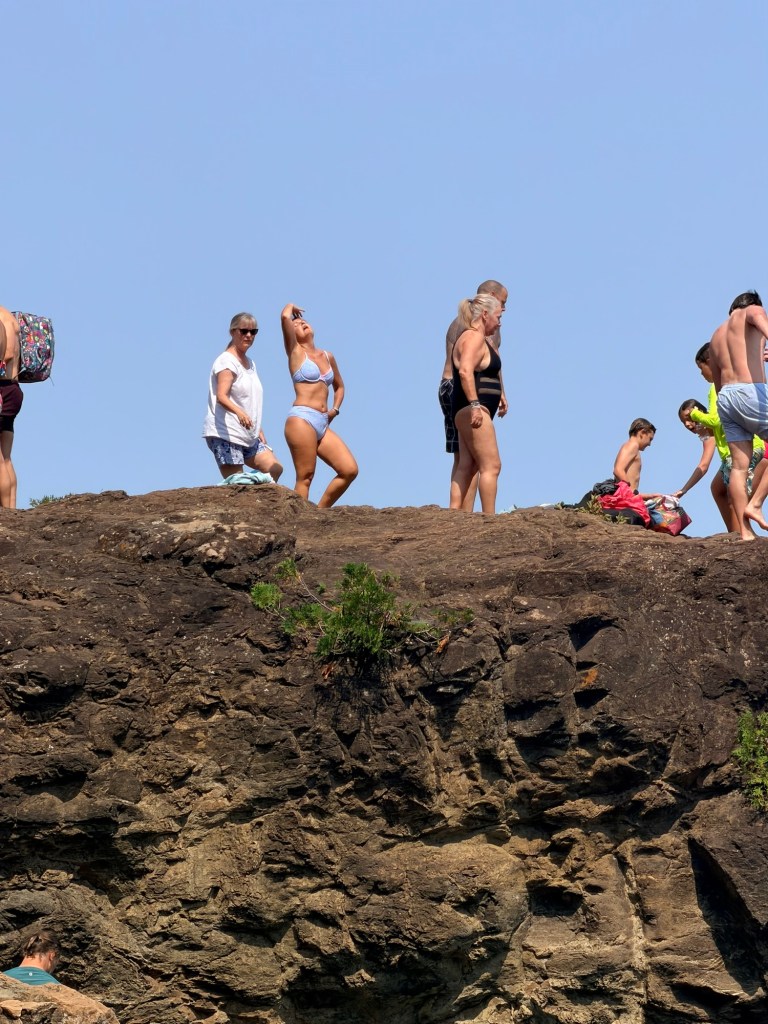
Peg and Liz positioned me between them, each grabbed one of my hands, and they counted to three.
We jumped approximately 15 to 18 feet into 67-degree Lake Superior water.
I promptly began the roughly 50-yard swim toward shore.
Did I do it? Yes.
Did I linger in the water to appreciate the moment? Absolutely not.
The National Park Trip That Wasn’t
Our biggest disappointment of the week involved Isle Royale National Park.
Somewhere along the way, a communication mix-up occurred within our group, and the necessary reservations failed to materialize. By the time we realized what had happened, all the transportation options—including three ferry routes and the seaplane—were completely booked.
That was a major disappointment for us.
Isle Royale is not a park you can visit spontaneously. Reaching it requires advance planning, transportation reservations, and a substantial commitment of time. Lesson learned.
Because that day had originally been reserved for Isle Royale, everyone made their own plans. Mark and I turned it into a workday, which was not nearly as exciting as traveling by seaplane to an island national park—but it did need to happen.
Going Underground at Quincy Mine
Our final major sightseeing day took us north through Houghton and Hancock into the heart of Copper Country.
The Keweenaw Peninsula was the site of America’s first major copper-mining boom. Mining began during the 1840s and continued in the region into the 1960s, leaving behind historic communities, industrial ruins, mine shafts, and enormous pieces of equipment that tell the story of the people who worked here.
We chose the two-hour tour at Quincy Mine in Hancock. The Quincy Mining Company earned the nickname “Old Reliable” because it regularly paid dividends to its investors from 1868 through 1920. The company operated the mine from 1864 until 1945.
Portions of more than a dozen buildings remain for visitors to explore. Some have been restored or partially restored, while others stand crumbling and in ruins.
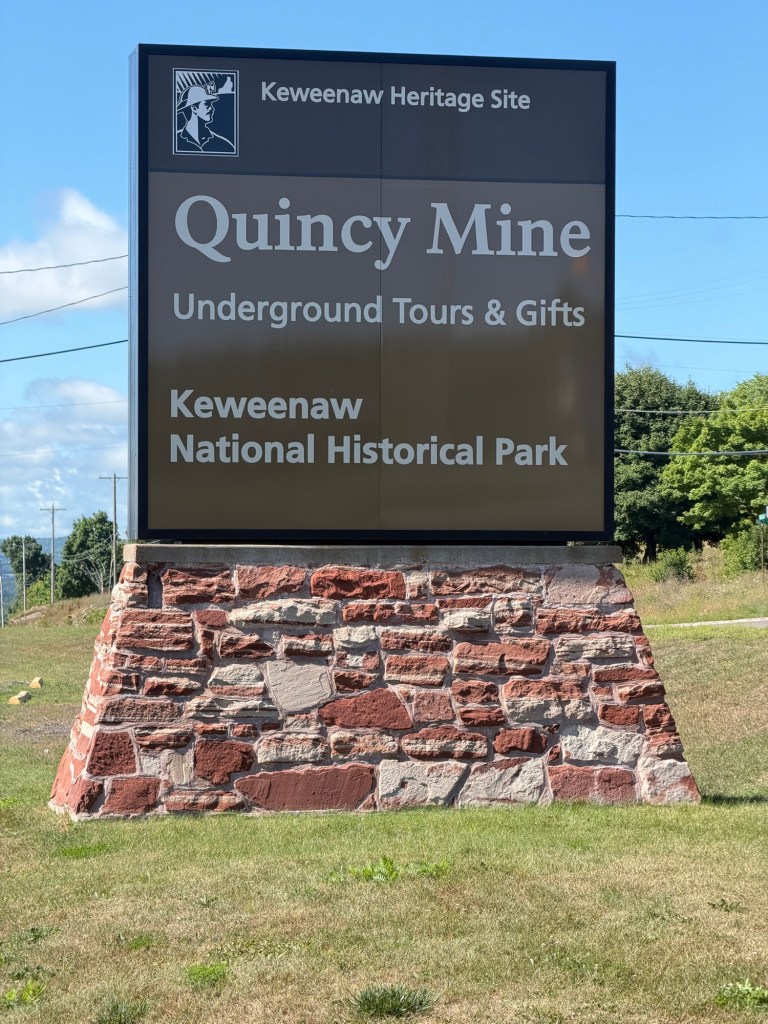
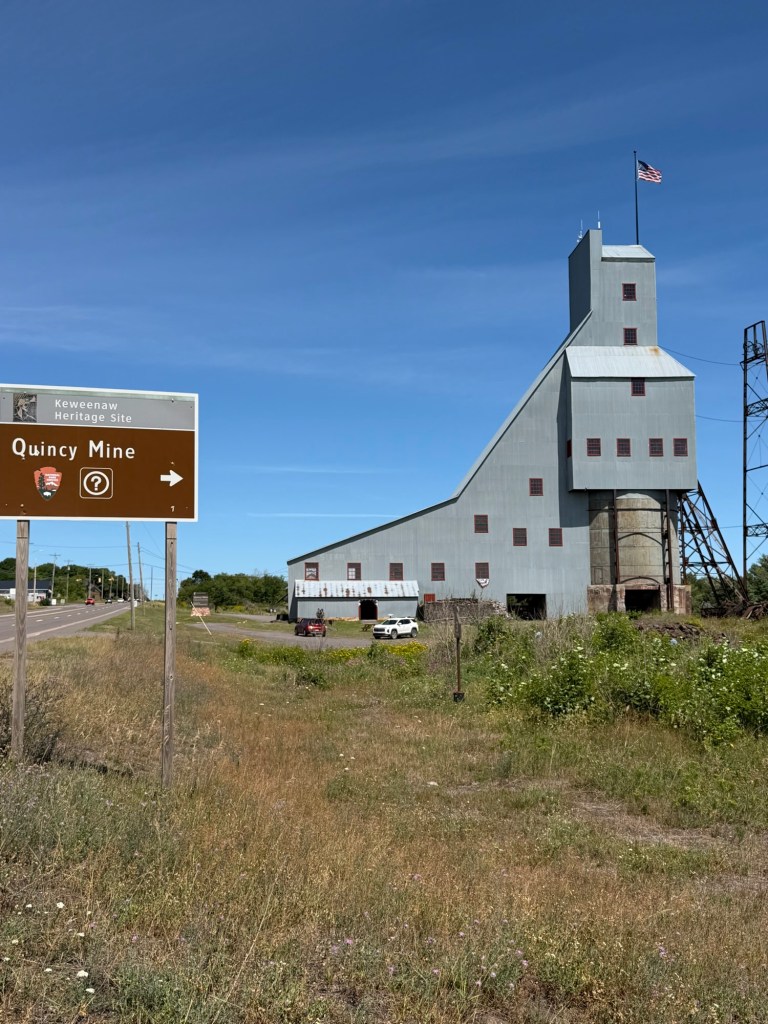
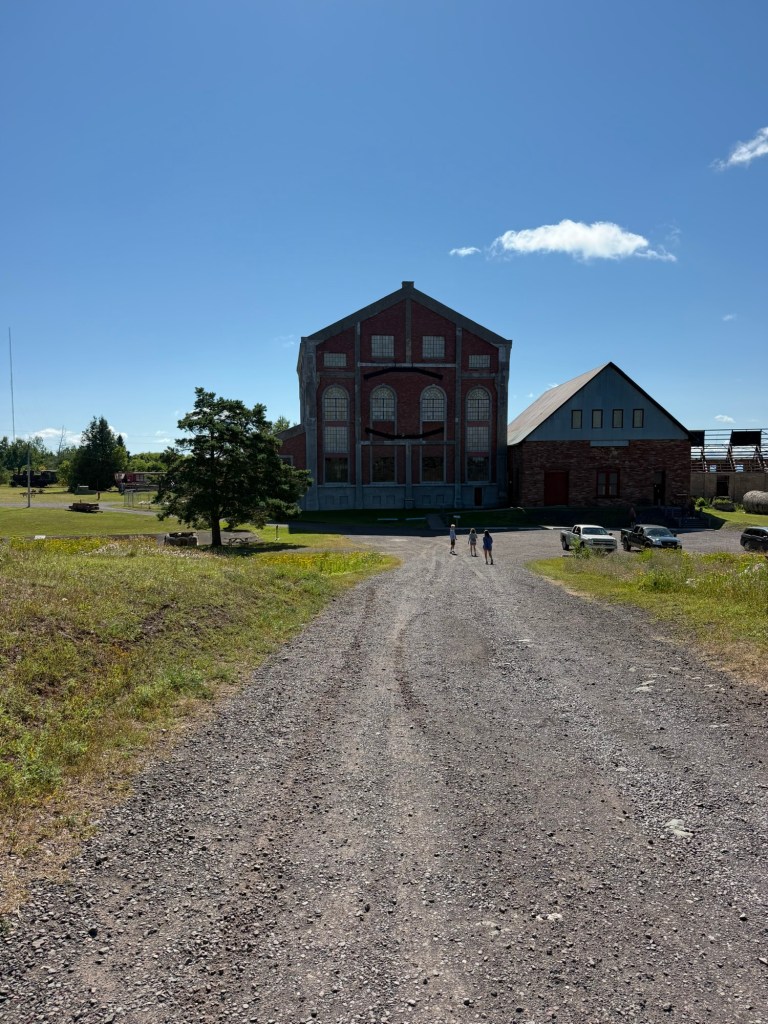
Our guide, Ben, was a local and a senior at nearby Michigan Technological University. He did a wonderful job explaining both the mechanics of the operation and the human history of the mine.
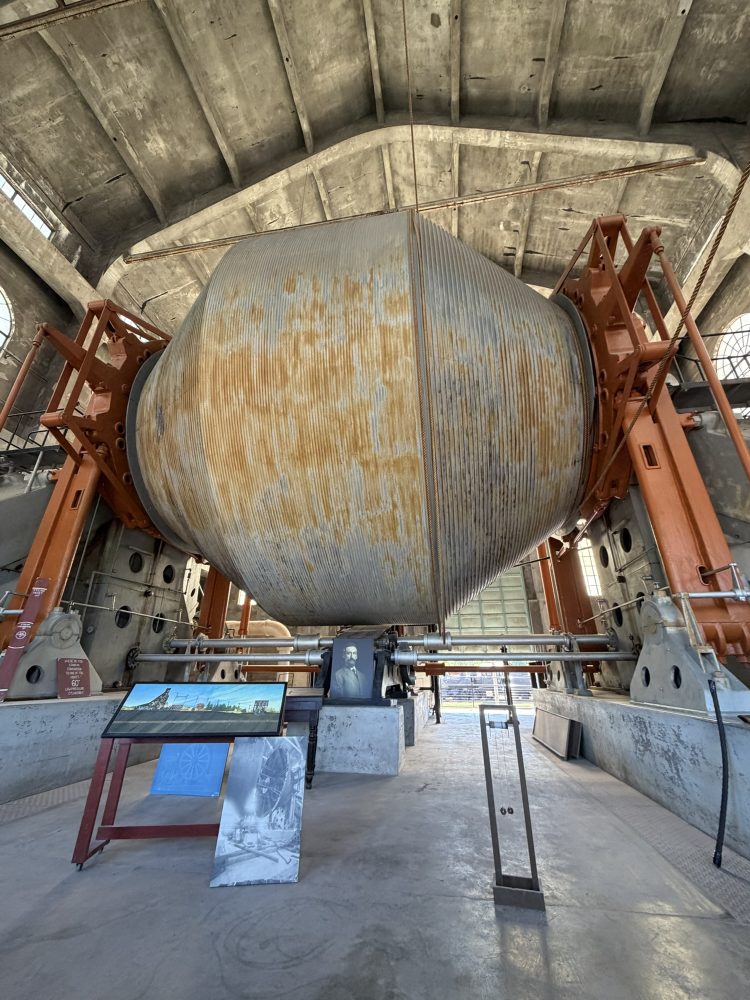
We began inside the No. 2 Hoist House, constructed in 1918 to hold what was then the world’s largest steam-powered hoist. The company clearly wanted the building to showcase this engineering accomplishment. One of the largest reinforced-concrete structures of its time, the massive industrial building was dressed up with brick veneer, green terra-cotta roofing tiles, large prismatic-glass windows, and white tile lining its interior walls.
Those prismatic windows were not merely decorative. Designed to redirect natural light deeper into the enormous building, they helped illuminate the workspace before modern electric lighting became commonplace.
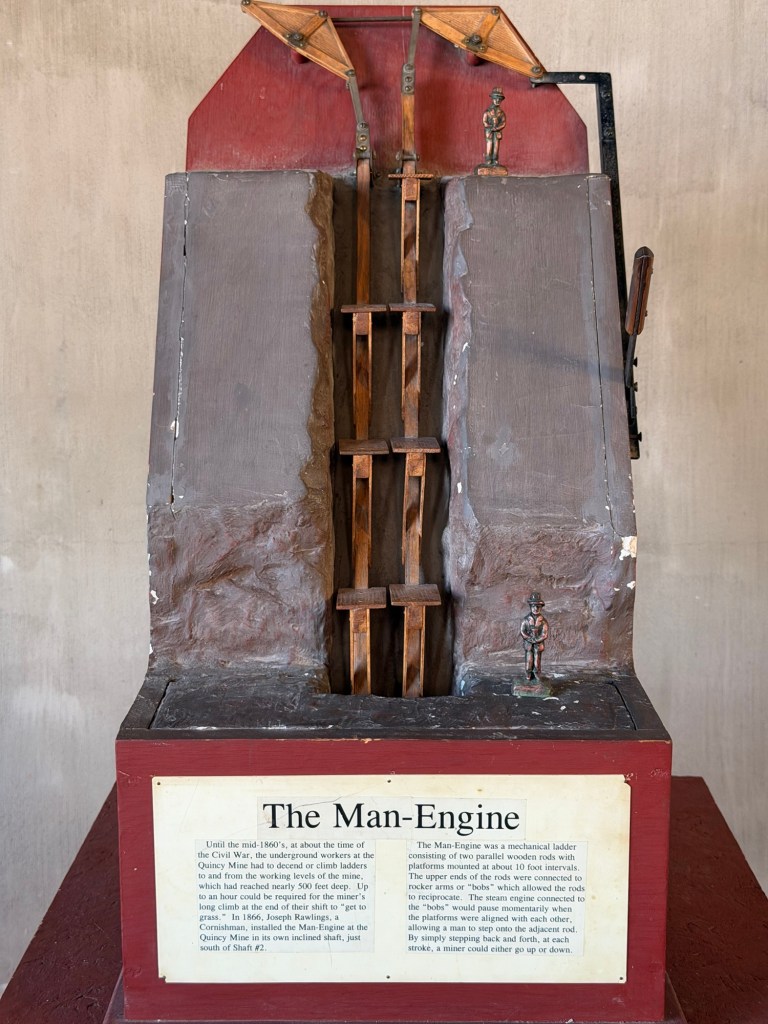
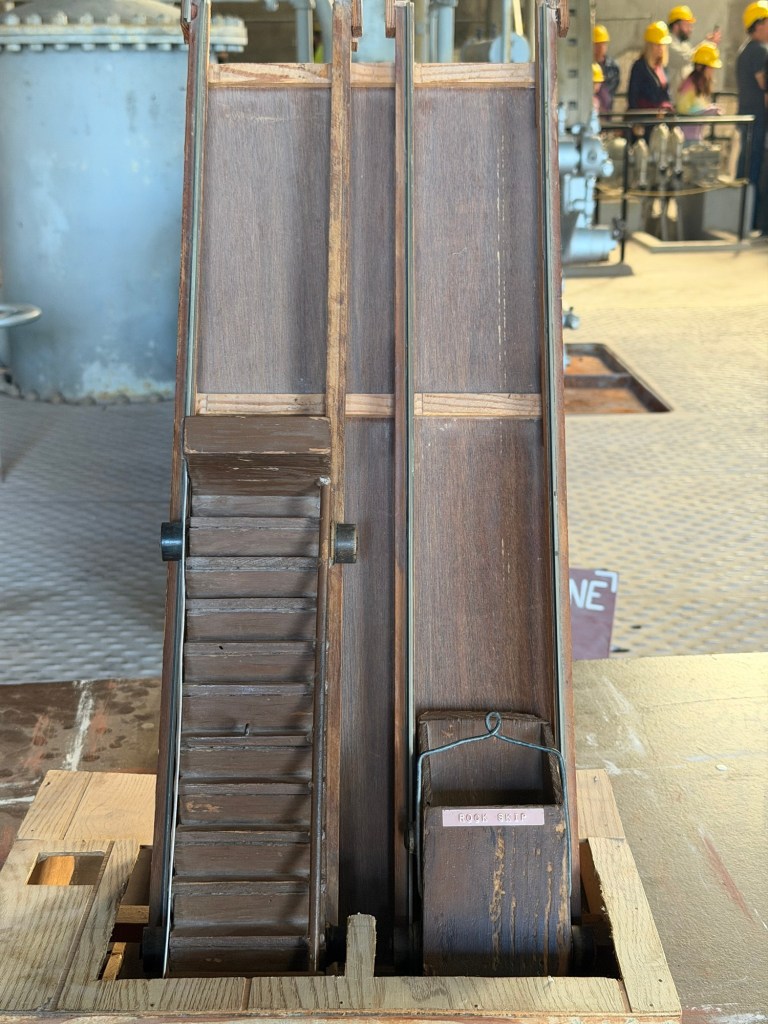
Ben then explained how miners originally climbed ladders to reach their underground work areas. Quincy later installed a “man engine,” a mechanical ladder consisting of two parallel wooden rods with platforms positioned at intervals.
The rods moved up and down in opposite directions, pausing briefly whenever the platforms aligned. A miner stepped sideways from one platform to the other every few seconds, gradually making his way into or out of the mine.
It required tremendous concentration. Imagine repeatedly stepping between two moving platforms for nearly an hour, deep underground, with only a candle mounted to your hard hat for light.
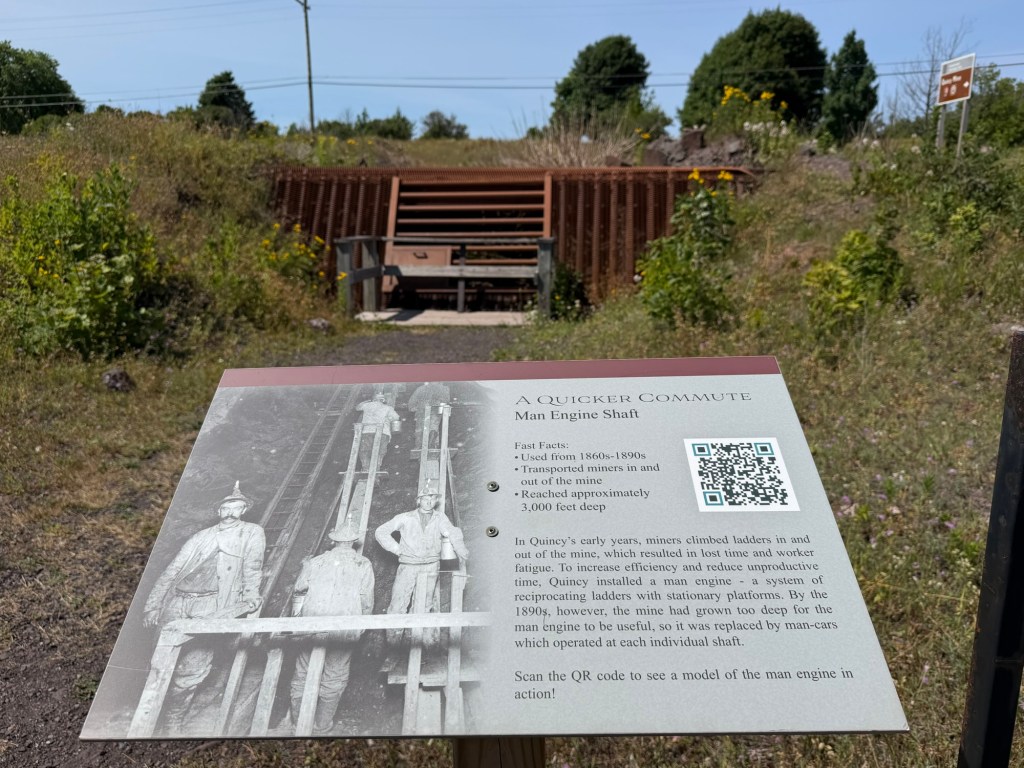
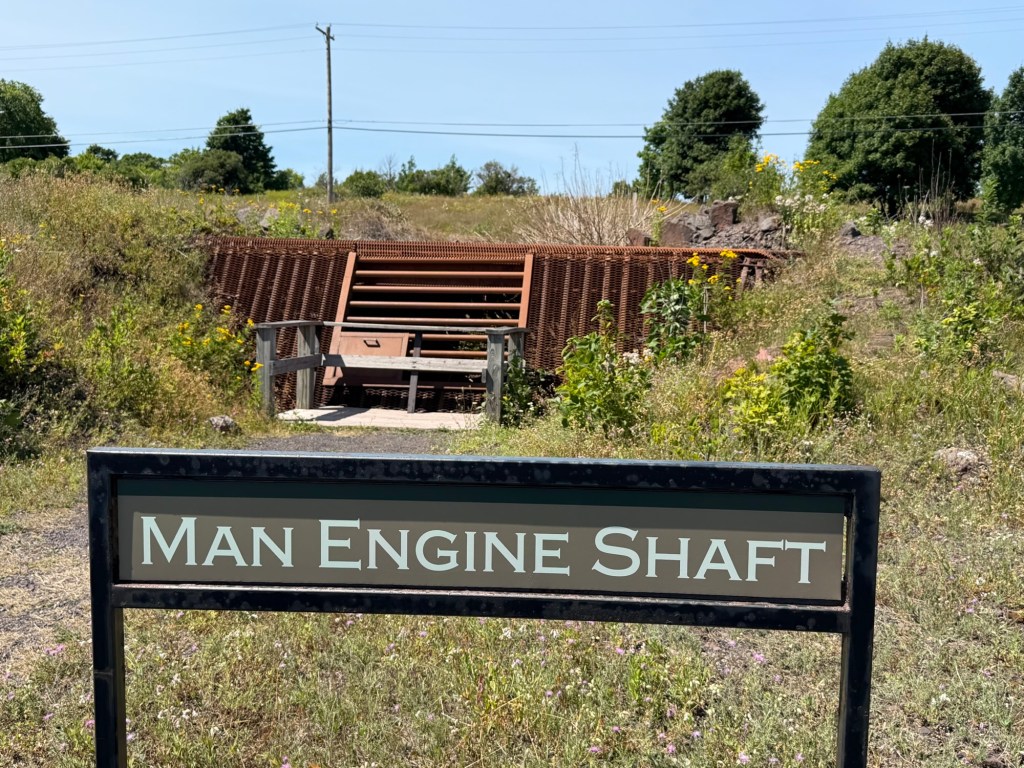
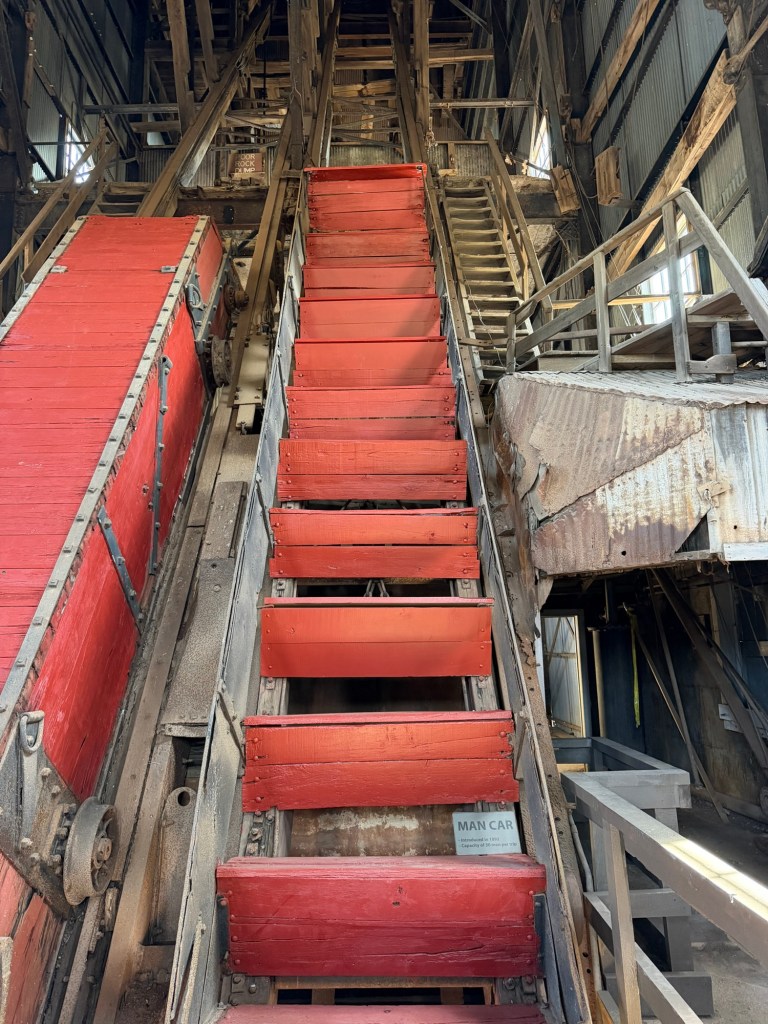
In 1892, the mine introduced the mine car. Up to 30 miners sat three abreast in a wooden car that traveled along the shaft’s 54-degree incline, reportedly reaching speeds of up to 32 miles per hour.
Perhaps it was an early predecessor to wooden roller coasters, although I doubt the miners viewed the ride as entertainment.
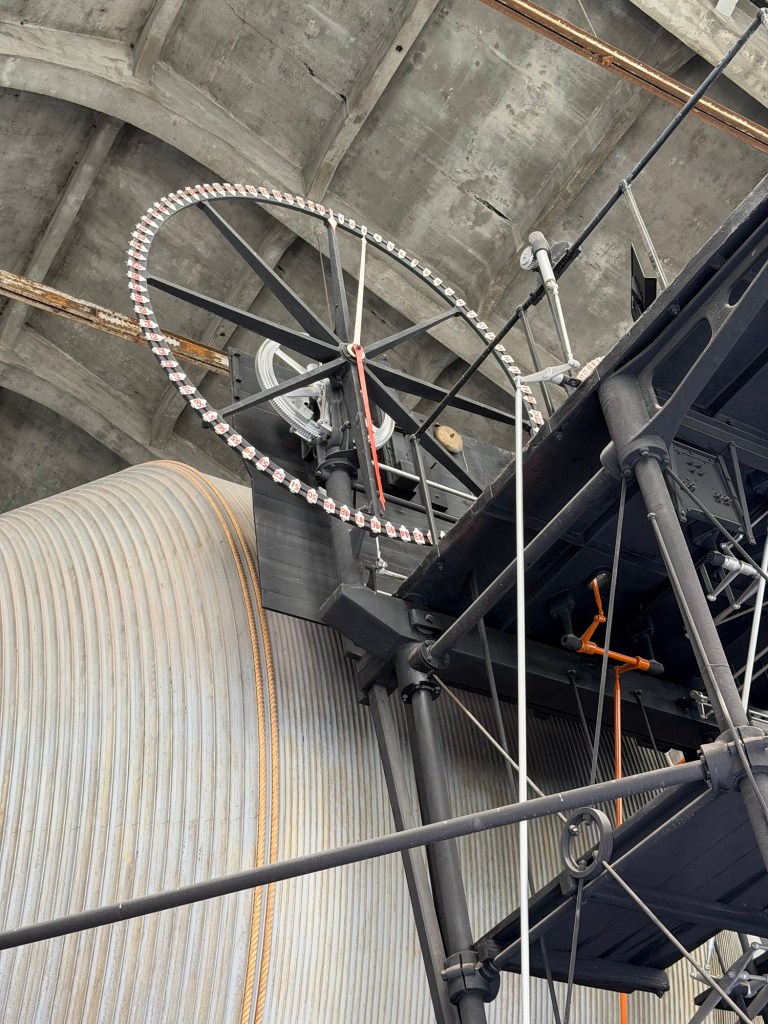
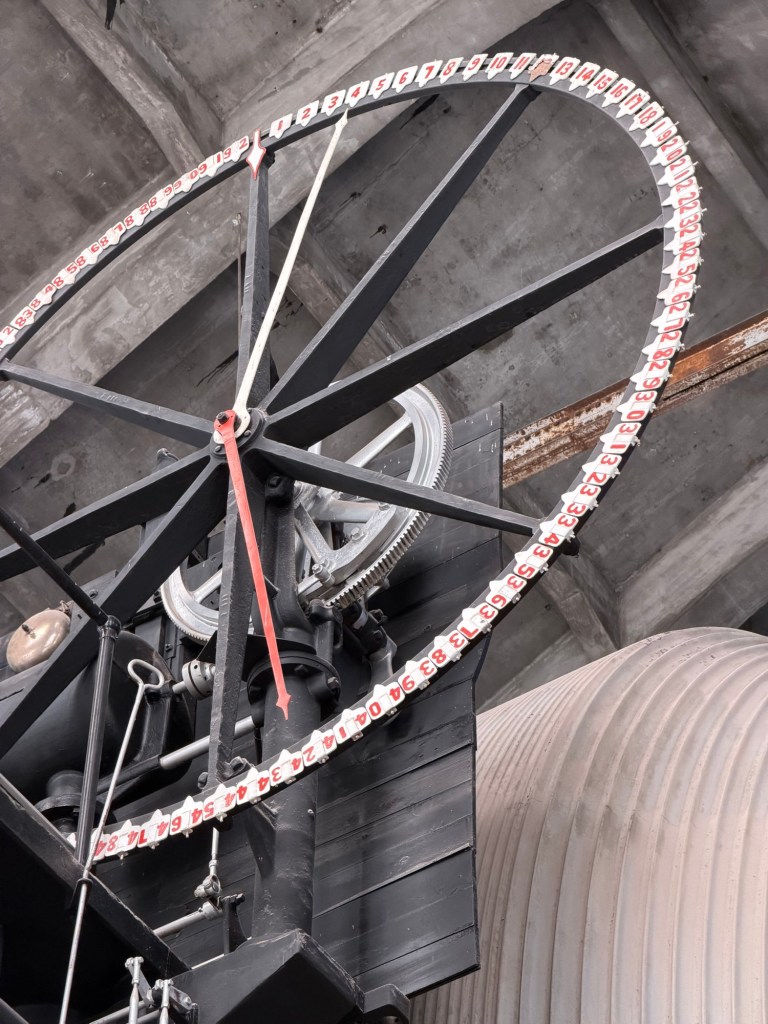
Inside the hoist room, we saw the enormous clock-like indicator the operator used to monitor the location of the hoist at the mine’s different levels. No one was permitted to speak to the operator while he was on duty, and the operator was not allowed to engage in conversation. Too many lives depended upon his complete attention.
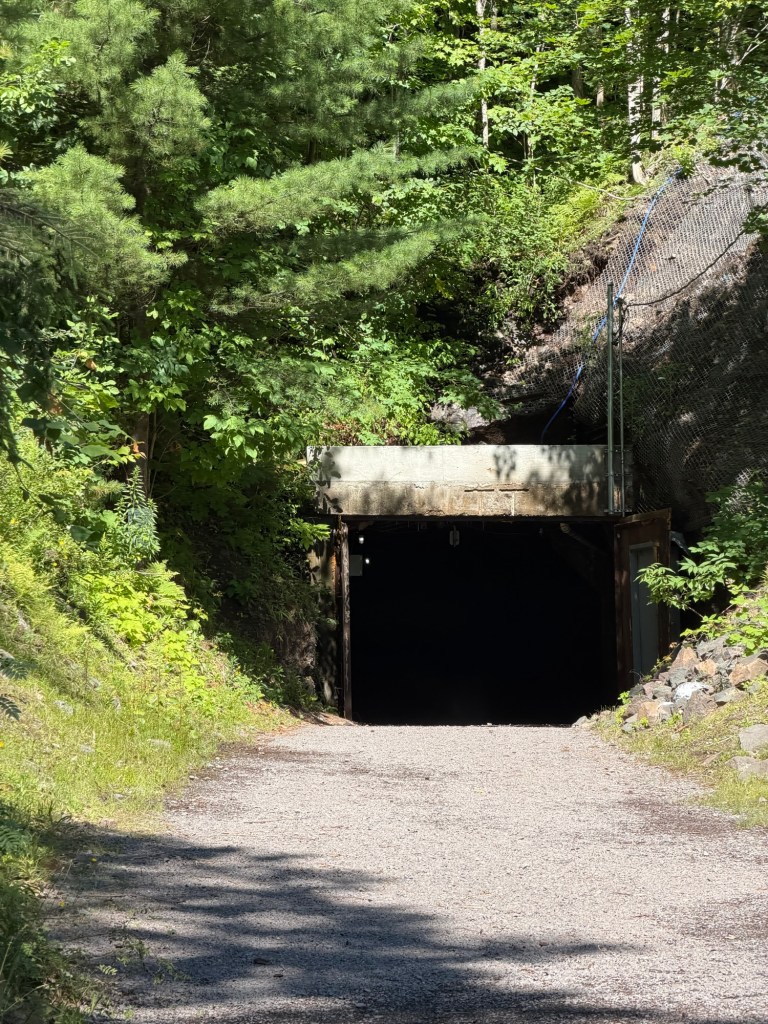
We then boarded the cog-rail tram—one of only a few operating in the United States—and descended to an adit, a horizontal tunnel cut from the surface into the side of the hill.
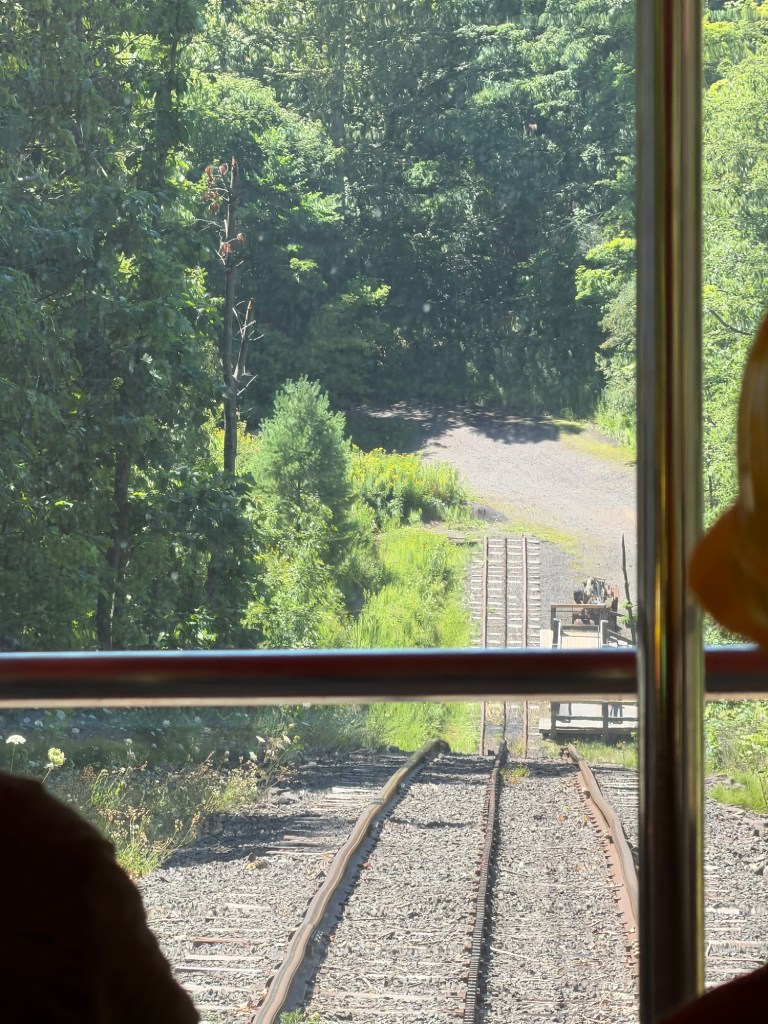
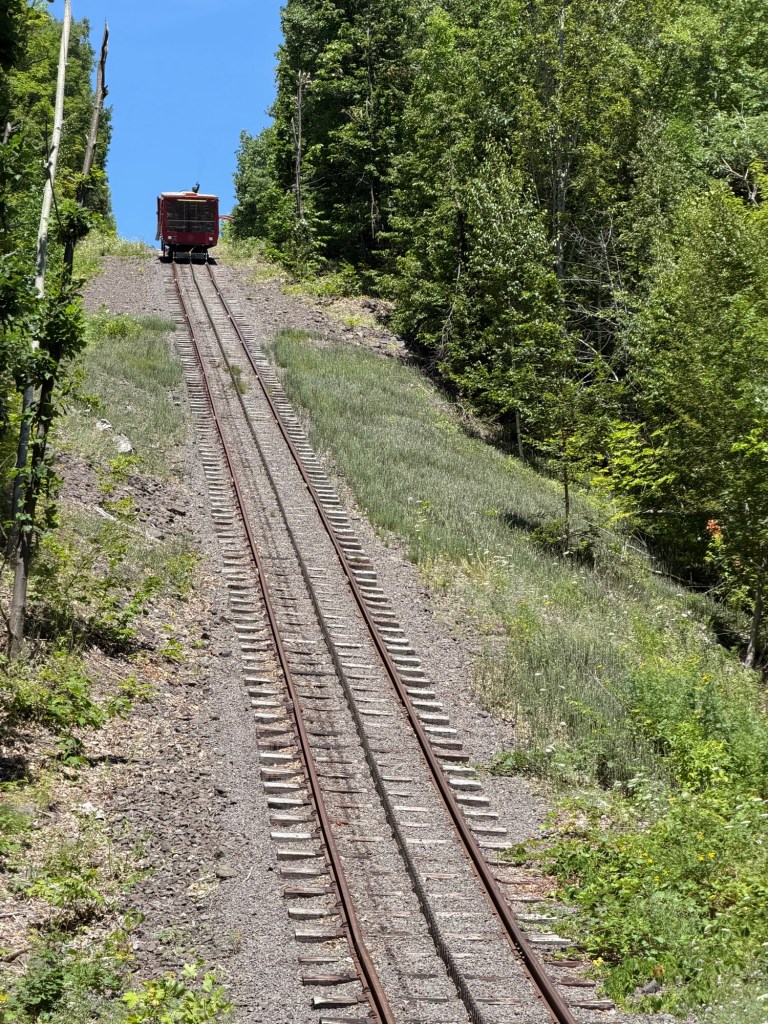
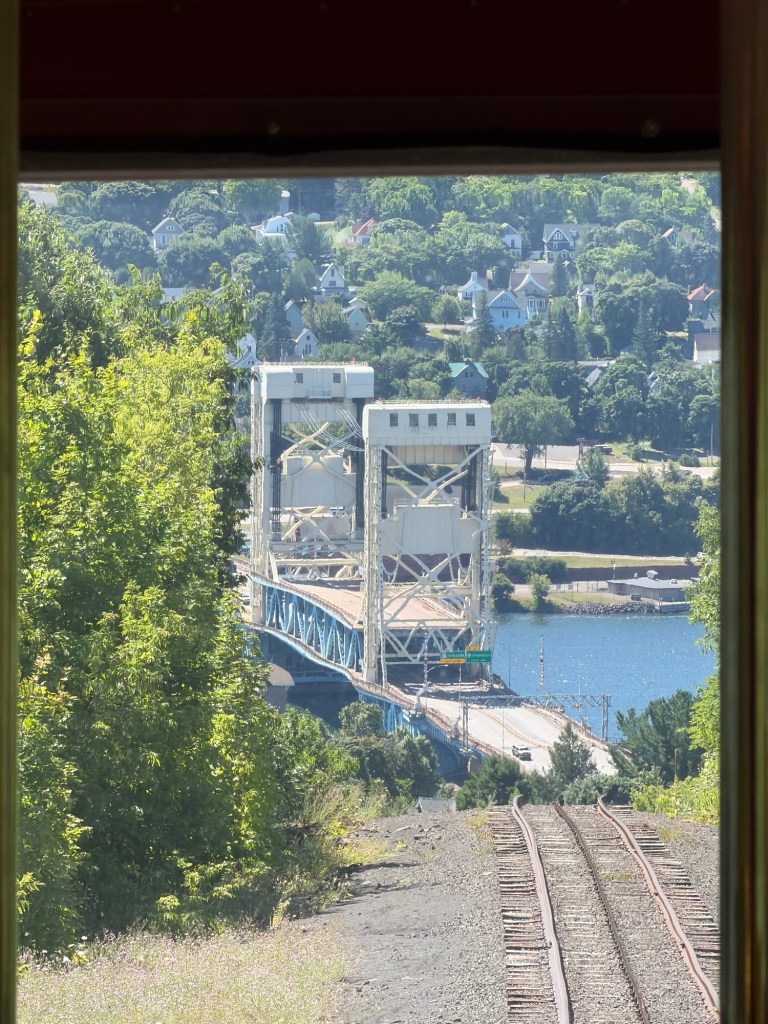
The Quincy Mine used the adit while searching for additional copper, but it also helped direct rainwater runoff away from the deeper workings and circulate fresh air through the underground network. Ben pointed out rock formations, mineral veins, fault lines, and other details that gave us a glimpse into the harsh conditions the miners experienced.
Much of the historic mine is now flooded and inaccessible, but the portion open for tours provides a sobering look at the enormous underground network—and the difficult lives of the people who worked there.
A True American Melting Pot
One of Ben’s most meaningful observations had little to do with machinery.
More than 30 nationalities were represented among the people who came to the Keweenaw during its mining years. Legal immigrants built communities, learned English, shared customs, blended food traditions, raised families, and worked alongside people from backgrounds very different from their own.
In one relatively small area, they created a powerful example of what America’s “melting pot” truly means.
The region’s culture still reflects those influences today—in its churches, architecture, community traditions, family histories, and even its pasties.
To the End of the Peninsula
After riding the tram back up and taking one final look around the gift shop, we continued north toward Copper Harbor.
Naturally, “one final look” at the gift shop resulted in copper earrings, stickers for the cooler, and a Christmas ornament coming home with us.
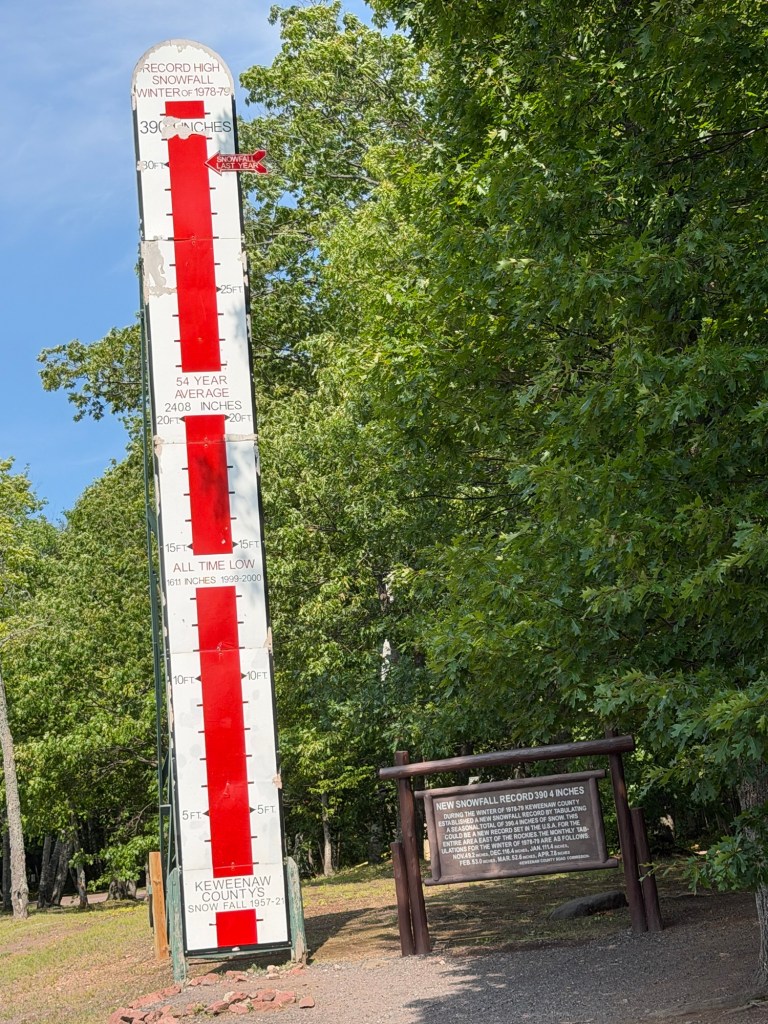
Along the way, we stopped beside one of the enormous roadside snow gauges that attempts to demonstrate just how much snow falls in the Keweenaw.
The region receives tremendous amounts of lake-effect snow from Lake Superior, with seasonal totals often measured in hundreds of inches. Seeing a marker towering above us helped put those numbers into perspective.
Last season, the area reportedly received approximately 30 feet of snow.
Thirty. Feet.
I enjoy looking at snow. I simply don’t enjoy living in 30 feet of it for six months or more!
Copper Harbor is a tiny community near the northern end of the Keweenaw Peninsula. The area is popular with mountain bikers, motorcyclists, and ATV riders, and the town was bustling when we arrived.
We stopped for a late lunch—or very early dinner—at Lake Effect Bar & Grill. It was a sunny afternoon, so we sat on the patio.
Despite both the patio and dining room being full, our waitress remained attentive and our food arrived promptly. We started with made-from-scratch macaroni and cheese and an order of bacon and Brussels sprouts.
The macaroni and cheese was fairly bland, but the Brussels sprouts were excellent, coated in a unique maple-soy vinaigrette.
Liz and Mark each ordered versions of the house burger, while I chose the beef-barley soup and a side salad. We had eaten very little that day, and the empty plates around the table made our hunger rather obvious.
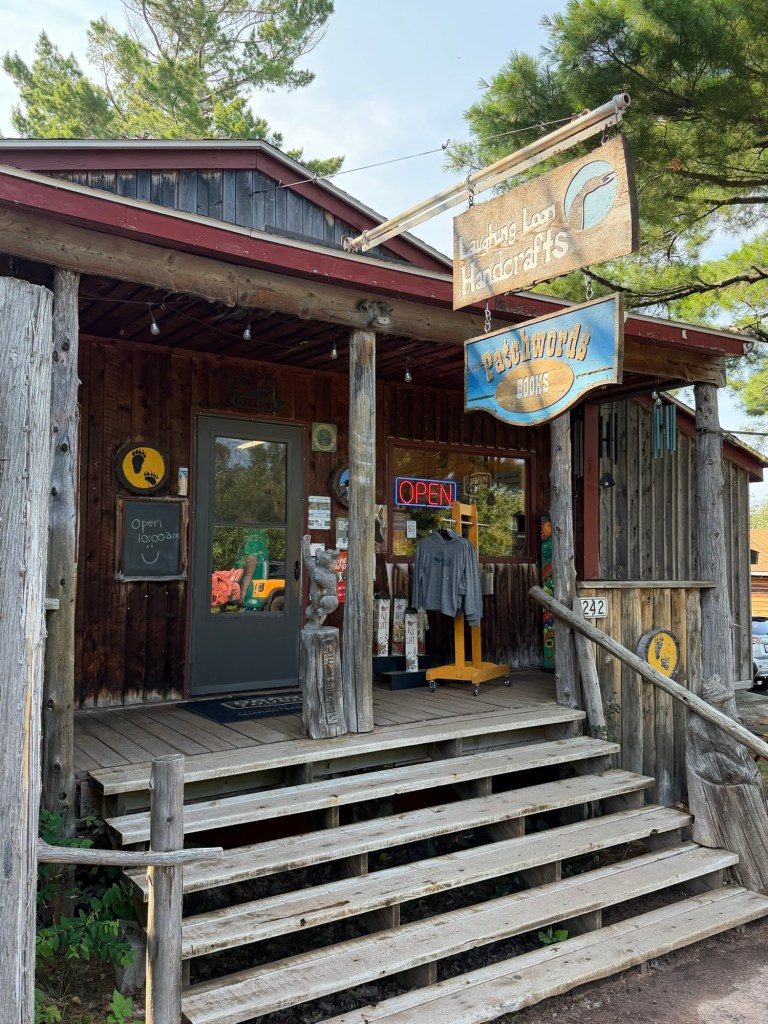
Afterward, we wandered through several local shops, including the Laughing Loon, where we found a variety of copper gifts and souvenirs before beginning the long drive back to Ishpeming.
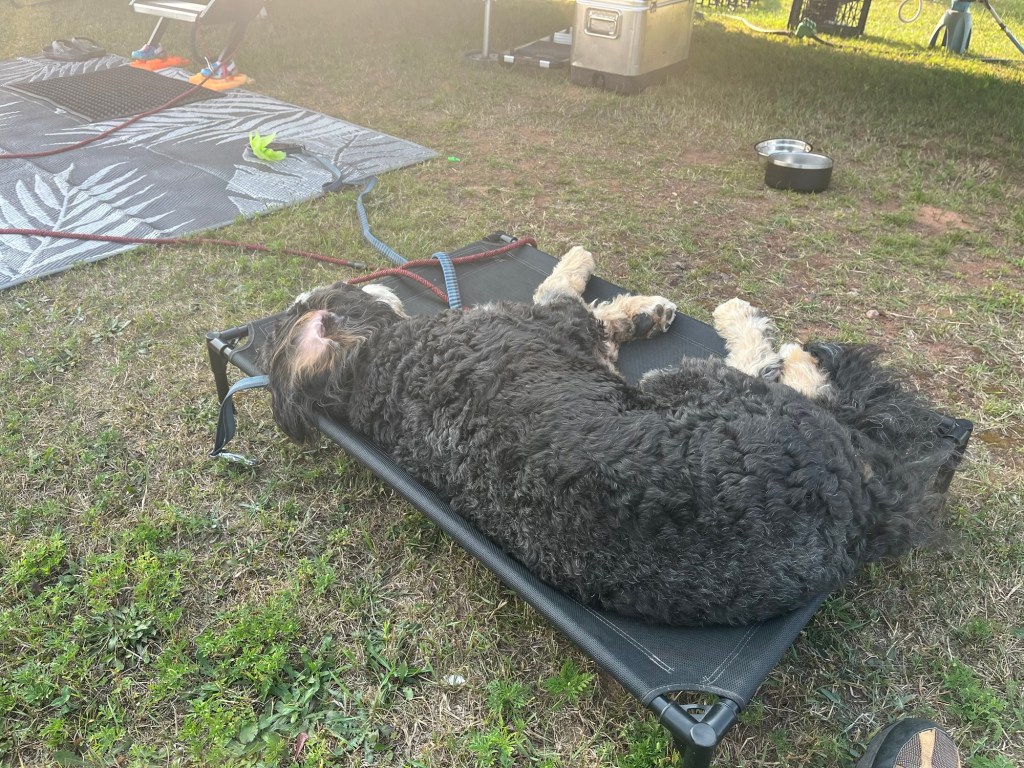
Mike had decided to skip the trip and stayed at the campground with Timber. Timber seemed perfectly content to spend the day with one of his favorite humans all to himself.
Campfires, Copper and Good Friends
Our final day was devoted to laundry, cleaning the rig, and preparing to leave. After a week of long sightseeing days, shared meals, waterfalls, mineral-streaked cliffs, copper mines, and one very cold leap into Lake Superior, we were ready for a quieter day.
We were certainly disappointed that Isle Royale did not work out, nor did we find any Yooper rocks, but the week gave us something even better than a perfectly executed itinerary: time with friends.
There is always another park to visit and another excursion to plan. The best travel memories, however, are often made while sightseeing, walking through campground, hiking on trails, and sitting around with friends.
Onward to Oklahoma
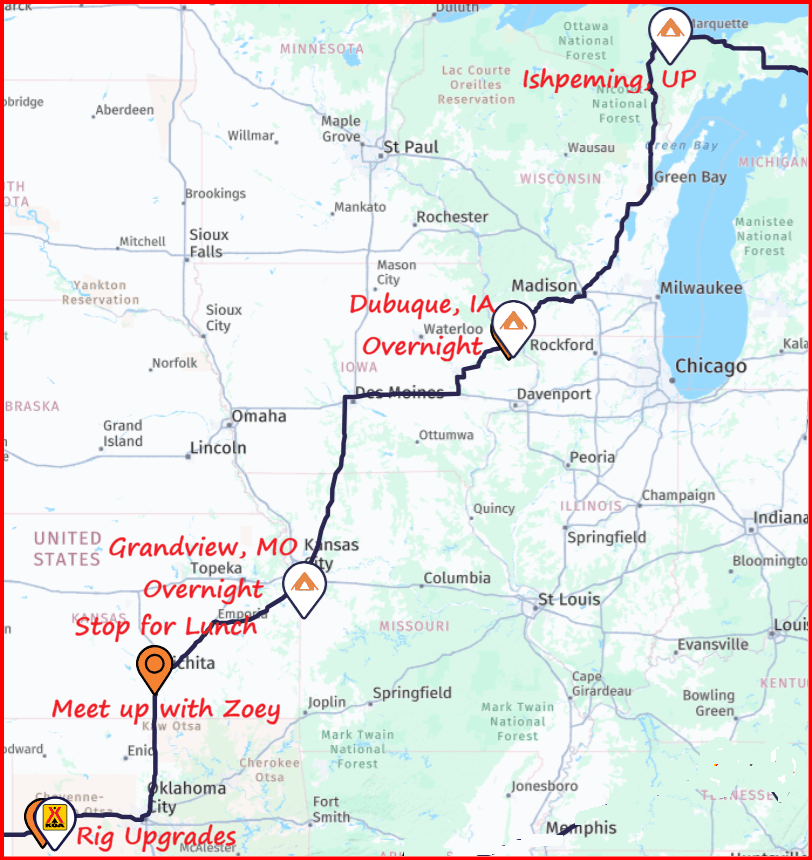
Early tomorrow morning, we begin the next leg of our journey—a seven-plus-hour drive through Wisconsin to an overnight stop in Iowa. From there, we’ll tackle another seven-hour travel day into Missouri before reaching our destination outside Oklahoma City, where we’ll settle in for a week while Jack receives a few upgrades.
More on those upgrades—and our Oklahoma adventures—later. For now, here is a look at the route ahead.


 Masters of RVing Adventures
Leave a comment